Will They Make It? Higher Education with Learning Differences
- Maren Angelotti Author
- Updated Jun 25, 2015
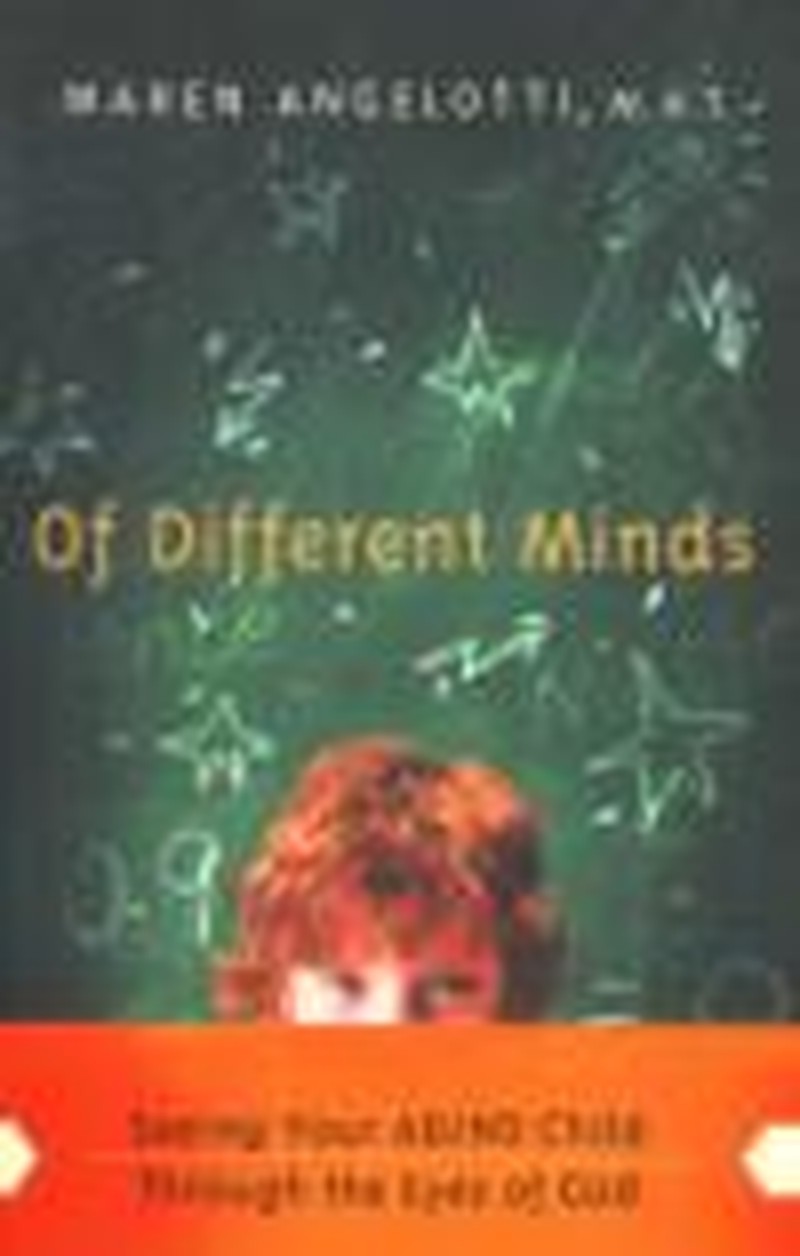
EDITOR'S NOTE: The following is an excerpt from Of Different Minds: Seeing Your ADHD Child Through the Eyes of God by Maren Angelotti. In this chapter, "Higher Education: Will They Make It?", Maren talks about how each one of her children with learning differences prepared for life after highschool.
A cheerful heart is good medicine, but a crushed spirit dries up the bones. - Proverbs 17:21
Learning-different children have a unique perspective on the world. Most of them see the world as a beautiful and good place, but when they try to interact with it there seems to be an invisible barrier that won’t let them pass. Their perceptions of others and the fairness of things is a little bit clouded. Their struggle with poor auditory processing can create a world that sounds muffled and hard to fully understand. We parents, often times, try to pull our children along through that invisible barrier and expect them to function well in all situations. But when it comes to your child’s future, pulling her along can lead to frustration and disappointment. This is the time to stand next to her and look through that invisible barrier. See what she sees and how she sees it. Understanding how she perceives her world will give you insight for how to guide her toward a healthy and prosperous future.
As the elementary and middle school years come to a close, many parents feel that the worst is behind them; they are now experts on dealing with learning differences. They have safely crossed the Sea of Denial with their family intact. But the truth is, these early years have been preparation for the greatest challenge: high school and beyond. The good news is that if parents place themselves in God’s hands, continuing to trust the One who brought them this far, He will continue to guide them through whatever lies ahead.
I like to recommend the following formula: Be a parent to your child from ages 0–10; guide them through life from ages 10–20; be their friend from age 20 until death. Your child will welcome your friendship and wise input in their adult years as you guide them through their adolescence. This process starts by setting them up to win in high school.
The majority of learning-different children make it through high school because their parents stay on top of the issues related to learning differences. Others have a more difficult time. To help your child through his struggles, start by listening to him. What are his dreams and goals? Though some of these may seem out of reach, treat all goals the same: with respect, joy and excitement. Your teen will pick up on your belief in him and believe that he might just make something of himself. Many learning-different kids have the ability to visualize the big picture. This is a strength. Their difficulty is trying to implement it. Because that is the case, the next step is to show your teen how to begin to make his dreams a reality.
Goals are the foundation of most everything we accomplish as human beings. They give us a direction and set us on a course to fulfill our potential. Without them, we wander aimlessly through life, wondering why our lives never amounted to anything. God wants great things for us. He provides opportunities for us to succeed, but all too often we don’t believe that we have what it takes to make our dreams come true. Too many times, we ignore God’s opportunities and settle for the status quo. As Christian parents, we must instill in our children an unshakeable belief that God doesn’t make mistakes, and that He expects us to live up to our potential.
Start by asking your teen what she thinks she might like to do for a living. Make a list with her of all of her choices. Often young adults say, “I don’t know.” Don’t worry; keep sharing with her the strengths you see in her. Challenge her to dream big as she imagines her future, and her reluctance (which is likely rooted in fear) will eventually melt away.
Now that you have the big picture, work backward to figure out the steps your teen needs to take to reach her big-picture goal. Create one-week goals, one-month goals, and six-month goals. These goals should be doable. Do not make them so difficult that they are impossible to achieve.
As I mentioned, my learning-different daughter Jackie has a real talent in music. She can sing like nobody’s business and she can write song lyrics in her sleep. (She had published poetry by the time she finished her eighth-grade year.) Jackie told us that she really wanted to do music for her life’s work. At the same time, Chris, our older son, was attending a local Catholic high school and was very active in the school band. He told us that he wanted to be the head of worldwide marketing for a major computer company.
Instead of blowing them off as if their dreams were ridiculous, we decided to take their dreams seriously. To do so, we worked backward from their big-picture goals. We looked at each individual dream and asked what we had to do today to make sure Chris and Jackie reached their goals tomorrow. We laid out the steps that had to be taken in order for them to get there. Ultimately, Chris and Jackie had to make the final choice: Would they take the steps necessary to make their dreams come true? Giving them the power to decide empowered them to take ownership of their lives and their futures.
Jackie had the good fortune to record her own album and to use her music for God in many venues. As she experienced the fruits of her careful and determined plan, she eventually decided to change her course. She is currently finishing a college major in communications for film and TV, with a dream (and a plan) to pursue a career in television.
Chris took the steps toward his goals throughout his high school career by working for a local computer retail store. He laid the foundation of his work ethic and carries that with him to this day. He is now working in the worldwide marketing department for that prominent computer company.
For both Chris and Jackie, homeschooling was the right choice for them to get their high school education. They were best able to implement their plans and work toward their goals in that environment. My other two children are currently in high school and college, and neither of them would have done well in a homeschool situation. The right choice for realizing their dreams is an education at the Shelton School and Loyola Marymount University. Our second son, Nick, dreams of making his mark in international business. Obviously, being multilingual will be important to his success. Becoming fluent in multiple languages is difficult for most people, but for learning-different students, it poses particular challenges. Nick knows that he must succeed in this area, and he also knows how he learns best. He has begun to learn Italian by listening to lessons on his iPod. Whenever he is not working, he listens on his headphones, trying to become fluent. He is taking the steps, one by one, that lie between him and his dreams.
Our youngest, Alicia, is a junior in high school, and we are working backward with her to make her big-picture dreams of a career in journalism and design become a reality.
Each child had different dreams and motivations, and every family comes with varied and special dynamics. Because of these factors, there is no “one size fits all” approach to your child’s future. The one question that can be answered is, “Have other children with similar differences succeeded in college and beyond?” Yes! Some have chosen college, with all of its challenges, while others have chosen to go to trade school. Either way, many experience successful careers and deeply fulfilled lives. So much depends on the family’s willingness to move on and guide their child to a world of adventure and happiness.
College or University
Here is an example of working backward if your child’s goals involve attending college or university:

Research the college and university options available to students with learning differences. Peterson’s Colleges with Programs for Students with Learning Disabilities or ADD is a great help when you are first getting started (a new edition is published every year). This catalog shows everything a parent needs to know to help your child choose the right university or college. Most colleges and universities in the country have outstanding programs available to learning-different students. The only “catch” is that students must learn how to be their own best advocate. The university will not hunt the student down to make sure that everything is running correctly, but they are available when the student comes looking for help.
When evaluating your choices, a key is student-teacher ratio. Most learning-different students get the one-on-one attention they need at a ratio of no more than 15:1.
Most colleges and universities want to have current testing, done within the last three years. In that testing they will be looking for the specific difficulties the student faces and what accommodations need to be made. Set up a time to meet with the college’s learning-different specialist to determine how the accommodations will be implemented.
Many universities provide a note-taker to students with learning differences. The note-taker compiles detailed notes of your student’s class sessions, puts them into an envelope and delivers them to your student’s school mailbox. No one in the class knows who the notes are for, which keeps your student’s learning style confidential. (Your student will still be required to attend all lectures and class sessions; the notes are to supplement what he or she is learning in the classroom.)
Because learning-different students have great difficulty reading and comprehending large quantities of material, audio textbooks are often available as well. (There is a great tool called the ClassMate Reader that helps students with dyslexia to read large quantities of text more easily. Check out the website at www.humanware.com and click on the link for learning disabilities. A short video will give you the information.)
These are just two of the accommodations available to the learning-different student at most colleges and universities. All too often, the main reason for failure in the college or university system is not the institution but the student. They have lived so long with parents and teachers telling them what to do and when that they do not yet know how to be successful unless they do everything they are told. They are desperate to prove to the world that they can succeed on their own, and often don’t seek the help they need. In my experience, this denial can last anywhere from six months to a year, which is a burden on parents footing the tuition bill. If you are not sure that your child is ready to take responsibility for his or her learning difference and get the help he or she needs in university, look again at the junior college option. A time of transition may be just what he or she (and your pocketbook) needs.
It is imperative to teach your learning-different child how to be her own best advocate. This means, first, that she must understand her learning difference and accept it. (If we parents can’t accept it, how can she?) Second, she must know how she learns best. Is she a visual learner? An auditory learner? Kinesthetic? She must know where to sit every time to get the most out of each class. Third, she must let the professor know about her learning difference and how she will best learn in the classroom. (Some professors will give tests according to a student’s learning style. For example, they might give oral exams or multiple choice.) Some professors may be uninterested at first, but with gentle reminders they will watch the student’s tenacity and come to appreciate their differences.
At one point, my son Nick thought he might want to go to medical school. He attended an inquiry session from a particular university on the West Coast. After the session, he went up to the university representative to introduce himself and said, “I am really looking forward to coming to the university. I’m looking into your medical school, but can you tell me what you have to offer the learning-different student? I am dyslexic.” The gentleman was so taken aback at my son’s cool and confident demeanor that he answered, “Certainly we will have all accommodations available to you. We certainly look forward to having you apply with us for the fall semester.” Nick continues to be an advocate for his education.
Jackie, at first, believed that she could do it on her own without any help. She attended junior college for two years, and her first year was a disaster. She was not her own best advocate, and it showed. Yet as she saw her choices steering her away from her goals, she decided to use the accommodations available to her. She is now completing her senior year in a university on the East Coast with a 3.9 GPA. She has received 90 percent of her tuition on an academic scholarship. She has succeeded because she knows how she learns best and is now unafraid to advocate on her own behalf.
Trade Schools and Vocational Training
Your learning-different child may or may not choose college as his or her path to realizing his or her dreams. Another alternative may be trade school or a vocational training program. Depending on your child’s abilities and interests, these options may be a perfect fit. Trade and vocational programs also typically take a shorter period of time to complete than college, which allows students to move toward a career sooner rather than later. Let’s take a closer look at what this form of education is all about.
Unfortunately, vocational instruction has sometimes worn the stigma of a poor man’s education. Yet prior to the twentieth century, vocational learning was simply referred to as an apprenticeship, and it was the primary mode of career training most people received. Individuals learned their trade by the side of local craftsmen, whether they were blacksmiths or merchants, or later, mechanics or welders.
As the twentieth century plowed forward, vocational and trade education diversified into other industries, including information technology, tourism, retail and manufacturing. Today, trade schools are advertised on television throughout the day, and some of the bad rap they’ve gotten is due to poor marketing and image strategies. In spite of this, vocational education is overcoming its image by giving individuals diverse opportunities to create a bright future.
As I researched this topic, I was pleased to find that stringent accreditation criteria are in place for several programs to ensure high-quality, expert instruction and on-the-job training. There are a number of trade schools, online schools, technical schools and community colleges that are accredited to these rigorous standards.
Distance learning may be a good option for your learning-different child. As of this writing, there are over 23 million U.S. students taking distance-learning courses. As this number has swelled over the past 5 to 10 years, accreditation has become more robust and stringent to ensure that students receive the best education available to them. (For more information about distance-learning programs, visit www.directoryofschools.com.)
Some of the online certification programs that might be good possibilities for learning-different students are:
• DeVry University—Areas of study include biomedical and health, business, electronics, networking, technology management, telecommunications, computer training and sales. (www.devry.edu)
• American InterContinental University—Opportunities include healthcare, human resources, marketing, Internet security, instructional technology and digital design. (www.aiuniv.edu)
• The Art Institute of Pittsburgh—Study graphic design, interior design, game art and design, Web design and interactive media, culinary management and residential planning. (www.aiuniv.edu/)
• Capella University—Certification in areas including human resource management, project management, addictions counseling, criminal justice and marriage and family services. (www.capella.edu)
• ITT Technical Institute—Learn Web design, IS administration, business accounting, computer forensics or criminal justice. (www.itt-tech.edu)
• University of Phoenix—Earn certification in project management, technology management, health care education, school nursing, IS security or visual communication. (http://www.phoenix.edu)
Many of these programs are a hybrid of vocational training and a university-level education. The great news for learning-different students is that they can take their time completing their coursework. (This can also be a big plus if the student needs to work while receiving his or her education.)
Maybe distance learning is not for your child; perhaps working with her hands is what God is calling her to do. If that is the case, opt for an accredited skilled trade school with a good reputation for job placement. Various trade schools offer certification for automotive repair persons, heating and air conditioning servicepersons, electricians, aircraft and transportation dispatchers, aviation maintenance persons, power generation technicians, power plant operators, wind power technicians and emergency medical technicians (EMTs). These careers are often well-paying and in high demand. Visit www.educationcenteronline.org and click on “Trade Schools” for more information.
Whether you and your teen decide that college, vocational training or trade school is the best option for him, setting reachable short- and long-term goals is the key to success. Goal-keeping will help your child achieve his full potential according to God’s plan. Lay out the tools before him and show him how to use those tools, and the world will be his.
Published on May 15, 2009
From Of Different Minds © 2008 by Maren Angelotti. Published by Regal Books, www.regalbooks.com. Used by permission. All rights reserved.