Ruth: GleanIng in the the Fields of Jesus
- Eva Marie Everson Author & Speaker
- Published Oct 16, 2002
In June 2002, author Eva Marie Everson toured the Holy Land as a journalist and photojournalist. For eight weeks, Crosswalk.com will feature articles taken from her journal, as a Christian who "fell into the Bible." Use them in your personal study time or as a group, focusing on what the Bible says. Then-using the reflections at the end-explore what it means to you personally.
We traveled from Jerusalem to the Kibbutz Ramat Rachel (the hill of Rachel), which overlooks the tomb of Rachel, the beloved wife of Jacob who died giving birth to their second son, Benjamin.
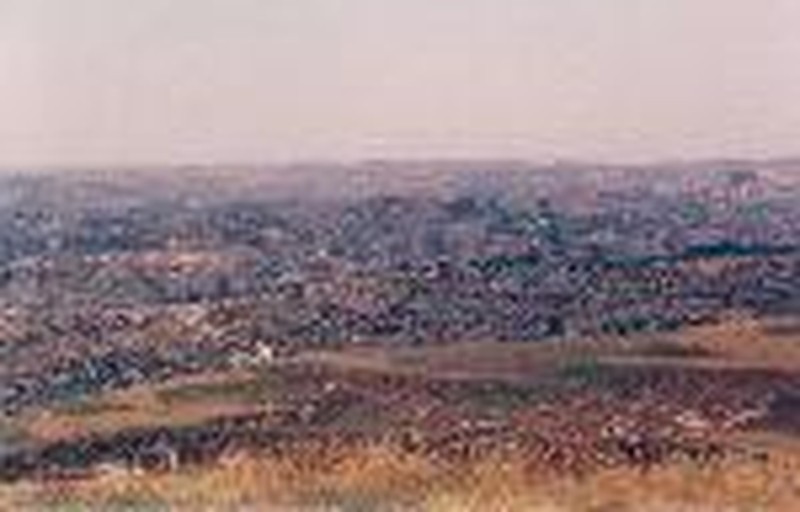
Standing on the patio area of the kibbutz's dining area (a kibbutz is a communal farm or settlement in Israel and a wonderful place to get a warm, delicious meal when you're a pilgrim there), high atop a plateau on the southern end of Jerusalem, we looked down across lush green valleys and fields toward a city we were not allowed to enter, Bethlehem.
Just beyond Bethlehem rose the hills of Moab, rolling like fresh baked bread against a sea of blue sky. Our tour guide, Miriam, pointed to them and said, "Can you imagine Ruth and Naomi, walking along just there, cresting the hills, making their journey toward Naomi's home of Bethlehem?"
Yes, I believe I could....
"And just there," Miriam said to me, "to the left of the outer gates of Bethlehem, are the traditional fields of Boaz where Ruth would have gleaned."
I thought I could see that, too. Ruth the Moabitess, gleaning in the fields of her kinsman-redeemer.
Biblical History
"Ruth the Moabitess," the author of Ruth writes, not once but six times, as though the land from which she hailed was as much a part of her as the name she'd been given at birth. This was for good reason. To come from Moab was, according to Psalm 60:8, to come from the Lord's "wash basin," or, a place with which He would use to wash the dust from His feet.
The people of Moab had descended from the incestuous relationship between Lot (the nephew of Abraham and survivor of the fiery destruction of Sodom and Gomorrah) and his oldest daughter.
"That night they got their father to drink wine, and the older daughter went in and lay with him. He was not aware of it when she lay down or when she got up. ...So both of Lot's daughters became pregnant by their father. The older daughter had a son, and she named him Moab; he is the father of the Moabites of today." ~~Genesis 19: 33, 36-37 (NIV)
Generations later, as the freed-from-slavery Israelites journeyed from Egypt to the Promised Land, they arrived in the plains of Moab, located on the east of Jordan and the Dead Sea, and south of Arnon, and set up camp by the Jordan River.
The king of Moab, Balak, had already gotten wind of the mighty acts of God with these warrior Hebrews and became afraid that they would attack his country as well. He knew his country didn't have a snow ball's chance in July if their army attacked, so he did what any sensible king would do: he called in Balaam, a respected believer in God who, it was thought, had the ability to curse or bless. Balak wanted the people of God to be cursed, but Balaam-having conferred with God-said no-go to the trip.
A second summons and Balaam went; an incident leading to "the talking donkey" story found in Numbers 22. By this, Balaam truly saw the power and glory of the God to whom he served and trusted.
In Numbers 25, we read that immoral relations with the Moabite women "who invited [the Israelites] to the sacrifices to their gods" (Numbers 25:2a) led to the Lord's anger burning against Israel and the deaths of those Israelites who had taken part in pagan worship.
Such was God's disapproval with all that had happened, that in the laws God gave to Moses in Deuteronomy, it was written:
"No...Moabite or any of his descendants may enter the assembly of the Lord, even down to the tenth generation. For they did not come to meet you with bread and water on your way when you came out of Egypt, and they hired Balaam ...to pronounce a curse on you...so do not seek a treaty or friendship with them as long as you live. (Deuteronomy 23:3-6)
Yet, in the truly romantic and gripping story of Ruth, we read of a man from the tribe of Judah named Elimelech, his wife Naomi, and their sickly sons Mahlon and Kilion. While they were living in Bethlehem (House of Bread), the land was struck by famine. It appears that rather than running to God and trusting in His provision, Elimelech and Naomi packed up and left for Moab.
While there, Elimelech died, Mahlon and Kilion married two Moabite women, Orpah and Ruth, and then followed their father to the grave, leaving their mother alone with her two daughters-in-law whom she encouraged to go back to their father's homes, marry, and have children. Heartbroken, Orpah kissed Naomi and left, but Ruth refused to go.
"Don't urge me to leave you or to turn back from you. Where you go I will go, and where you stay I will stay. Your people will be my people and your God my God. Where you die I will die, and there I will be buried. May the Lord deal with me, be it ever so severely, if anything but death separates you and me." (Ruth 1:16,17)
And so these two women returned to Naomi's home of Bethlehem, traveling over the hills of Moab and into a moment that would change biblical history.
It was necessary for Ruth to find work in order to support herself and Naomi. While in route to Bethlehem, we can imagine that Naomi had explained the customs and culture of her people to Ruth, as well as any family history she might need to know. This may have included information about a respected and wealthy man named Boaz, who was related to Elimelech and who owned fields where servants worked.
Ruth came up with an idea to glean in fields -- anyone's fields -- and pick up left over grain so that she and Naomi could eat. This had the potential of being dangerous for Ruth because she was both "the Moabitess" and was a young, and most likely beautiful, woman.
But her love for Naomi was greater than her fear, so off she went. As God would have it, she ended up in the fields of Boaz, the only Old Testament key figure presented without sin (though he surely did).
Because of his relationship with Elimelech, Boaz was actually a "ga'al," or kinsman-redeemer-a man required to take care of the widows of his kin people and who was responsible for marrying a childless widow and give her have a child with her so that the names of each Jewish man would continue. (This is called "levirate marriage." See Deuteronomy 25:5,6)
Boaz saw to it that Ruth's needs (enough grain, etc) were fulfilled but not in a way as to embarrass her. He ensured she would not be injured or compromised by any of the men in the field. Wise Naomi saw the possibilities and encouraged Ruth to go to the threshing floor where Boaz would be winnowing barley. "Put on your best clothes," she said. "And then lie down at his feet." (See Ruth 3:1-4)
Putting on her best clothes meant taking off her widow's clothes. Lying at his feet meant taking on a position of servanthood. When all this had taken place, Ruth more-or-less proposed marriage to the godly Boaz.
"I am your servant Ruth...Spread the corner of your garment over me, since you are a kinsman-redeemer." (Ruth 3:9b)
Boaz was touched by this, blessed her with barley and sent her home until he could "work some things out." With that done, he announced to the city elders that he would marry -- and thereby redeem and make debt-free -- Ruth, who from that time forward, was not called Ruth the Moabitess, but simply "Ruth."
Ruth and Boaz would, in time, have a son named Obed (which means "servant") and Obed would have a son named Jesse...and Jesse would have a son named David, with whom God would enter into covenant saying, "When your days are over and you rest with your fathers, I will raise up your offspring to succeed you who will come from your own body, and...I will establish the throne of his kingdom forever." (2 Samuel 7:12, 13)
As Isaiah later prophesized, "Of the increase of his government and peace there will be no end. He will reign on David's throne and over his kingdom, establishing and upholding it with justice and righteousness from that time on and forever." (Isaiah 9:7)
Falling In
There was a time when, like Ruth, I lived in a "foreign land." Yes, I had been raised as a Christian and yes; I knew all the biblical stories. The history of God's people and the Gospel story were at the forefront of my brain. And although I had "promised myself" to a life of Christianity -- as Ruth had promised to live as a Jewess -- I did not yet intimately know my Kinsman-Redeemer.
Like Boaz, when Jesus saw me "gleaning the leftovers" (for "to glean" was to gather the leftover grain from those working in the field) and barely getting by spiritually, He had compassion on me and saw to it that I was protected and cared for.
Though, like Ruth, I came from a people (the human race) who had rejected Him and sullied the message He had brought to all mankind, He saw in me the potential I had of being a part of His bride, the Church.
For this reason a man will leave his father and mother and be united to his wife, and the two will become one flesh." This is a profound mystery-but I am talking about Christ and the church. (Ephesians 5:31,32)
As Jesus "winnowed on the threshing floor" of my life (to "winnow" is to separate the good grain from the chaff, or worthless covering), there came a time when I took off my worldly clothes of mourning and opted for garments of praise and joy. I found myself at His feet, with a simple request: to be His precious, covenant bride forever.
From that moment on, I was no longer known by what the world might have seen in me, but what Jesus Himself saw in me. I was no longer called "the Moabitess," but instead, "Christian," for I belong now only to Him.
Because of that promise, God has reaped out of His blessings for my life a legacy I could have never imagined, with children and children's children who will one day stand around the Throne of God with men like Boaz and David and women like Naomi and Ruth, and will praise His name forever.
It really doesn't matter where we've come from, you know. What matters is that we move toward the "House of Bread"...the "Living Bread" (John 6:35), gleaning in His fields until He has removed all the old and worthless chaff, because He is our Kinsman-Redeemer.
He's paid the price and purchased my soul.
And this is part of what I learned when I fell into the Bible.
Photo by Eva Marie Everson. Eva Marie Everson is the author of "Shadow of Dreams" & "Summon the Shadows." She is an award-winning national speaker and can be contacted at Bridegroomsbride@aol.com