Root Cellaring: A Complete Unit Study


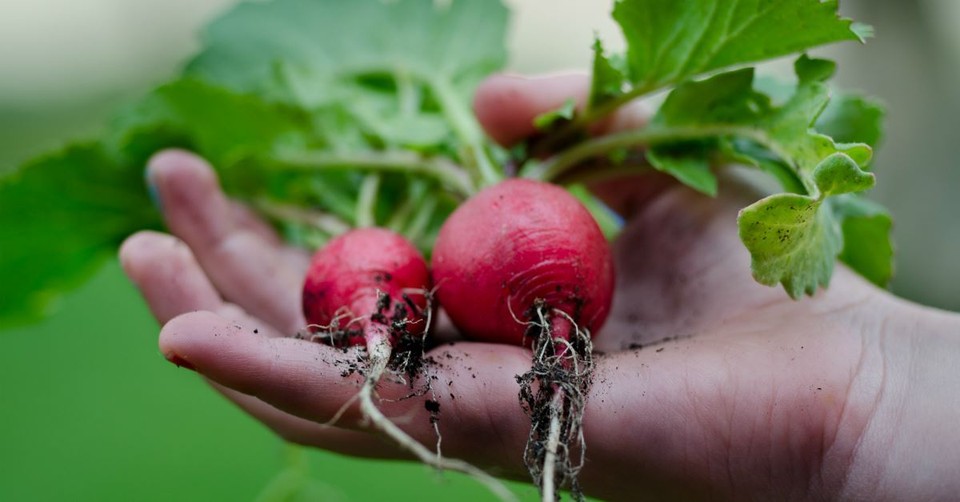
The sun is sitting high in the sky. Its rays reach down to warm your skin. A drop of sweat trickles slowly down your back, but you hardly notice. Your bare toes wiggle deeper into the warm soil as a refreshing fall breeze ruffles your hair. The breeze flows past and flutters the leaves of a nearby tree. A scarlet leaf breaks loose and flutters in the wind. It twirls and dances in dizzying circles until it lands gently in the grass.
Your eyes move from the tree to scan the scene before you. Numerous wooden baskets, lined neatly in a row, wait patiently for you to fill them with the fruits of your labor. Before your eyes is a crop of vegetables, plump, juicy, brightly colored and ready for picking. Your hand tightens around the garden rake with anticipation.
The first thing you touch is the onions. Their once hollowed green spikes are now bent over, dried and yellow. A gentle pass with the rake reveals firm, round onions, ready to be dried and stored for the winter. Ah, you can already taste the generous flavor they'll add to soups and hot dishes.
From there you move on to the rest of the garden. Red, juicy tomatoes. Hard, round pumpkins and green cucumbers are a feast for the eyes. It's harvest time!
But once you gather all those vegetables in baskets, you realize you have enough food in front of you to feed the twelve tribes of Israel! What are you going to do with all this food? You can give some of it away, and you can eat a bunch of it, but there will still be baskets and baskets left over. You certainly don't want to waste what God's given you—you want to be a good steward. Hmmm.
You could can and freeze the excess ... then an idea pops into your head. An idea so brilliant you can hardly believe you thought of it. What if you simply stored your vegetables just as they are? Then you could eat fresh vegetables throughout the winter. It's a genius plan! It's marvelous! It's fantastic!
But ... how do you do it?
Have no fear! Remember that the pioneers stored food all the time. They couldn't have survived without meticulous planning and careful preparations. When they harvested their gardens, they stored their food in root cellars.
A root cellar is simply a storage area. If it is kept dry, ventilated, and warm enough to prevent frost, vegetables can survive throughout the winter and sometimes into the spring. Root cellars can be built completely underground or partially underground in the sides of hills. Some folks have found interesting ways to build their root cellars above ground, as well as making small root cellars in their basements, garages, and even closets. Much of it depends on where they live and how low the temperature drops in the winter.
Even if you don't want to actually build a root cellar of your own, you can still learn some interesting things by planning and researching an imaginary root cellar.
MATH
- When building a root cellar, there are many things to consider. First of all, where are you going to build it? Do you have a small hill you can build into? Could you make a hay bale fortress? What about using that extra space in your garage or porch?
- You'll also need to estimate how big your root cellar will be. How many people are in your family? How many pounds of potatoes, barrels of apples, or crates of carrots will you need to take you through the winter? Make sure your cellar is big enough for all the vegetables you plan to store.
- What about the temperature? Carrots, parsnips, broccoli, brussels sprouts, and celery like to be cool and very moist. Thirty-two to forty degrees Fahrenheit and 90-95% relative humidity will give these vegetables a perfect place to live during those winter months. Pumpkins, squash, and sweet potatoes like it much warmer and drier; about 50-60 degrees F and 60-70% relative humidity. How will you make your root cellar keep that constant temperature? Perhaps you'll want to build more than one.
- Once you've decided on the place to build and how much food you want to store, you'll have to commence making the cellar. Draw a rough diagram of your cellar, inside and out. When considering the inside, you'll want to have an idea about the containers you'll be using. Are you going to use pails, wooden crates, baskets? How much space will each container use? How wide should you make your shelves? How much space will you need between each shelf?
ACTIVITIES
Make the building and organizing of your root cellar a fun event. Perhaps you want to plan what you'll put in your root cellar before you decide to build it. Gather recipes that you and your family enjoy in the winter and find out what fruits or vegetables you'll need. Look through seed catalogs and find vegetables that store well. Try a few fun varieties like the purple carrot. Have fun at garage sales and flea markets, looking for wooden crates and baskets for storage.
BIBLE
God gave us everything we need to eat when He created the world. Copy these verses in your notebook to remind yourself of God's sovereignty.
"And God said, Behold, I have given you every herb bearing seed, which is upon the face of all the earth, and every tree, in the which is the fruit of a tree yielding seed; to you it shall be for meat. And to every beast of the earth, and to every fowl of the air, and to every thing that creepeth upon the earth, wherein there is life, I have given every green herb for meat: and it was so. And God saw every thing that he had made, and, behold, it was very good. And the evening and the morning were the sixth day." Genesis 1:29-31
"He causeth the grass to grow for the cattle, and herb for the service of man: that he may bring forth food out of the earth . . ." Psalm 104:14
Storing our food is a useful idea. However, we must be careful. God wants us to be wise in how we think about and store our food. Include this verse in your notebook as a reminder to be a good steward.
"And he spake a parable unto them, saying, The ground of a certain rich man brought forth plentifully: And he thought within himself, saying, What shall I do, because I have no room where to bestow my fruits? And he said, This will I d I will pull down my barns, and build greater; and there will I bestow all my fruits and my goods. And I will say to my soul, Soul, thou hast much goods laid up for many years; take thine ease, eat, drink, and be merry. But God said unto him, Thou fool, this night thy soul shall be required of thee: then whose shall those things be, which thou hast provided? So is he that layeth up treasure for himself, and is not rich toward God. And he said unto his disciples, Therefore I say unto you, Take no thought for your life, what ye shall eat; neither for the body, what ye shall put on. The life is more than meat, and the body is more than raiment. Consider the ravens: for they neither sow nor reap; which neither have storehouse nor barn; and God feedeth them: how much more are ye better than the fowls?" Luke 12:16-24
Can you find more verses?
READING
Unfortunately there are only a few books out there that teach about root cellars. One of my favorites is Root Cellaring by Mike and Nancy Bubel. This book tells all about the natural cold storage of fruits and vegetables. The pencil-drawings and photographs of root cellars are sure to spark your own building plans. Also try Build Your Own Underground Root Cellar by Phyllis Hobson and Diary of an Early American Boy: Noah Blake 1805 by Eric Sloane.
Some helpful Web sites include:
- https://waltonfeed.com/old/cellars.html
- https://www.organicgardening.com (Type "root cellar" into their search engine)
SCIENCE
- Part of planning a root cellar is planning your garden. Begin by making a list of the vegetables and fruits you want to include in your root cellar. Find out what each vegetable needs to promote healthy growth. Most vegetables can be planted several times or planted in the same area another vegetable was harvested from. For example, the nitrogen left in the soil from peas and beans is beneficial to cabbages and kale. Parsnips and brussels sprouts have the best flavor after a light frost. Each vegetable has its own needs, and each has a peak harvesting period.
- Don't forget the flowers during the growing season! Flowers? Yep. If you are growing cucumber, pumpkins, or strawberries, you'll need bees to pollinate. Plant nectar-producing flowers like borage, sunflowers, and clover around them. Chrysanthemums help reduce nematodes, especially when planted with tomatoes. Geraniums are known to deter cabbageworms, corn earworms, and Japanese beetles. What a wonderful way for God to take care of our vegetables and give us a thing of beauty at the same time!
- Once you've harvested, you'll have to plan where to store your vegetables in your root cellar. For example, you'll want to keep your apples and potatoes away from each other as the apples give off a gas which encourages potatoes to sprout.
- You can also study why the lower temperatures and higher humidity of a root cellar preserves fruits and vegetables. What happens if the food gets too cold or hot, or too wet or dry?
- Although root cellars are for fruits and vegetables, are there methods that can be used to preserve other foods? Are there some foods that don't require any preservation?
HISTORY
Do some research to see if you can learn about different food preservation and storage techniques that have been used throughout history.
VOCABULARY
There is a little bit of lingo that goes along with root cellars. Do you know some of these words? Biodiversity, interplant, decay, mulch, ventilation, compost, humidity, bushel, frost, circulation, condensation, ripe, temperature.
God takes care of all our needs. Springtime and harvest, summer and winter.
-------------
Paula Miller is a children's author, freelance writer, and homeschooling mom. She and her husband Travis live in south central Minnesota with their 4 sons. You can read more about Paula's Faces in History Series for children 7 and up by visiting www.paulajmiller.com
This article was originally published in the Sep/Oct '07 issue of Home School Enrichment Magazine. For more details, visit https://HomeSchoolEnrichment.com
Photo Credit: ©Pexels/Skitterphoto
Originally published May 14, 2019.