



E-MAIL NEWSLETTERS


There was an error processing this request. We cannot subscribe you to newsletters at this time. Please contact technical support with details.
Featured Sponsors
HOMESCHOOL Sponsorship

AVERAGE USER RATING

RATE THIS ARTICLE

  • Email
  • Print
  • Discuss
Search The Bible   
Advanced Search
Product photo

How to Combine Subjects

Lorraine Curry

Contributing Writer

Combining subjects can be a most efficient homeschooling technique. Instead of five to eight separate time slots, you can spend bigger blocks of uninterrupted time on one topic while covering most subjects. Here are some ideas.

History

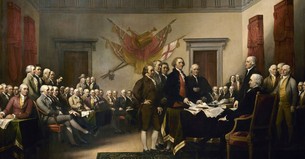
  • McMurray says, "the chief use of history is to form moral notions in children." History's primary purpose is not to pump facts and figures into the child, but to teach morals by example. The study of men is also a study of morals. Each story (each action) demands a moral judgment. Did he do right? Was that the wrong decision? What were the consequences of that action? History teaches what heart-qualities the person had, and inspires the child to similar greatness of character. The study of history can be combined with language arts, fine arts, penmanship, home economics, science, travel, geography, Bible and speech.
    Fine Arts, Penmanship. Read history (or science) while your children are doing penmanship or a detailed art lesson. ~ Borrow art videos and other materials about the period you are studying from your public library, or from the National Gallery of Art. ~ Purchase inexpensive project booklets on different periods of history (Kids Art). ~ While children are working on art projects, read biographies of artists from the period you are studying. ~ Create a time line. Get ends of newsprint rolls from your local newspaper. Draw a wavy horizontal line with a wide marker. Label each hill and valley with a year thirty years apart (1630, 1660, etc.) leaving enough space for the events of those thirty years (about 18-24 inches). Have your children draw a picture of each historical figure or event studied with colored markers, including the date of his or her life, or the date of the event.
  • Home Economics. Children can do needlework while you or another child is reading aloud. You can do crafts from the period in history that you are studying.
  • Science. You can veer from history into scientific topics or personalities. We have done this during our Renaissance study by reading about the astronomers, da Vinci and Galileo. Your older children could research and write a paper on astronomy or the scientists.
  • Travel. Visit historical sites. Have your children journal about what they have learned. Take photographs or do sketches for a scrapbook to be completed at home.
  • Geography. Always look up the place that you are learning about on a map or globe.
  • Bible. Study Bible history to learn God's will and His ways along with ancient and creation history.
  • Language Arts. Read aloud and then dictate some of the more memorable passages. (See "Spelling," below, for dictation instructions.)
  • Speech. Have your older children read history aloud, practicing the speech skills of enunciation, projection, emphasis and pronunciation. ~ Famous speeches or other historical documents (such as the Gettysburg Address) can be memorized. Take several days or even weeks to memorize longer passages. Speech skills can also be practiced reciting memorized Bible verses.

How to Memorize

1 | 2 | 3 | Next | All
Most Recent User Comments
Be the first to comment on this article!
Sign up to post your comments

It's quick and easy to register with Crosswalk.com! Just fill out the short form below. You'll have the opportunity to post comments, and be more involved in our community and forums. Plus, with this one account, you can sign in anywhere in our network of sites displaying the Salem All-Pass logo, including Oneplace.com, Christianity.com, Lightsource.com, Crosscards.com, and more!