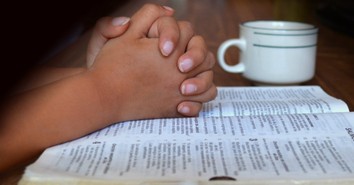





The first thing I did was to change our school day. Instead of pulling out the math books first, we sat on the couch and I read aloud from the Bible. My children complained at first that they were sick of Bible stories, having attended Sunday School their whole lives, which was why I chose the Bible itself over a book of Bible stories.
Every day we read a section of the Gospel of John (usually less than one chapter), and then we talked about it. Some days we would get into deep theological discussions, and some days my children would come up with surprising applications from their own lives. My visually-oriented child insisted on sitting next to me, following along, while my kinesthetic jumping bean of a child needed to lie on the floor and draw as I read. Some days it took less than half an hour to read the passage and talk about it, and then we were on to academics; other days inspiration would hit and we would jump up and act out a scene or a parable, or draw pictures about what we’d read, or speak at length about what-if situations or real-life situations, hammering out what our responses should be.
When we finished the book of John, my children begged for more of the story of the gospel, so we moved on to Acts. After that we went through Genesis and Exodus, and they were amazed to discover that the Bible stories with which they were so familiar really were there in the Bible. Hearing the stories come out of our readings of the actual text gave them greater understanding than they had had before and they started to see how it fit together.
Next I added a Bible verse memorization program designed specifically for elementary-aged kids. Each week we focused on one verse and read passages from the Bible that applied to the concept in it. As they started memorizing verses about not complaining, not arguing, working hard, telling the truth, respecting authority and many other concepts important to their day-to-day lives, I noticed a change in their behavior. It wasn’t overnight, and it wasn’t immediately dramatic, but a change did indeed occur. They even surprised me sometimes by quoting a verse when they were explaining why they had made a particular decision to behave well or be obedient.
One year I typed 1 Peter 2:5-7 into a word processing program and blew the type up so big that one landscape page had only a word or two on it. We read the verses and talked about them first, and then I printed out two pages per week, amounting to only three or four words. Each child decorated their page to their taste (which resulted in some rather interesting artwork that unfortunately often had nothing to do with the words). I also showed them how to pick apart the meaning of the words using an exhaustive concordance. To this day they remember that the word "goodness" in that verse is also translated as "virtue" and means doing a hard job well because it’s the right thing to do, in the sense of soldiers going off to war to protect their country. We taped the pages in order around the top of our dining room walls, and every guest for dinner that year would spend the meal reading about goodness, brotherly kindness, perseverance and other virtues (and undoubtedly wondering what spaceships had to do with self-control).