




Home education is never conventional. Any parent who has accepted the immense challenge of instructing his children at home is familiar with this truth. It’s one of the stumbling blocks parents often encounter when they are deciding whether to homeschool or place their children in public or private institutions. Many of these questions arise: How can my children properly learn outside the confines of a traditional classroom atmosphere? How can they receive a decent education without the care and attention of a college degree-bearing professional? How can home education prepare my children for a world in which most individuals receive their education through public institutions?
Such questions are commonly raised by parents who have reservations about the unconventional nature of homeschooling. To them, the method goes against the flow of what our society accepts as correct and incorrect educational experiences. But what such parents fail to realize when debating whether to continue teaching their children at home or commit them to the public education system is that unconventionality is oftentimes a good thing, especially when it means going against the flow of what secular culture considers acceptable.
That has been the story of my homeschool experience. Guided by parents who devoted years and years to instructing my brother and me, I learned during my educational sojourn that doing things differently is not an evil to be avoided at all costs but a method that opens up great possibilities. While many public and private schools maintain a rigid schedule that makes learning a chore, home education recognizes that no two children learn alike and offers the chance to institute a loosely structured environment in which gaining knowledge is actually enjoyable.
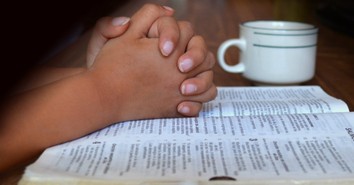
But more importantly, home education creates a setting where parents can truly teach the most critical educational curriculum their children will ever learn—the message of Jesus Christ. It is not a message heard for one hour on Sunday morning; it is not a standard played out by a 10-second prayer before meals. It is an ongoing evangelizing effort that seeks to fulfill the words of Deuteronomy to instruct children in the ways of God "when thou sittest in thine house, and when thou walkest by the way, and when thou liest down, and when thou risest up."
That’s the core of home education. Like the Puritans fleeing religious persecution in the seventeenth century, the pioneers of the homeschool movement largely objected to public education because of its unvarying conformity to the ways of secular culture. In the beginning, home education was not necessarily about achieving better standardized test scores or winning a national spelling bee. Instead, it was focused on creating an atmosphere in which children were free to express their religion without being reprimanded and learn about the Bible without being persecuted. In essence, the movement was about going against the flow—not in a rebellious fashion, but in a way that honored God and upheld His ways.