Who is Jesus?


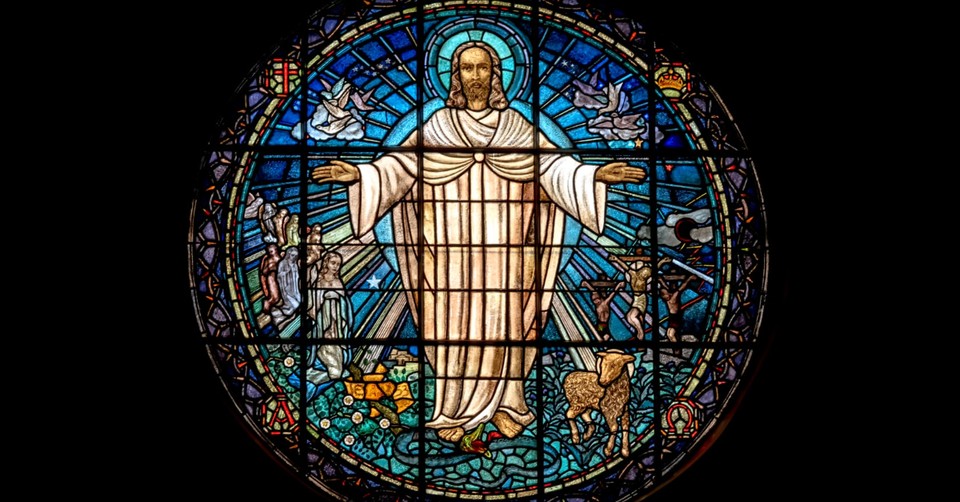
Christ the Messiah… The Prince of Peace… The Word made Man… Savior and Lord… The King of Kings… The Lion of Judah… The Lamb of God
When Christians answer the question “Who is Jesus Christ?” they build their answer on the Bible – on things Jesus said about Himself, on prophecies from the Old Testament that foretold His coming, and the doctrines laid out about Jesus Christ and His Church through the rest of the New Testament.
There is little historical question that Jesus Christ existed, but people do often wonder about His divine nature, His miracles, and God’s offer of eternal salvation by grace through Jesus Christ “first to the Jew and also to the Gentile” (Romans 1:16)… in other words, to all mankind who would believe.
Because the love that Jesus offers comes in the form of a “personal relationship” with Him, many believers have particular definitions about who Jesus Christ is to them. We want to give you the Biblical basics about this amazing, paradoxical Savior who purports to be simultaneously the Son of God and Son of Man.
The gospel of Jesus is literally “good news,” so we hope you enjoy exploring the miracle and wonder of what the God of all creation did for you through His Son.
Table of Contents
- Who Jesus Said He Was
- Old Testament Prophecies About the Messiah
- How the New Testament Answers "Who Is Jesus?"
- The Humanity of Jesus
- Who Killed Jesus?
- Who Jesus Is Not
- Timeline of Jesus' Life, Death, and Resurrection
- The Need for Jesus: Taking the Next Step
- Salvation - The Reconnection to God
Let’s begin our study on the identity of Jesus Christ in the Gospel of Matthew, Chapter 16, where the Lord put the very question to His own disciples:
When they came to the area of Caesarea Philippi, he asked his followers, "Who do people say the Son of Man is?" They answered, “Some say you are John the Baptist. Others say you are Elijah, and still others say you are Jeremiah or one of the prophets.” Then Jesus asked them, “And who do you say I am?” Simon Peter answered, “You are the Christ, the Son of the living God.” Jesus answered, “You are blessed, Simon son of Jonah, because no person taught you that. My Father in heaven showed you who I am.” (Matt. 16:13-17)
The same questions are being asked to this day: Who does everyone else say Jesus Christ is, but then, who do you say He is? You must ultimately decide. It is the most important question to settle during your lifetime, for reasons we’ll examine shortly.
The New Testament book of Hebrews is another source that attempted to answer the same question. As the Ryrie Study Bible states, “The theme of the book is the superiority of Jesus Christ and thus of Christianity.” Superior to what? Among other things: prophets, angels, Moses/The Law, priests, and other powers. In other words, Jesus Christ is supreme among any thing or any one – even things and people that issue from or are beloved of God. “For this reason we must pay much closer attention to what we have heard, lest we drift away from it,” says Hebrews 2:1 about the nature of the Messiah’s identity. This is why even Christians continually study these precepts; it is not merely skeptics, seekers, and unbelievers who benefit from asking the question, “Who is Jesus Christ?”
The Apostle Paul, before his conversion, was known as Saul, a very legalistic Jew who persecuted Christians… until he was confronted with the answer to our question in a most dramatic way, a way that changed his life and the course of history (read about it in Acts Chapter 9). After that, Paul would often refer to himself as a “bond-servant of Christ Jesus,” someone little more than a voluntary slave, but one sharing in the same servitude. In Philippians 1:21, he expresses his secure devotion to the Lord as well as gives another clue towards answering our question when he writes: “For to me, to live is Christ, and to die is gain.”
You see, finding the answer can be jarring, topsy-turvy, and life-altering. It can also fill what has always seemed to be missing inside you since the Father sent His Son to reconcile you to your original purpose – communion with a wonderful, holy Creator. So as you pursue knowledge of the Savior, consider yourself joyfully warned.
Who Jesus Said He Was
1. He claimed to be the Son of God, equal with God, and with authority from the Father
“Then they all said, ‘Are You then the Son of God?’ So He said to them, ‘You rightly say that I am’” (Luke 22:70).
“For whoever does the will of My Father in heaven is My brother and sister and mother" (Matthew 12:50).
“Jesus came and spoke to them, saying, ‘All authority has been given to Me in heaven and on earth’” (Matthew 28:18).
“Therefore the Jews sought all the more to kill Him, because He not only broke the Sabbath, but also said that God was His Father, making Himself equal with God” (John 5:17-22).
Bear in mind that while a man claiming to be God is a radical thought, Jesus is the only leader of a world religion to have made the claim – not to mention backed it up. How?
2. He claimed to live a sinless life.
“Can any one of you convict me of a single misleading word, a single sinful act? But if I'm telling the truth, why don't you believe me?” (John 8:46, The Message).
Jesus had the ability to sin; if He weren’t able to sin, He could not have been tempted genuinely and would be unable to be our sympathetic High Priest (Hebrews 4:15). When He was tempted, He always rebuked the thought with scripture.
Because He didn’t sin, God was able to accept His sacrifice. 1 Peter 3:18 says, “Christ also suffered once for sins, the just for the unjust, that He might bring us to God, being put to death in the flesh but made alive by the Spirit.”
3. He claimed to be the one and only way to God.
“I am the way, the truth, and the life. No one comes to the Father but by me” (John 14:6).
It’s also interesting to note that Jesus did not call himself the destination, but the way, indicating that our Christian walk is a journey.
4. He claimed He had the power to forgive sins and provide everlasting life
“Jesus said to her, ‘I am the resurrection and the life. He who believes in me will live, even though he dies; and whoever lives and believes in me will never die” (John 11:25).
“When Jesus saw their faith, He said, ‘Friend, your sins are forgiven.’ The Pharisees and the teachers of the law began thinking to themselves, ‘Who is this fellow who speaks blasphemy? Who can forgive sins but God alone?’” (Luke 5:20-21).
"For my Father's will is that everyone who looks to the Son and believes in him shall have eternal life, and I will raise him up at the last day." John 6:40
“I tell you the truth, he who believes has everlasting life.” (John 6:47).
5. He predicted his own death and resurrection.
“Jesus took the Twelve aside and told them, ‘We are going up into Jerusalem, and everything that is written by the prophets about the Son of Man will be fulfilled. He will be handed over to the Gentiles. They will mock him, insult him, spit on him, flog him and kill him. On the third day he will rise again’” (Luke 18:31-33).
6. He’s said He would come back.
Matthew 24:27-30 "So as the lightening comes from the east and flashes to the west, so will be the coming of the Son of Man... At that time the sign of the Son of Man will appear in the sky, and all the nations of the earth will mourn. They will see the Son of Man coming on the clouds of the sky, with power and great glory."
Mark 14:61-62 "Again the high priest asked him, 'Are you the Christ, the Son of the Blessed One?' 'I am,' said Jesus. 'And you will see the Son of Man sitting at the right hand of the Mighty One and coming on the clouds of heaven.'"
Jesus clearly knew He was the Lamb of God, the Messiah spoken of in the Old Testament. He knew He had to live a life without sin, no matter what. When He returns, He will judge the sins of the world… except for those who have already acknowledged conviction, entered a plea of guilty, and sought His mercy by believing on Christ.
Old Testament Prophecies About Jesus Christ
- "He was wounded for our transgressions; He was bruised for our iniquities: the chastisement of our peace was upon Him; and with His stripes we are healed." (Isaiah 53:5, KJV)
- "The stone which the builders rejected has become the chief cornerstone." (Psalm 118:22, NAS)
- "He will swallow up death for all time, and the Lord God will wipe away tears from all faces, and He will remove the reproach of His people from all the earth." (Isaiah 25:8, NAS)
The Old Testament was completed hundreds of years before Jesus was born. A large number of prophecies were made in astonishing detail by many people throughout these books. In fact, fulfilled prophecy is one of the distinguishing marks of the Bible, authenticating its claim to be the inspired Word of God.
For example, the Old Testament indicated Jesus would be betrayed by someone he trusted. "Even my close friend whom I trusted, he who has shared my bread, has lifted up his heel against me" (Psalm 41:9). The New Testament, which records Jesus' life and resurrection, reveals that one of the 12 people Jesus chose to be part of his inner circle betrayed him: "Then Judas Iscariot, one of the Twelve, went to the chief priests to betray Jesus to them" (Mark 14:10).
More than 300 Messianic prophecies like this were made in the Old Testament and then fulfilled through Jesus' life, death and resurrection. The chances of one person fulfilling a mere eight of these prophecies are one-in-100,000,000,000,000,000. For one person to fulfill 48 of these prophecies, the number becomes staggering – one chance in 10-to-the-157th power. Add to that the 250 other prophecies, and it becomes impossible for any other person except Jesus ever to fit that particular sequence of time and events. Excerpted from whoisjesus-really.com)
A few examples:
Messiah to be born of a virgin: Prophesied – Isaiah 7:14; Fulfilled – Matthew 1:18-25
Messiah to be accursed and crucified: Prophesied – Deuteronomy 21:22-23, Psalm 22, Psalm 69:21; Fulfilled – Matthew 27:34-50; John 19:28-30, Galatians 3:13
Messiah to be raised from the dead: Prophesied – Psalm 16:10; Fulfilled – Acts 13:35-37
For a more thorough discussion of Messianic prophecies fulfilled by Jesus, visit greatcom.org.
The New Testament Answers "Who Is Jesus?"
“So Jesus tried again. ‘When you raise up the Son of Man, then you will know who I am - that I'm not making this up, but speaking only what the Father taught Me. The One who sent Me stays with Me. He doesn't abandon Me. He sees how much joy I take in pleasing Him’” (John 8:28-29, The Message).
“In the beginning was the Word, and the Word was with God, and the Word was God. He was in the beginning with God. All things came into being by Him, and apart from Him nothing came into being that has come into being” (John 1:1-3, NAS).
“For God so loved the world that he gave his only Son, so that everyone who believes in him will not perish but have eternal life” (John 3:16, NLT).
From The Book of Acts
The Book of Acts describes how Christianity moved from being seen as a sect of Judaism into a world religion because the spirit of God moved into the lives of those who had witnessed Jesus and who now carried His message of salvation into all the world.
At Pentecost, Peter preaches, “Let all the house of Israel know for certain that God has made Him both Lord and Christ – this Jesus whom you crucified” (Acts 2:22-36).
From Paul’s Letters
The Apostle Paul wrote numerous letters to the churches he helped establish in southern Europe and Asia Minor, helping to answer questions or solve disputes over Christian theology.
“Therefore having been justified by faith, we have peace with God through our Lord Jesus Christ” (Romans 5:1).
“For no man can lay a foundation other than the one which is laid, which is Jesus Christ” (1 Corinthians 3:11).
“Just as the sufferings of Christ are ours in abundance, so also our comfort is abundant through Christ” (2 Corinthians 1:5).
“It was for freedom that Christ set us free” (Galatians 5:1).
“Husbands, love your wives, just as Christ also loved the church and gave Himself up for her” (Ephesians 5:25).
“Have this attitude in yourselves which was also in Christ Jesus, who, although He existed in the form of God, did not regard equality with God a thing to be grasped, but emptied Himself, taking the form of a bond-servant, and being made in the likeness of men” (Philippians 2:5-7).
“And He is the image of the invisible God, the first-born of all creation” (Colossians 1:15).
From The Book of Hebrews
The Book of Hebrews is about the superiority of Christ – over prophets, angels, Moses, and priests. He made Himself our High Priest, so that we can all become priests with our own access to the Father.
“God… has spoken to us in His Son, whom He appointed heir of all things” (Hebrews 1:1-2).
From The Book of Revelation
“Jesus Christ, the faithful witness, the first-born of the dead, and the ruler of the kings of the earth” (Revelation 1:5).
From Demons
“Suddenly they cried out, saying, "What have we to do with You, Jesus, You Son of God? Have You come here to torment us before the time?" (Matthew 8:29, NKJV)
The Humanity of Jesus
It was one of Jesus’ favorite ways to refer to Himself. He’s quoted 85 times in the King James Version of the New Testament, calling Himself the “Son of Man.” Here are some of His human characteristics:
- Born in Bethlehem into a poor family where the mother, Mary, was a virgin. Both she and Joseph, the “step-father” were of the line of David and the tribe of Judah, fulfilling prophecies from Micah 5:2, Genesis 3:15, Isaiah 7:14, Genesis 49:10, Psalm 132:11, Jeremiah 23:5, and Isaiah 11:10.
- A Jew who grew up in Nazareth, He learned carpentry from his earthly father, “grew in wisdom & stature, and in favor with God and man,” (Luke 2:52), and began a ministry throughout Israel at age 30.
- The cousin of John the Baptist, who proclaimed the coming of the Messiah.
- Was baptized by John at the beginning of His ministry, at which point a voice from the heavens proclaimed, “Thou art My beloved Son; in Thee I am well-pleased.” (Luke 3:22, NAS)
- He was tempted by Satan in the wilderness for 40 days, at which time He fasted and prayed and resisted temptation by quoting scripture.
- He was misunderstood by His family and those of His hometown.
- The half-brother of James, who authored the Book of James and was a leader of the early church.
- After ministering, healing, and teaching for three years, He was crucified outside Jerusalem during the feast of Passover by the Romans at the demand of Jewish religious leaders.
- He had human needs to eat, drink, and sleep.
- Showed human emotions of love, happiness, sadness, and anger… but not fear, hatred, or pride.
"And the Word became flesh and dwelt among us, and we have seen his glory, glory as of the only Son from the Father, full of grace and truth." (John 1:14)
The Significance of Christ’s Humanity
Living on earth for 33 years, Jesus experienced every temptation you and I face, which is why “the Lord knows how to rescue the godly from temptation” (2 Peter 2:9). He also showed us how to model our behavior. 1 Peter 2:21 says, “Christ also suffered for you, leaving you an example for you to follow in His steps.”
So, He knows what we go through. A god-savior could forgive sins but would not be able to relate to the sinners. A man-savior would be able to relate to humanity but would not have the authority or power to forgive sins or return from the dead. It was necessary that Jesus be both.
In doing so, he became “the New Adam.”
“For as in Adam [the first man, through whom sin entered the world] all die, so also in Christ all shall be made alive. So also it is written, ‘The first man, Adam, became a living soul.’ The last Adam became a life-giving spirit” (1 Corinthians 15:22, 45; NAS).
"Since the children have flesh and blood, he too shared in their humanity so that by his death he might break the power of him who holds the power of death—that is, the devil— and free those who all their lives were held in slavery by their fear of death." (Hebrews 2:14-15)
Who Killed Jesus?
With the release of the film The Passion of the Christ, this question again became something of an issue. Was Pilate responsible? Was Rome? Was it the Sanhedrin or the entire Hebrew Nation? Or did you and I kill Jesus?
Yes. And no. First, He’s not dead. Upon His death, He descended into Hell, where He took the keys and ministered to the dead. After three days, He came back to life, and not as a spirit, but with flesh and bones. When, after 40 days, He left His followers again, He ascended into Heaven, where He sits at the right hand of the Father until the time comes when He will return.
Second, Christ offered Himself up as a sacrifice, which is why we are to daily offer up ourselves as “living sacrifices” (Romans 12:1). With armies of angels and the power of the heavens at His command, would it have been possible to hang the Son of God on a cross without His permission? What’s more, how awful would it be for us now had nobody “killed” Jesus? We required His perfect blood to wash our sins away. “Without the shedding of blood there is no forgiveness” (Hebrews 9:22, HCSB).
Therefore, to blame any individual or group for “murdering” Jesus is incorrect and a dishonor to His sacrifice.
"This Jesus, delivered up according to the definite plan and foreknowledge of God, you crucified and killed by the hands of lawless men." (Acts 2:23)
Who Jesus Is Not
Jesus was not simply a good moral teacher. How, in the name of logic, common sense, and experience, could an impostor -- that is, a deceitful, selfish, depraved man -- have invented and consistently maintained from the beginning to end, the purest and noblest character known in history with the most perfect air of truth and reality? How could He have conceived and successfully carried out a plan of unparalleled beneficence, moral magnitude, and sublimity and sacrificed His own life for it in the face of the strongest prejudices of His people and age? (Philip Schaff, The Person of Christ. New York: American Tract Society, 1913, 94-95)
C.S. Lewis, one-time atheist and author of The Chronicles of Narnia put the dilemma this way:
"A man who was merely a man and said the sort of things Jesus said [about Himself] would not be a great moral teacher. He would either be a lunatic -- on a level with the man who says he is a poached egg -- or else he would be the Devil of Hell. You must make your choice. Either this man was, and is, the Son of God; or else a madman or something worse. You can shut Him up for a fool, you can spit at Him and kill Him as a demon, or you can fall at His feet and call Him Lord and God. But let us not come away with any patronizing nonsense about His being a great human teacher. He has not left that open to us. He did not intend to." (Mere Christianity)
Jesus would have to have been lying or insane (not the qualities of a good moral teacher) to call Himself the Son of God and the Savior of mankind if it weren’t true.
Therefore, to separate what is comfortable about Jesus – His kindness, His message of unconditional love, His healing of the sick – from that which is less comfortable (He was born of a virgin, He claimed to be God, He rose from the dead) isn’t really possible.
There are four options open to a person dealing with Jesus. You may consider Him: a legend, a liar, a lunatic, or Lord and God.
Jesus was/is not a political deliverer. This is one reason some Jews of Jesus’ time could not believe He was their Savior – He didn’t deliver them from the oppression of their Roman occupiers. He never actually intended to. The deliverance Christ offered and still offers today is of a spiritual nature, reconciling mankind to God (Matthew 11:27). The peace this Messiah brings is internal. His hope is for each human to be restored to a relationship with God, which sin has broken.
Timeline of Jesus' Life, Death, and Resurrection
Preparatory Period (4 B.C.-26 A.D.)
- Birth of Jesus (4 B.C.)
- Jesus in the Temple (8 A.D.)
- Life in Nazareth (8-26 A.D.)
Early Ministry, Judea (26-27 A.D.)
- Baptism of Christ, Temptation in the Wilderness, First Disciples.
- Visit and Wedding at Cana and Capernaum.
- First Passover, Nicodemus.
Period of popular favor: Galilee (27-29 A.D.)
- John imprisoned; Samaria; Galilee.
- Rejection at Nazareth.
- Twelve chosen.
- Sermon on the Mount.
- Tours through Galilee; Parables and Miracles.
- Five thousand fed. The Bread of Life.
Period of Opposition; Galilee, Judea, and Perea (29-30 A.D.)
- The Great Confession; the Transfiguration.
- Departure from Galilee; the Seventy sent out.
- Lazarus raised; retirement to Perea.
- Return to Jerusalem; teachings on the way; Jericho, Zacchaeus; arrival at Bethany.
The Final Week; Jerusalem (30 A.D.)
- Triumphal entry.
- Teaching and controversies in the Temple.
- Greeks at the feast; Discourse on the Last Days.
- The Passover; the Last Supper; Gethsemane.
- Arrest; Trial; Crucifixion; Burial.
Resurrection and Ascension (30 A.D.)
- Resurrection; appearances to the Disciples.
- Meetings with the Disciples in Galilee; forty days.
- The Ascension.
Excerpt taken from A Guide to Bible Study by J. W. McGarvey (public domain).
Christian Terms and Definitions of Christ
JESUS – literally, “God saves.” In the original Hebrew, the name is Yeshua, “salvation,” and/or “The Lord who is salvation.” It is the name the Angel of the Lord told Joseph to bestow upon Him (Matthew 1:20-21). And there is power in the name: “And being found in appearance as a man, He humbled Himself and became obedient to the point of death, even the death of the cross. Therefore God also has highly exalted Him and given Him the name which is above every name, that at the name of Jesus every knee should bow, of those in heaven, and of those on earth, and of those under the earth, and that every tongue should confess that Jesus Christ is Lord, to the glory of God the Father” (Philippians 2:8-11, NKJV).
CHRIST – Not His last name. It’s a Greek title meaning "Anointed Messiah."
It denotes that He was… consecrated to his great redemptive work as Prophet, Priest, and King of his people… To believe that ‘Jesus is the Christ’ is to believe that He is the Anointed, the Messiah of the prophets, the Savior sent of God, that He was… what He claimed to be. This is to believe the gospel, by the faith of which alone men can be brought unto God. That Jesus is the Christ is the testimony of God, and the faith of this constitutes a Christian (1 Corinthians 12:3; 1 John 5:1). (Easton’s 1897 Bible Dictionary).
MESSIAH – The deliverer whose coming was foretold by the prophets of the Old Testament. Jews still await the coming of their Messiah today.
SALVATION – The condition of being redeemed by faith, saved by grace from an eternity of damnation. Salvation is also the belief that the death and resurrection of Christ accomplished:
- Substitution – Christ sacrificed Himself in the place of sinners, just for unjust
- Redemption – He paid the price of sin for each individual who accepts it
- Reconciliation – Man is no longer alienated from God
- Propitiation – God is satisfied with the sacrificial death of His perfect lamb as payment for sin
- The fulfillment/completion of Mosaic Law
The Need for Jesus: Taking the Next Step
The Problem: Holy God and sinful man - "For all have sinned and fall short of the glory of God." Romans 3:23
"The wages of sin is death, but the free gift of God is eternal life in Christ Jesus our Lord." Romans 6:23
The word “sin” is used in a lot of ways, but the essential meaning and result of sin is separation from God since it involves pride -- man thinking more highly of his own ways than God’s. Without Jesus, His sacrifice and resurrection, connecting to God is not possible because of sin. We all have sinned, the results of which are death and an eternity separated from God. Since God is Holy, there can be no imperfection in His presence.
But death was not God’s plan for us. Abundant and eternal life (John 10:10) is what Jesus came to bring.
Why? Because even though man was broken and earth given over to evil, God never stopped loving us. Romans 5:8 says, "But God showed His great love for us by sending Christ to die for us while we were still sinners."
Salvation - The Reconnection to God
Nothing but Jesus could have permanently fixed the problem – it was a gap that could not be bridged. Your best work just can’t get you to Heaven. Even if you could somehow achieve a score of 99 out of 100 in life, you’d still need a sacrificial savior to make up the difference and pay off your debt. That’s the difference between Grace and the Law. James 2:10 says, “For whoever keeps the whole law and yet stumbles in one point, he has become guilty of all.”
However, “God saved you by His special favor when you believed. And you can't take credit for this; it is a gift from God. Salvation is not a reward for the good things we have done, so none of us can boast about it.” (Ephesians 2:8-9, NLT). You can’t earn a gift – it’s an unmerited favor. You do, however, have to make the choice to accept it.
So, we all, as sinners, have to turn to God for forgiveness of sin and trust that Jesus died to give us new life so that we may be “born again” (John 3:3; 1 Peter 1:23).
Faith is the key. It’s the cause and effect of our hope for salvation. If there is truly “no other name under heaven that has been given among men, by which we must be saved” (Acts 4:12), then your acceptance of God’s gift, your admission that you are a sinner, your repentance (changing mind), and your faith in the real-but-unseen Lord is all that can bring eternal and abundant life.
If knowing about Jesus has stirred your heart to hear even more, receive forgiveness for your sins, renew your Christian walk, or get involved in ministry, pray the following sinner's prayer:
Lord God, thank you for loving me enough to send your one and only Son to die for me. I know I am a sinner, and that Jesus was crucified and raised to life to pay a debt I was unable to pay, in order that I may live with You forever. I want to turn from my way of life and follow Jesus. I invite Jesus into my heart as the Lord of my life. Thank you, Father, for giving me new life in the name of Jesus. Amen!
Related Articles:
What Languages Did Jesus Speak?
"Jesus Wept" - True Meaning of John 11:35
How Old Was Jesus When He Died?
How and Why Do I Pray 'in Jesus’ Name?'
Who Were the 12 Disciples of Christ?
10 Surprising Jesus Movies You Should See
Originally published December 08, 2022.