How to Tune out the 'Christian Noise' for Clear Evangelism



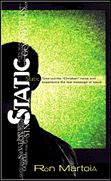
Editor's Note: The following is a report on the practical applications of Ron Martoia's new book, Static: Tune Out the “Christian Noise” and Experience the Real Message of Jesus, (Tyndale House, 2007).
When you’re trying to talk to someone about faith and your message doesn’t seem to be getting through, it may be because you’re using words that block your message like static interfering with a broadcast.
Many words used in traditional evangelism simply don’t resonate well with people in our culture anymore. But if you communicate with fresh words that both reflect biblical truth and speak well to today’s seekers, your message can be clearly heard.
Here’s how you can break through static to evangelize in ways people in today’s culture can understand well:
* Recognize the cultural baggage that some words carry. Understand that many people today either don’t understand certain language traditionally used in evangelism, or are turned off by the negative connotations those words have developed in our culture. Know that when you use words like “gospel,” “salvation,” “repentance,” and “sin,” other people may react in ways you don’t expect, based on their own experiences and emotions. Realize the importance of choosing the right words to share your faith with others. Seek to understand both the biblical meaning of a word, and its context in our culture today, before deciding if and how to use it in conversations about spirituality.
* Open your mind. Don’t assume that you already know all there is to know about words commonly used in evangelism. Ask God to help you keep learning as you study the Bible, so you can get rid of cultural assumptions and preconceived notions, and more clearly understand the rich meaning of various words. Realize that there are many creative ways to express the original meaning behind various words in fresh language.
* Get to know your audience. Realize that you need to get to know the people you’re trying to engage in spiritual conversations before you can truly reach them. Spend time asking them questions and genuinely listening. Pay attention to their ages, social status, backgrounds, experiences, and other issues that impact the cultural contexts within which they think about God. Know that when you start sharing your faith with them, you need to start with the real-life issues that are most immediate for them (instead of starting with your own agenda and theology).
* Think of the gospel as a newsflash. Know that, although the word “gospel” means “good news,” the word itself doesn’t sound like good news to people influenced by our culture to view the gospel as intolerant, arrogant, militant, and imperialistic. So instead of using the word “gospel,” speak to people about a newsflash, which conveys the urgency and importance of the good news Jesus has for them.
* Think of repentance as reorienting lives. Realize that repentance is more than what our culture presents it to be – simply a call for people to clean up their morals. Know that, instead, repentance involves people changing the direction of their whole lives to move closer to God. Understand that God is not nearly as concerned with whether or not people say a sinner’s prayer as He is with the true condition of their hearts. Acknowledge that a prayer of repentance isn’t a magic formula for salvation. Realize that God wants people to do more than utter a prayer; He wants them to reorient every part of their lives so they can become the people He intends for them to become. When talking with people about faith, rather than urging them to “repent,” encourage them to consider what would happen if their lives were headed in a new direction.
* Think of the kingdom of heaven as a restoration to how God intended the world to be. Recognize that the kingdom of heaven doesn’t refer just to people getting reserved seats in heaven for when they die. Know that, instead, the kingdom of heaven begins here on Earth, where people can experience the blessing of a new way of living right now. When talking with people about spirituality, don’t focus just on getting to heaven in the future. Let them know that they can start experiencing transformation from God now, and begin to live healthier and more fulfilling lives as a result. Understand that when Jesus came to announce the kingdom of God, He meant that He was restoring God’s created order to the world. Know that Jesus wants to transform people in the world instead of helping them escape it. Help people understand that, through a relationship with Jesus, they can experience blessings that start now, not later.
* Think of sin as a barrier. Understand that many people will tune you out when you use the word “sin” while talking to them about faith, because they either don’t recognize sin in their lives or they’re offended by the thought. Know that if you help them think about what barriers exist between them and God, however, they’ll likely be more open to discussing spirituality. Focus on the shame people often feel in our society today, because of the many cultural messages that they don’t measure up to all that’s considered good and attractive. Help them realize that a relationship with Jesus, who offers true and unconditional love, will set them free from shame. Emphasize that the central spiritual issue isn’t just about right versus wrong; it’s about brokenness versus wholeness. Help them see that any attitudes or behaviors that place barriers between them and God leave them broken, but Jesus can give them the wholeness they need as He connects them to God.
* Think of people who are saved and “born again” as restored to a right relationship with God. Rather than using the terms “saved” and “born again,” which carry negative cultural connotations and emphasize a future relationship with God in heaven, focus on how people can be restored to a right relationship with God beginning here on Earth, as soon as they embrace a relationship with Jesus. Understand that salvation isn’t an escape from the world to some other invisible world; it’s the transformation of this world as God invades it. Realize that heaven is just a byproduct of salvation that begins during people’s earthly lives and continues after their souls leave this world, as they keep on loving God and other people. Recognize that salvation is geared more toward giving broken people wholeness than it is about simply giving them places in heaven. Understand that salvation is more than just a one-time event in which a person says a prayer and then receives a spiritual ticket to heaven. Know that salvation also allows people to experience genuine peace on Earth as they enjoy intimacy with God and keep growing closer to Him. Instead of asking people, “Are you saved?” as if salvation was just a business transaction to complete, ask them how God is at work in their lives. Remember that the Holy Spirit is at work in people’s lives even before they come to faith. Engage people in conversations about their spiritual journeys and the process of how they’re relating to God. Rather than emphasizing the importance of escaping hell when they die, focus on the blessings that a relationship with Jesus brings, both in this world and the next. Shift the spotlight from what people have to do to be saved, to helping them notice what God is already doing in their lives to draw them closer to Him. Respect the mystery, complexity, uniqueness, and beauty of what God is doing in people’s lives without trying to control them to make them fit into arbitrary boxes of who is “in” and who is “out” with God.
* Listen to people’s yearnings. Make the time to find out what people are looking for in their lives. Discover what they’re truly yearning for, so you can talk with them about what’s most important to them instead of just giving them pat answers or clichés. Instead of viewing people as projects to successfully complete by evangelizing them, see them as individuals to love through genuine relationships. As you get to know them, ask God to help you connect their stories with His story.
Ron Martoia is an author, speaker, and former pastor. His passion is helping people, and the organisms they serve, design, build and experience revolutionary change. Over the last two years Ron has spoken to more than 25,000 leaders in conference settings. His area of expertise is on the new and shifting landscape of church/cultural intersection, where he helps churches consider how they can shift their theological outlook which in turn will shift and adjust their ministry trajectory and cultural interface. Through his speaking, consulting, writing, and acting as "a distant staff member" to a number of churches, Ron is using his cultural intonation to help churches shift paradigms from the old Newtonian world to the Quantum world of the 21st century context.
Originally published April 12, 2007.