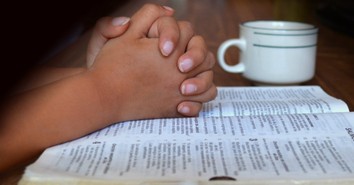
The Praying Church: What If...



Years ago I read a book by Charlie Shedd called The Exciting Church: Where People Really Pray. I have forgotten everything in the book except the story of a young man who was newly elected to the board of the church where Charlie Shedd served as pastor. That young man asked a very simple question:
“What do you think Christ wants this church to be?”
From that question came a second one:
“What would happen in our congregation if every member was prayed for every single day by someone?”
Charlie Shedd said, “That night he stopped us in our tracks.” The rest of the book is the answer to that question.
And what a question. We all believe in prayer, don’t we? Even if we don’t pray very much, we still believe in prayer. So what would happen in our churches if every day every member was prayed for by someone?
What would it do to our worship?
What would it do to our preaching?
What would it do to our ministries?
What would it do to our evangelism?
What would it do to our relationships?
Our churches wouldn’t be the same if we made sure every person was prayed for every day by someone.
What if we started to pray like that?
So what would happen in your church if we prayed like that? Hold that thought and we’ll come back to it later. In the meantime we need to see what was on Paul’s mind in Ephesians 6. As he nears the end of his magnificent letter, he calls Christians to put on the whole armor of God so that we can fight and win the spiritual battles we face every day (vv. 10-17). Then without any break he says, “And pray in the Spirit on all occasions with all kinds of prayers and requests” (v. 18). In the School of Christian Living, this is Prayer 101. This is the “how to” not the “why” of prayer. There is nothing difficult to understand in what he writes.
It’s easy to see how this fits in the context. Prayer is our ultimate weapon in spiritual warfare. It is not part of the armor; it is that which makes the armor effective. In verse 18 Paul gives five fundamental facts about Christian prayer.
I. There are many ways to pray and they are all valid.
Paul says we should pray “with all kinds of prayers and requests.” We can analyze prayer from many angles.
We can talk about the content of prayer, such as adoration, thanksgiving, meditation, confession and petition.
We can talk about the posture of prayer, such as sitting, standing, hands uplifted, eyes open, eyes closed, walking, kneeling, and stretched out before the Lord.
We can talk about the associations of prayer, which means we can pray alone or in a small group or in a worship service or in a concert of prayer or over the Internet or over the phone or by email or in a handwritten letter.
We can talk about the style of prayer. It may be formal, informal, liturgical, written, recited, conversational, antiphonal, sentence prayers, “Thank you” prayers, “Lord, have mercy” prayers, short prayers, long prayers, prayers sung, prayers spoken, prayers written, prayers chanted, prayers offered spontaneously or prayers memorized.
We can talk about the places of prayer, such as in the morning, during your devotions, around the dinner table, in the car, on the phone, during a worship service, in the street, sitting in the pew, or at a ball game.
We can talk about the objects of prayer, such as confession and restoration, for physical or spiritual or emotional healing, for a financial need, for a broken relationship to be healed, for salvation, for spiritual growth, for the spread of the gospel, for a friend in need, for the leaders of our church, for the leaders of our nation, for our friends and, yes, for our enemies.
Prayer may be as varied as the needs of the heart. The true measure of prayer is not its form or content or style or location or length or beauty of expression. The real question is, Does it come from the heart? Is it sincere? Are we truly seeking the Lord? If so, then we may claim the promise of James 5:16 that the prayers of the righteous are powerful and effective.
Prayer may be as varied as the needs of the heart.
There are myriad ways to pray. If we pray from the heart in Jesus’ name, then the Father is pleased and he inclines his heart to hear us when we call on him.
II. The best time to prayer is when you feel the need to pray.
That’s simple, isn’t it? Paul instructs us to pray “on all occasions.” The Greek word is kairos, which means a particular moment when we feel our need for God. It speaks of coming to a crossroads, a time of need, a sense of our own weakness, and crying out to the Lord in prayer.
Sometimes we approach prayer superstitiously, as if we should only pray about “big things.” We don’t want to bother God with the “small stuff.” How foolish we are. He’s God! It’s all “small stuff” to him. Or perhaps we should say it another way, because he cares so much for us, even our “small stuff” matters to him. I think of our own three sons who are now grown. Last Sunday was Mother’s Day. It happened that none of our boys live nearby so we didn’t see any of them. But on Monday I heard Marlene remark that Mother’s Day had been a good day because we heard from all our family. Josh and Leah and Mark and Vanessa called from Dallas. Nick called from Birmingham. I’m sitting here smiling as I write this because we got to talk to our family on Sunday. Nothing could be better than that. No gift could be better than hearing from them. But if we are so glad to hear from our children, how much more is our Heavenly Father glad to hear from us. When our kids are in trouble and need our help, we want them to call and let us know. It’s the same with the Lord. He waits to hear from his children. And because we are his children, he will never turn us away.
The Lord waits to hear from his children. And because we are his children, he will never turn us away.
Many years ago when Marlene taught the little children in Sunday School, the lesson was about the truth that “God is always with us.” So she had the children draw a picture to illustrate that truth. One child drew a picture of a boy in bed, raindrops over the bed, and outside the window a sinister-looking creature. “Where is God with you?” Marlene asked. “He’s with me,” the boy replied, “when I’m in bed, in the dark, and it’s raining inside, and there’s a monster outside."
We’ve all had a few moments like that, when it’s raining inside and there’s a monster outside. The little boy is right. God is with us even then so go ahead and pray. God is near us when we need him most.
III. Effective prayer requires sensitivity to the Holy Spirit.
Paul says we are to pray “in the Spirit.” That means “under the influence of the Holy Spirit.” It helps me to think about it this way. Praying in the Spirit means following the Spirit’s guidance as to when to pray. Because prayer itself is the language of heaven, the impulse to pray comes from the Holy Spirit. He not only invites us to pray, he also incites us to pray. Sometimes you will think, “I should pray about that.” Don’t ever brush that thought away. Do it. Go ahead and pray right then. Sometimes people may say, “I wish we could pray about that.” Take that as a message from the Holy Spirit and go ahead and pray. These impulses to pray may come at any time . . .
When we are on the phone . . .
When we are talking with a friend . . .
When we are listening to the radio . . .
When we are sitting in church . . .
When we are taking a deposition . . .
When we are having a sleepless night . . .
When we are getting ready for surgery . . .
If you think about praying, go ahead and pray. You don’t have to pray out loud. You can pray to the Lord without speaking any words at all, and the Lord will hear you from heaven. When the Lord speaks to you and says, “Pray,” don’t say “No.” Go ahead and pray.
When the Lord speaks to you and says, “Pray,” don’t say “No.” Go ahead and pray.
And pray about the things the Lord lays on your heart. Don’t be ashamed or worried that you won’t say the right thing. The Holy Spirit knows your heart and intercedes for us with wordless groaning (Romans 8:26-27). He comes alongside to help us when we pray so that our feeble prayers rise with power and enter the courts of heaven to be carried to the Throne of Grace. As an old gospel song says, sometimes we just need to “have a little talk with Jesus.” That song along says, “When you feel a little prayer wheel turning.” It’s hard to explain exactly what that means, but I know what that’s like. You can be sure that the Lord is turning the “prayer wheel” in your heart and moving you to pray.
So let’s not make this mysterious. Whenever you feel an inner urge to pray, do it! We would all pray a lot more every day if we became sensitive to the impulse of the Spirit in our lives.
IV. If you want your prayers answered, stay awake and keep on praying.
“Be alert and always keep on praying for all the saints” (v. 18). Eugene Peterson gives us this version: “Keep your eyes open. Keep each other’s spirits up so that no one falls behind or drops out.” Paul uses a military term to get his point across. Consider a sentry guarding a base in Afghanistan, not far from a Taliban stronghold. Now compare that soldier with a security guard at the Kroger’s grocery store. Who will be more alert? It better be the sentry in Afghanistan. The one who believes he is on the front lines is going to be more alert. Our problem with prayer is that we think we’re a security guard at Kroger’s when in reality we’re like the sentry in Afghanistan. He has to stay alert because his buddies are depending on him. It’s life or death to them. We mess around in prayer because we think it doesn’t matter, when in reality we are sentries standing guard on the front lines of spiritual combat.
Whenever you feel an inner urge to pray, do it!
Have you ever noticed how easy it is to be distracted when you pray? Just as you bow your head, the phone rings, or your pager beeps, or some music distracts you, or you suddenly remember that you have to check the roast in the oven. A thousand things come crowding into your mind. Sometimes it seems as if the devil’s best work comes when we decide to pray. He unloads his full armory of distractions against us. Or perhaps you decide to spend an hour in prayer. So you get on your knees and begin to pray. You pray for yourself, the members of your family, all your friends, the leaders of your church, the missionaries you know, then all the missionaries in the world, then every country in the world. Finally you pray by name for every person in every country of the world (or so it seems). Then you look up and discover you’ve only been praying for five minutes!
Several years ago, during an “Ask Pastor Ray” night, one of the junior highers turned in the following question: “If God is up in heaven, why do we have to close our eyes and bow our heads when we pray?” Good question. We’ve all wondered about that from time to time. Here’s the answer: You don’t have to bow your head or close your eyes when you pray. We do that simply to keep out distractions. In the Old Testament men often prayed standing up, with outstretched arms, looking up to heaven, eyes wide open. I find that I do my best praying when I’m riding my bike-and I assure you that I keep my eyes open! Whatever helps you stay alert is the right way for you to pray.
We mess around in prayer because we think it doesn’t matter, when in reality we are sentries standing guard on the front lines of spiritual combat.
V. The Wider Our Circle of Concern, the Wider the Results.
Paul instructs us to pray “for all the saints.” This means we need to pull ourselves out of the rut of praying only for ourselves and our family. It’s perfectly legitimate to pray for those closest to you. But you have not exhausted the power of prayer if you stop there.
If you pray for your friends, that’s good.
If you pray for your church, that’s also good.
If you pray for missionaries you know and love, that’s even better.
If you pray for other churches in your area, that’s wonderful.
If you pray for God’s work in other countries, your heart is stretched to new horizons.
Think of your prayers in terms of concentric circles. Naturally you start with those closest to your heart and then move out from there. With every outward circle, you move away from yourself and closer to the heart of God. “For God so loved the world . . .”
How wide are your prayers?
How broad is your concern?
When you pray, pray for the people of God around the world. And pray for those yet to be reached with the gospel.
Dr. Lee Roberson called prayer “the Christian’s secret weapon, forged in the realms of glory.” It is no accident that prayer comes immediately after the listing of the “armor of God” in verses 14-17. As someone has said,
Prayer is the Christian’s secret weapon,
Forged in the realms of glory.
Satan trembles when he sees
The weakest saint upon his knees.
Some of us who know a little theology would do well to get an advanced degree in “kneeology.”
With that we can quickly sum up Paul’s personal prayer request in verses 19-20.
Pray also for me, that whenever I open my mouth, words may be given me so that I will fearlessly make known the mystery of the gospel, for which I am an ambassador in chains. Pray that I may declare it fearlessly, as I should.
He asks for two things: clarity and courage:
- Clarity - that he might have the right words to say.
- Courage - that he might say the right words at the right time.
Have you ever considered that the ability to communicate truth clearly is a gift from God? It comes in answer to prayer. If a pastor is not preaching well, it may be because his people are not praying well.
Paul wrote from a Roman prison where he was chained to a guard 24 hours a day. He was literally an “ambassador in chains.” Here’s what blows me away. Though he was innocent of any crime, he doesn’t say, “Pray that I can get out of here” or “Ask God to reverse my sentence” or “Pray that they will cut me loose from these chains.” In short, he doesn’t ask that his circumstances might be changed because he understood that behind the mighty Roman Empire stood the Lord God himself.
God had called him to that prison. He had work to do there.
So he asked for prayer that he might be clear and courageous to do God’s work while he was in prison. Did he want to be set free? I’m sure he did, but that wasn’t uppermost in his mind. Whether in prison or out, he wanted only to proclaim Christ to those who did not know him.
Pray for clarity and for courage. He doesn’t pray to be released nor does he ask that his life might be spared. He doesn’t ask for a miracle. He only asked for this:
- That when he opens his mouth he will have something to say, and
- That he will have the courage to say it.
What a man. What an example for the rest of us.
Two Take-Home Truths
Let me summarize the teaching this way:
1. No one ever outgrows the need for prayer.
Most of us find it hard to say “Pray for me” because that seems like a sign of weakness. And it is! But that’s why we need prayer in the first place. If we were strong, we could do it all ourselves. Here is the real truth about you and me . . .
We aren’t that strong.
We aren’t that smart.
We aren’t that clever.
We aren’t that wise.
We aren’t that brave.
That’s why we need others to pray for us. No one is so strong that he is beyond the need of prayer. No one is so rich in blessings that he does not need someone to pray for him. As the old spiritual says, “It’s me, it’s me, O Lord, standing in the need of prayer.” Sometimes we do not ask for prayer because we are overly concerned about our image. Our pride keeps us silent even in desperate moments. We want to keep up the image that we are in control, that we can handle our problems, that we are self-sufficient. After all, if people hear us asking for prayer, what will they think?
If they love us, they will think we need some prayer, and they will pray for us.
Sometimes we do not ask for prayer because we are overly concerned about our image.
Who is the greatest Christian of all time? I nominate the Apostle Paul. Who knew the gospel better? No one. Who preached it more fearlessly? No one. Yet he wanted the Ephesians to pray for him. Was Paul a failure? Not at all. He wrote a great part of the New Testament and opened Europe to the gospel. Yet he wasn’t afraid to admit his need. It is a mark of the right kind of humility when someone says, “Pray for me.”
2. No one ever outgrows the need to pray for others.
Someone you know needs your prayers right now. In the army of the Lord, every soldier needs help. Someone needs hope, someone needs patience, someone needs courage, someone needs love, someone needs determination, someone needs insight, someone needs strength, and someone needs guidance.
Someone will be wounded unless you pray.
Someone will give up unless you pray.
Someone will be deceived unless you pray.
Someone will yield to temptation unless you pray.
Someone will make a foolish choice unless you pray.
Someone will grow faint unless you pray.
Someone will collapse under the load unless you pray.
Someone will go AWOL unless you pray.
There is always more than enough to pray about if only we would open our eyes and look around.
So let me return to the question I posed earlier. What would happen in our churches if everyone in the congregation was prayed for every day? What would it do for our worship? Our outreach? Our relationships? Our faith? Our vision for the future? Our leadership?
There is always more than enough to pray about if only we would open our eyes and look around. If we all started praying for each other every day, we wouldn’t be the same, would we?
I wonder if it could ever happen. I’m not thinking about another organization or some big program or another meeting to attend or reports to fill out. Those things are well and good and have their place, but that’s not what is on my mind.
Remember that Jesus said . . . “My house shall be called a house of prayer.” Wouldn’t it be wonderful if that were true of your church? My church? Every church?
- Think of the word that would spread. “Those people really know how to pray.”
- Think of the love that would grow.
- Think of the lives that would change.
- Think of the miracles God would do.
- Think of the excitement on Sunday morning.
We would get up early and come to church eagerly, waiting to see what God was going to do. We would sing with new gusto and pray with new fervency and listen with new expectation. And who knows? Someone might just hang around and get saved.
Think of the impact around the world as we begin to pray for God’s work in Burundi, Pakistan, Laos, Gambia, Paraguay, Mongolia, Uzbekistan, Hungary and Irian Jaya.
I think God has more for us than we have ever dreamed.
What if we really started to pray?
Some sermons answer questions. This one asks a question. Now it’s your turn to think about the answer.
Our Father, we know so little about prayer. We stagger and stumble and pray our two-bit prayers, and then we feel guilty. Make us willing to learn from you. We say with the disciples, “Lord, teach us to pray” so that we may receive all that you have for us. In Jesus’ name, Amen.
Dr. Ray Pritchard is the president of Keep Believing Ministries. He has ministered extensively overseas and is a frequent conference speaker and guest on Christian radio and television talk shows. He is the author of dozens of books, including Credo, The Healing Power of Forgiveness, An Anchor for the Soul and Why Did This Happen to Me? View recent entries on Ray's blog.
Original publication date: May 20, 2009
Originally published January 08, 2012.