Easter - Holiday Meaning, Traditions, and Symbols Explained


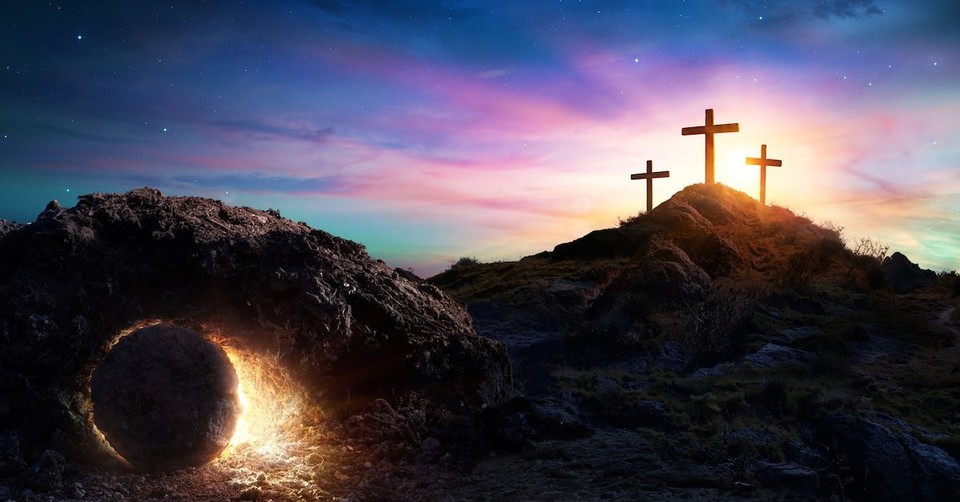
Table of Contents
- What is Easter?
- Origin of Easter and History of Celebration
- When is Easter 2024?
- What Does Easter mean?
- Easter and Passover
- Christian and Pagan Traditions
- Easter Bunny Origin and Traditions
- Easter Eggs Origin and Tradition
What is Easter and Why Do We Celebrate It?
Easter is the celebration of the resurrection of Jesus from the tomb on the third day after his crucifixion. Easter is the fulfilled prophecy of the Messiah, Who would be persecuted, die for our sins, and rise on the third day (Isaiah 53). Remembering the resurrection of Jesus is a way to renew daily hope that we have victory over sin. According to the New Testament, Easter is three days after the death of Jesus on the cross.
Easter follows a period of fasting called Lent, in which many churches set aside time for repentance and remembrance. Lent begins on Ash Wednesday and ends on Good Friday, the day of Jesus' crucifixion. The 40-day period was established by Pope Gregory 1 using the 40-day pattern of Israel, Moses, Elijah, and Jesus' time in the wilderness.
The week leading up to Easter is called The Holy Week, or "Passion Week," and includes Palm Sunday (the day Jesus entered Jerusalem and was celebrated), Maundy Thursday (the "Last Supper" where Jesus met with his disciples to observe Passover), and Good Friday (when Jesus would be crucified on the cross).
Easter is a very significant date within Christianity and is the foundation of the Christian faith. Jesus, the Son of God, fulfilled prophecy and, through his death, has given the gift of eternal life in heaven to those who believe in his death and resurrection. Read the entire Biblical account of Resurrection Day in Matthew 28, Mark 16, and Luke 24 and more Easter Bible verses at BibleStudyTools.com.
Christians celebrate Easter because it commemorates the resurrection of Jesus Christ from the dead. This pivotal event stands as the bedrock of Christian belief, embodying the promise of redemption, eternal life, and the triumph of light over darkness. For believers, Easter represents the culmination of God's divine plan for humanity, offering profound hope, forgiveness, and the assurance of salvation through Christ's sacrificial death and glorious resurrection. It serves as a sacred opportunity for spiritual renewal, collective worship, and joyful celebration, inspiring hearts with the enduring message of God's boundless love and grace.
Ready to prepare your heart for this Lent and Easter season? Download our FREE 40-Day Easter Devotional to celebrate and reflect upon Jesus' sacrifice for us.
The History and Origin of Easter Celebration
The earliest Christians celebrated the resurrection on the fourteenth of Nisan (our March-April), the date of the Jewish Passover. Jewish days were reckoned from evening to evening, so Jesus celebrated His Last Supper on the evening of the Passover and was crucified on the day of the Passover. The origin of Easter started with early Christians celebrating the Passover and worshiping Jesus as the Paschal Lamb and Redeemer.
The origin of some of the Gentile Christians began celebrating Easter on the nearest Sunday to the Passover since Jesus actually arose on a Sunday. This especially became the case in the western part of the Roman Empire. In Rome itself, different congregations celebrated Easter on different days!
Many felt that the date should continue to be based on the timing of the Resurrection during Passover. Once Jewish leaders determined the date of Passover each year, Christian leaders could set the date for Easter by figuring three days after Passover. Following this schedule would have meant that Easter would be a different day of the week each year, only falling on a Sunday occasionally.
Others believed since the Lord rose on a Sunday, this day had been set aside as the Lord’s Day. This was the only possible day to celebrate His resurrection. As Christianity drew away from Judaism, some were reluctant to base the Christian celebration on the Jewish calendar.
Constantine wanted Christianity to be totally separated from Judaism and did not want Easter to be celebrated on the Jewish Passover. The Council of Nicea accordingly required the feast of the resurrection to be celebrated on a Sunday and never on the Jewish Passover. Easter was to be the Sunday after the first full moon after the spring equinox. Since the date of the vernal equinox changed from year to year, calculating the proper date can be difficult. This is still the method used to determine Easter today, which is why some years we have Easter earlier than others.
When is Easter and Why Does the Date Change?
In 2025, Easter falls on Sunday, April 20th. Easter is celebrated on the Sunday following the first full moon, the Paschal full moon, after the vernal equinox. Since the vernal equinox date changes yearly, calculating the proper date can be difficult. This is still the method used to determine Easter today, which is why some years we have Easter earlier than others. For more details, visit: When Is Easter?
Future Easter Dates
- April 5, 2026
- March 27, 2027
- April 16, 2028
Why is Easter called 'Easter'?
The origin of the word easter isn’t certain. The Venerable Bede, an eighth-century monk and scholar, suggested that the word may have come from the Anglo-Saxon Eeostre or Eastre – a Teutonic goddess of spring and fertility. Recent scholars haven’t been able to find any reference to the goddess Bede mentioned and consider the theory discredited.
Another possibility is the Norse eostur, eastur, or ostara, which meant “the season of the growing sun” or “the season of new birth.” The word east comes from the same roots. In this case, easter would be linked to the changing of the season.
A more recent and complex explanation comes from the Christian background of Easter rather than the pagan. The early Latin name for the week of Easter was hebdomada alba or “white week,” while the Sunday after Easter day was called dominica in albis from the white robes of those who had been newly baptized. The word alba is Latin, both for white and dawn. People speaking Old High German made a mistake in their translation and used a plural word for dawn, ostarun, instead of a plural for white. From ostarun we get the German Ostern and the English Easter.
Get your free Easter Prayer and Scripture Guide HERE to reflect on the meaning and importance of Christ's resurrection.
The Easter Bunny Origin and Traditions

What is the first thing that comes to mind when you think of Easter? As a Christian, the first image might be the cross or the empty tomb. For the general public, a blitz of media images and merchandise on store shelves makes it more likely that the Easter Bunny comes to mind. So, how did a rabbit distributing eggs become a part of Easter?
There are several reasons for the rabbit, or hare, to be associated with Easter, all of which come through pagan celebrations or beliefs. The most obvious is the hare’s fertility. Easter comes during spring and celebrates new life. The Christian meaning of new life through Christ and a general emphasis on new life are different, but the two gradually merged. Any animals – like the hare – that produced many offspring were easy to include.
The hare is also an ancient symbol of the moon. The date of Easter depends on the moon. This may have helped the hare to be absorbed into Easter celebrations.
The hare or rabbit’s burrow helped the animal’s adoption as part of Easter celebrations. Believers saw the rabbit coming out of its underground home as a symbol of Jesus coming out of the tomb. Perhaps this was another case of taking a pre-existing symbol and giving it a Christian meaning.
The Easter hare came to America with German immigrants, and the hare’s role passed to the common American rabbit. Originally children made nests for the rabbit in hats, bonnets, or fancy paper boxes, rather than the baskets of today. Once the children finished their nests, they put them in a secluded spot to keep from frightening the shy rabbit. The appealing nests full of colored eggs probably helped the customs to spread.
Back in Southern Germany, the first pastry and candy Easter bunnies became popular at the beginning of the nineteenth century. This custom also crossed the Atlantic, and children still eat candy rabbits – particularly chocolate ones – at Easter.
The Origin and History of Easter Eggs
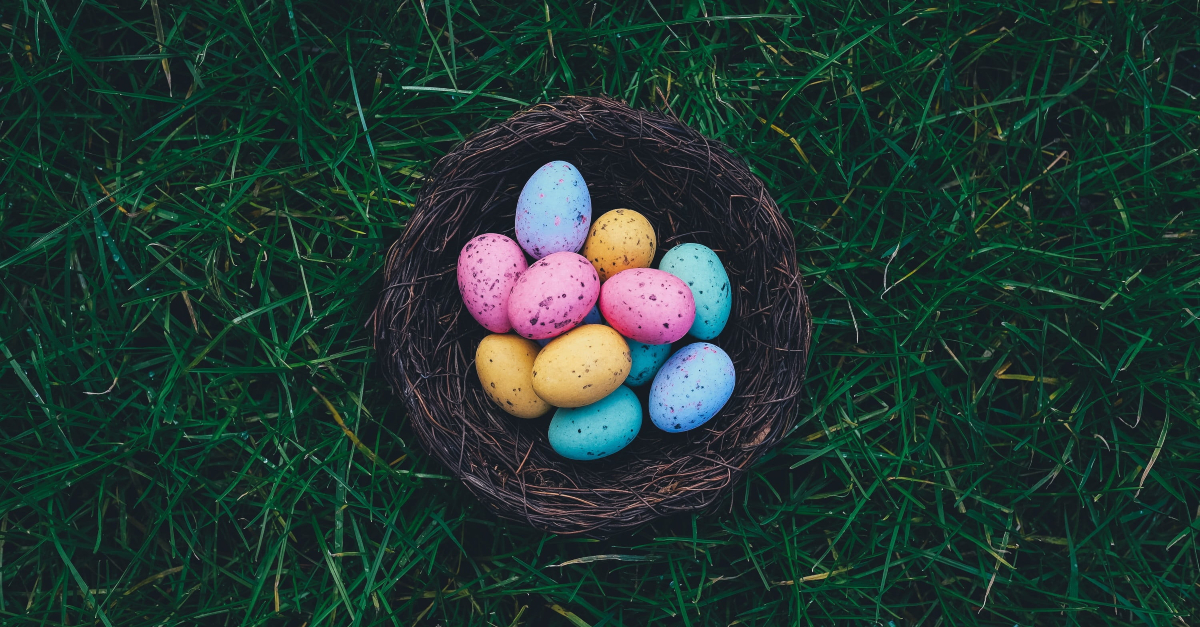
Next to the Easter bunny, the most familiar symbol is the Easter egg. Like others, the egg has a long pre-Christian history. Again, there’s no certainty as to why it became associated with Easter.
Many Ancient cultures viewed eggs as a symbol of life. Hindus, Egyptians, Persians, and Phoenicians believed the world began with an enormous egg. The Persians, Greeks, and Chinese gave gifts of eggs during spring festivals in celebration of new life all around them. Other sources say people ate dyed eggs at spring festivals in Egypt, Persia, Greece, and Rome. In ancient Druid lore, the eggs of serpents were sacred and stood for life.
Early Christians looked at the connection eggs had to life and decided eggs could be a part of their celebration of Christ’s resurrection. In addition, in some areas, eggs were forbidden during Lent; therefore, they were a delicacy at Easter. Since many of the earlier customs were Eastern in origin, some speculate that early missionaries or knights of the Crusade may have been responsible for bringing the tradition to the West.
In the fourth century, people presented eggs in the church to be blessed and sprinkled with holy water. By the twelfth century, the Benedictio Ovorum had been introduced, authorizing the special use of eggs on the holy days of Easter. The timing of this blessing would uphold the idea that Crusaders may have brought the tradition back. Even though eggs had been used previously, the Crusaders may have made the custom more popular and widespread.
In 1290, Edward I of England recorded a purchase of 450 eggs to be colored or covered with gold leaf. He then gave the eggs to members of the royal household.
Once the custom became accepted, new traditions began to grow up around it. Eggs were dyed red for joy and in memory of Christ’s blood. Egg-rolling contests came to America from England, possibly as a reminder of the stone being rolled away.
What about the familiar Easter Egg hunt? One source suggested that it grew out of the tradition of German children searching for hidden pretzels during the Easter season. Since children were hiding nests for the Easter Bunny to fill with eggs at the same time they were hunting pretzels, it was only a small leap to begin hiding eggs instead.
Meaning and Symbolism of the Easter Lamb
Of all Easter symbols, the lamb is probably the most strongly Christian. Other than the fact that lambs are young animals born in springtime, it has no strong ties to pagan traditions.
The lamb comes from the Jewish Passover, where each family killed a lamb as a sacrifice. When Christ became the Passover Lamb for everyone, the lamb became a symbol for His sacrifice.
John 1:29 - "The next day John saw Jesus coming toward him and said, “Look, the Lamb of God, who takes away the sin of the world!"
1 Peter 1:18-21 - "For you know that it was not with perishable things such as silver or gold that you were redeemed from the empty way of life handed down to you from your ancestors, but with the precious blood of Christ, a lamb without blemish or defect. He was chosen before the creation of the world, but was revealed in these last times for your sake. Through him you believe in God, who raised him from the dead and glorified him, and so your faith and hope are in God."
How Does Easter Connect to Passover?
The day before his crucifixion, Jesus observed Passover with his disciples. This event is known as the Last Supper. Passover is the time that Jews remember their freedom and exodus from Egypt. During this Passover feast, Jesus told his disciples that the bread symbolizes his body that would be broken and the wine, his blood, which would be poured out for the forgiveness of sins (Matthew 26:17-30). The Last Supper is remembered today in churches and religious services through the act of taking Communion and sharing bread and wine to remember the sacrifice of Jesus.
Jesus was arrested after the Passover meal while he was praying in the Garden of Gethsemane. He was then taken before the Roman Governor, Pontius Pilate, for trial.
Christian and Pagan Traditions and Observances
Many traditions surround the entire Lent season, Holy Week, and Easter Sunday. Generally observed traditions across the globe include the Easter bunny, colored eggs, gift baskets, and flowers. We will dive into specific traditions below in more detail, but here are a few more interesting traditions from around the world:
- In Australia, bunnies are considered pests that ruin crops and land. Aussies celebrate with their native marsupial, the Bible, which has large ears and a more pointy nose.
- In Poland, on Easter Monday, boys try to soak people with buckets of water. This tradition is rooted in the baptism of Polich Prince Mieszko on Easter Monday in 996.
- In Greece, the morning of Holy Saturday is known as the annual "pot throwing," where residents throw pots out of windows. It is a tradition used to mark the beginning of spring and new crops being gathered in new pots.
- In Europe, there are large bonfires called Easter Fires that are lit on Easter Sunday into Monday. The Saxon origin is that the fires will chase away winter, and Easter will bring spring.
New Clothes at Easter
New clothes have long been associated with the idea of newness and a fresh beginning. The familiar custom of having new clothes for Easter probably began with early Christians wearing new white robes for baptism during Easter Vigil services. Later, the custom expanded to everyone wearing new clothes in celebration of his or her new life in Christ.
Sunrise Services
The familiar sunrise service is a relatively new addition to Easter. A group of young Moravian men in Hernhut, Saxony, held the first recorded sunrise service in 1732. They went to their cemetery called God’s Acre at sunrise to worship in memory of the women who went to the tomb early on the first Easter morning and discovered it empty. Moravian immigrants brought the custom to America, with the first service in the United States held in 1743.
Easter Lilies

The Easter lily is another new addition to Easter celebrations. Throughout the years, painters and sculptors used the white Madonna lily to symbolize purity and innocence, frequently referring to Mary. This lily doesn’t force well, so nurseries couldn’t get the flower to bloom in time for Easter. In the 1880s, Mrs. Thomas Sargent brought Bermuda lily bulbs back to Philadelphia. A local nurseryman, William Harris, saw the lilies and introduced them to the trade. A more practical consideration was that they were easy to force into bloom in time for the Easter season. From there, the Bermuda lily, now the familiar Easter lily, spread throughout the country.
Easter is an important holiday, if not the most significant event in the Christian religion. No matter how you celebrate Easter, may God bless you on this resurrection Sunday and always!
Related:
Easter Prayers
Easter Bible Verses and Scriptures - He is Risen!
Easter Blessings
What is Good Friday
The Resurrection of Jesus - 7 Facts to Know and Understand
Sources:
Claire Nowak, 9 Fascinating Easter Traditions from Around the World, Readers Digest
Mary Papenfuss, Aussies Are Shunning Bunnies and Embracing the Easter Bible Instead, Huffington Post
Christianity.com When is Easter?
Excerpted from Holidays & Holy Days, © 2001 by Susan E. Richardson. Published by Regal Books, 1957 Eastman Ave, Ventura, California, 93003. Used by permission. All rights reserved. You can purchase this book at christianbook.com.
Photo credit: ©Thinkstock/motimeiri, Photo Credit: Unsplash/Matt Lewis, Photo Credit: Unsplash/Annie Spratt, Photo Credit:©GettyImages/Konstanttin
This article is part of our larger Holy Week and Easter resource library centered around the events leading up to the death and resurrection of Jesus Christ. We hope these articles help you understand the meaning and story behind important Christian holidays and dates and encourage you as you take time to reflect on all that God has done for us through his son Jesus Christ!
What is Lent? It's Meaning and Why We Celebrate
When is Lent? When Does Lent Start and End?
What is the Meaning Ash Wednesday?
What is Holy Week?
What Is the Meaning of Palm Sunday?
What is the Meaning of Holy Monday?
What is Maundy Thursday?
What Is Good Friday and Why is it Good?
Good Friday Prayer
What Does Holy Saturday Mean?
What Is the Easter?
Easter Prayers
Powerful Facts About the Cross of Jesus
Originally published March 29, 2023.