What Christian Parents Need to Know about His Dark Materials


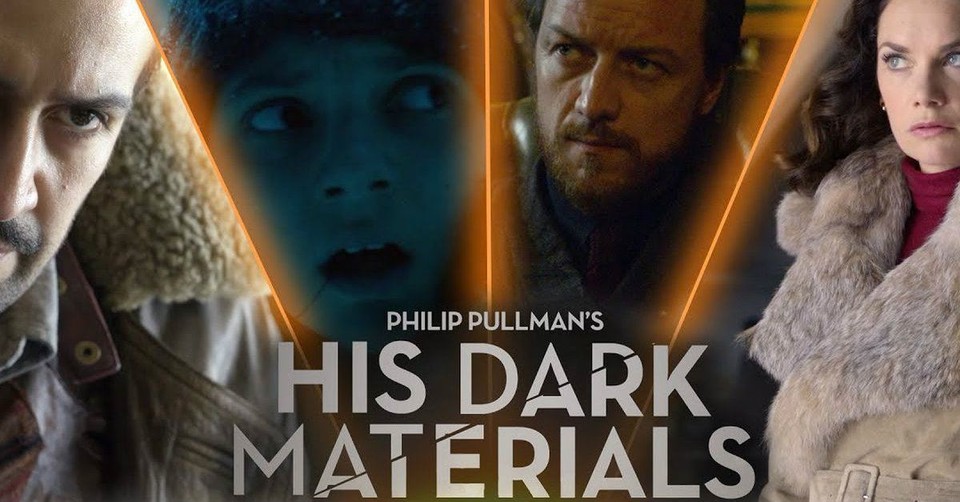
EDITOR'S NOTE: This article was originally written in 2007 to address Christian concerns with the release of the movie The Golden Compass, which covered the first book of Philip Pullman's fantasy series, His Dark Materials. Now, beginning November 3, 2019, HBO and BBC One are creating a three-season series to cover the complete story. While much of our original discussion here involves the 2007 movie, it is also relevant to the tenor, plot and themes of the books, the HBO series, and what Pullman's trilogy is generally about.
If you intend to read these books or watch this series, please consider this your warning that MAJOR SPOILERS lie ahead.
When Crosswalk's editorial staff realized that we were not very well-versed in all the talk about The Golden Compass film or Philip Pullman's His Dark Materials trilogy of which this film is the first part, we purposed to read the books and then attend a screening of the movie. Since then, we've spent more time in fascinating discussion over what we've encountered than actual work. What we intend to do is provide honest, useful feedback for Crosswalk users that dovetails with what others have already written, while also presenting what really stuck out to us from both literary and Christian backgrounds.
For the uninitiated, The Golden Compass is about a pre-teen girl, Lyra Belacqua, who grows up without parents on the grounds of Jordan College in Oxford under the care of scholars. She is wild, fanciful, and rough around the edges. While hiding in a wardrobe (sound familiar?) she witnesses an attempted murder, as well as conversations about something called “Dust” - a metaphor for sin/experience - and a city in the sky beyond the Northern Lights.
Lyra finds herself caught between two strong but morally ambiguous adult influences – her father Lord Asriel, who she believes to be her uncle (to be played by James McAvoy in the HBO series), and her mother Mrs. Coulter (Ruth Wilson in the HBO series), who purports to be just a well-accomplished woman of the world in need of an assistant.
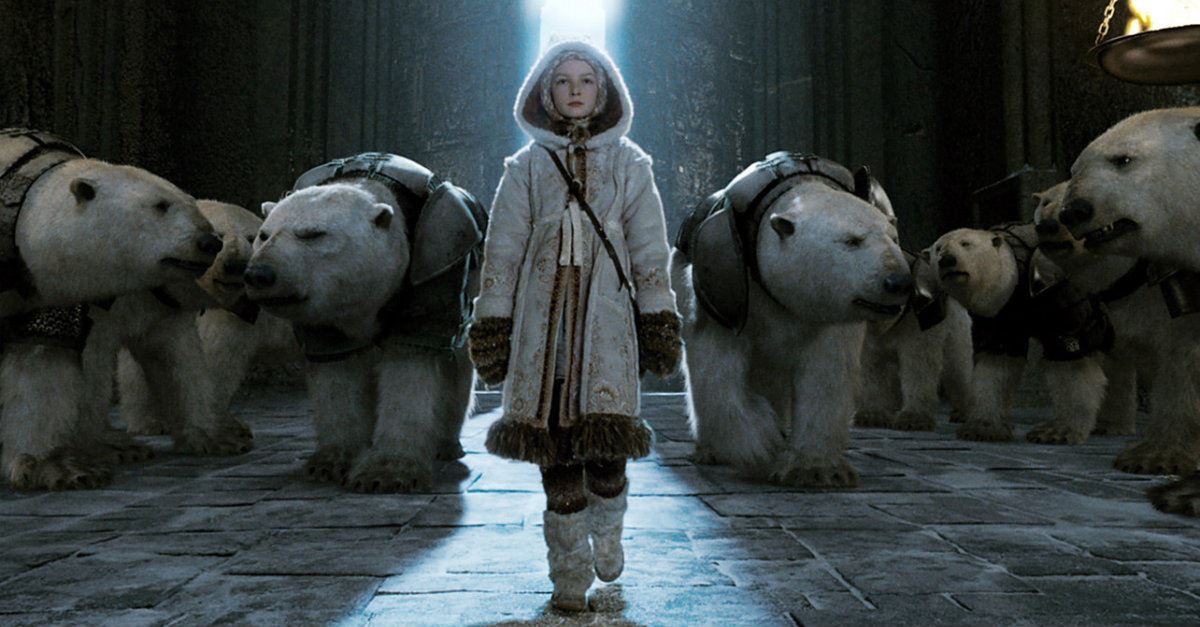
In Lyra’s world, every individual has a constant companion called a “daemon” (pronounced “demon”) that is always beside them in the shape of an animal, and which represents the individual’s soul, intellect, identity – everything special about them. Touching another person’s daemon is taboo, so intimate is the relationship. Lyra and her daemon Pantalaimon, who can take the shape of many animals (daemons of adults have settled into one permanent form) team up with gyptian boat people; a Texan balloonist (Lin-Manuel Miranda on HBO); witches; giant, talking, armor-wearing polar bears; and other children on a journey to the far north. Guiding her is the golden compass, called an “alethiometer” (lit. ‘truth measure’) that shows her the answer to any question. Opposing Lyra is a church entity known as the Magisterium.
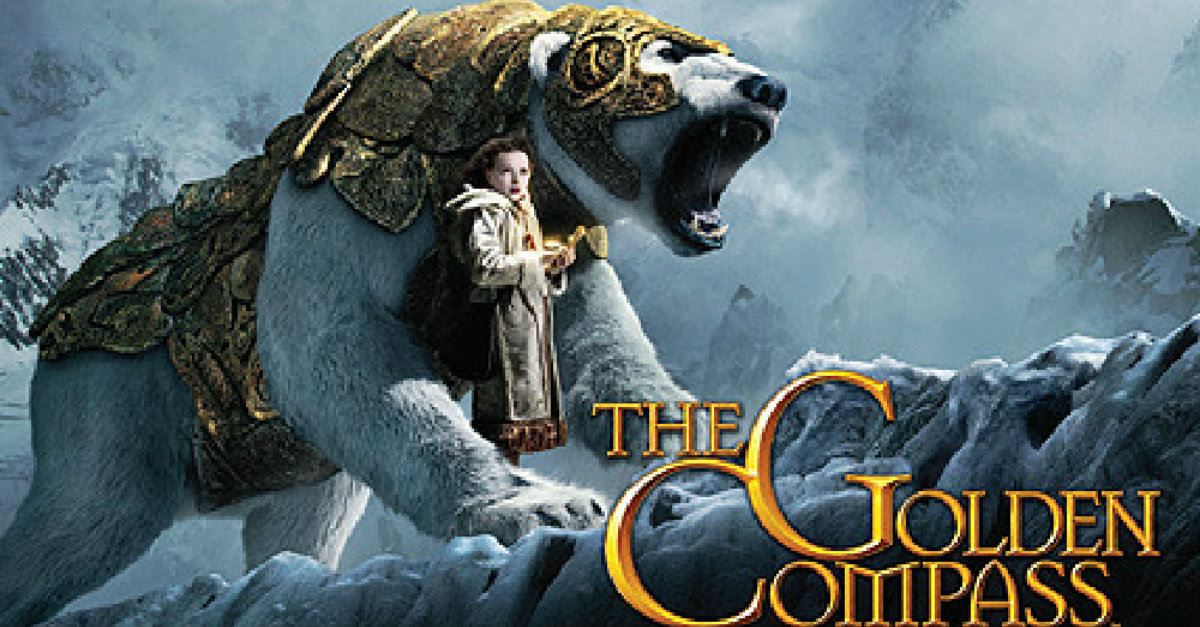
Our round-table discussion about the experience of reading His Dark Materials and watching The Golden Compass (2007) features the following participants:
- Sarah Jennings Phillips, former Crosswalk Family editor. Her responses to the book and film were unavoidably informed by her family-focused work here at Crosswalk, her degree in English, and her Catholicism.
- Shawn McEvoy, Director of Editorial. He has a Master's degree in English, is a fan of the fantasy genre, and a married father of two.
- Meghan Kleppinger, former Christianity.com editor. She found herself approaching the book from the theological perspective, using her background as a Bible study teacher. She has worked in public policy, which informed the ways she was on the lookout for issues that affect children.
So what sticks out the most to you about this story?
MK: I expected it to be trickier. I thought I would have to search for proof that this story attacks Christianity. The way Philip Pullman weaves his agenda into the story is somewhat subtle but his anti-church view is quite blatant in his language and imagery. It challenged my mind, but certainly not my faith. The discussions that came out of it were stimulating, but I don’t think any of us left questioning God’s existence or our own salvation.
SJ: The language he uses, the paragraphs where he addresses the Christian faith are very clear. Referring to the Church as "The Magisterium" instantly struck me as a Catholic. The story will go for long stretches of just great story, but then a paragraph will stick out and hit you.
SM: For lack of a better term, the "spiritual warfare," surprisingly, stuck with me. Some scenes touched me uncomfortably at an elemental level. I expected to be more caught up with Pullman's agenda, but where I was drawn in was with what's going on under the surface, more subtly, even to the idea of just what these daemons are. Ever wonder what that voice talking to you is that sounds like yourself? What would the Bible say that is?
I also noticed the moral ambiguity, which by reading we know is only going to get stronger as the series goes on. It has to if your belief is that no action is truly bad because at the minimum it leaves you with experience and knowledge. But it's odd how a universe created by an atheist would have a definitive spiritual side: a God to kill, daemons, (gay) angels, witches, all sorts of things.
SJ: I do think the way Pullman weaves spirituality into the book was unexpectedly overt and disturbing. I went into this thinking it might contain more gray areas, but this was more like having a worldview handed to you on a silver platter. He's very purposeful in the way he writes this and the way he portrays Christianity. That was a surprise; I didn't have to dig for it.
MK: I expected it to be much more atheistic, but it’s actually humanistic. After visiting his site, reading his quotes and writings, I’ve come to call Pullman the seemingly "hurting, searching, bitter man." I think it’s important to note that the first book is more anti-church than anti-God. And Pullman would probably be shocked if he knew how much we agreed with him about the flawed church and the problems of power. His 'Church' is not what Christ is about. We, the body of believers, know we are imperfect. It’s why we need Christ after all!
What is your general reaction?
MK: Surprise. As far as story telling goes, I liked it. It's a very well-written and compelling story. I enjoy books that get me thinking about some of the deeper issues. I did, however, find it unsettling that I began sympathizing with things Christians would and should normally consider wrong. Because things are turned around in this book, I caught myself rooting for what typically would be evil. I can see now why people would be drawn in and why parents should be concerned.
SJ: The books are appealing, well-written. Yet, they’re also very dark. I was a little taken aback by the heroine. Lyra’s behavior, somewhat toned down in the movie, wasn't what I expected – she lies, gets drunk, smokes, and curses. She doesn't always have the emotional reactions to various situations you would expect. And to me as a woman, as a girl, she certainly didn’t appear very womanly or girlish.
MK: I agree. For the purpose of the story, Philip Pullman needed Lyra to be a female so he wrote her as one… and that’s where it ended. She is completely lacking femininity – Sarah and I both felt that we couldn’t identify with her responses or actions.
SM: Reading ahead, we’re going to eventually see the reason for that. After all, Eve herself probably hadn’t been taught how to behave like a girl. But I’m getting ahead of the action a bit in revealing how Pullman is going to set Lyra up as his New Eve.
As I was reading, for the first two-thirds of Book One I thought it was just a nice entry in the fantasy genre. One could easily wonder where all the fuss comes from, especially because I was trying to make myself experience it from two perspectives at once, the first as being completely aware of Pullman's agenda, the second being a more naive position of just picking up a book and reading. So my reactions varied. The reaction I noticed most was when I began literally shaking at the point in the book where Lyra is about to be severed from her daemon. That idea and image caused me to have a physical reaction and some strange thoughts. Some other things that stuck out were the lack of married adult characters, and the idea that in the middle of morality is human education (the Oxford Scholars), and things then branch out in directions from there. It's an incredibly humanistic piece, and that's often thematically uplifiting, even to many Christians.
To the 2007 movie, I was surprised at how edited, how truncated that story is. So much less depth. We’d heard from the producers that any anti-Christian elements had been toned down. We’d also heard the film would end before the book does, which is interesting because that's where, in the book, most of the controversial material lives. I suspect that some folks who walked out of a movie theater in 2007 wondering what the big deal is will, with the HBO series, find themselves surprised at where the story goes.
MK: Yes, the 2007 movie cuts off the last three chapters of The Golden Compass, and those last three chapters deliver a swift slap to the Christian reader. It is one thing to write from an anti-Christian point of view, but it is downright insulting to discover a re-written version of Genesis 3 and then read an "interpretation" of that re-written scripture that states, in part, God must be sinful. That irritated me more than anything else.
SJ: He really is using his storytelling abilities to bait. So when he plops something down about the Church or Lyra or spirituality, you're expected to accept that. But when you take away all the enticing fantastical elements, he has set up a world where Christianity is at odds with science, intellectual thought, sexual fulfillment, free will... Pullman knows he has some ammunition; the Church is an easy target for failures that have happened. But he misrepresents. As Christians, the Church is the Body of Christ and the Bride of Christ. You can't misrepresent the Church without misrepresenting Christ.
Are Christians overreacting if they boycott the movie/books/HBO series?
MK: In terms of overreacting, it depends on who you are and what your purposes are. This story can be a tool for Christians who are informed and equipped to handle the deeper issues. We all received emails (in 2007) that were misinformed and alarmist in nature, but there is truth in them, because there are troubling elements in His Dark Materials. But as far as "Don't read or see," there really isn't a simple answer to that. There needs to be an intelligent response. We need to be better informed as Christians. When asked, "Why aren't you seeing this?" saying, "Because I heard I shouldn't" is not a good response.
SM: When I purchased the books and the clerk asked if I was going to see the movie, a fellow shopper said politely, "Oh, then you must be a horrible person." He was being sarcastic, obviously aware of the objections Christian groups have raised. It made me sad, both that we've caused people to believe that's what we think of them if they see it, and that people really just think we have our dander up without having a reason. Pullman has not been secret about what his intentions and beliefs are. If someone had purposed to bring down everything you hold personal and true, you might raise an alert about it.
SJ: We need to be careful. There are two reactions I think Pullman would enjoy: burn his book, denounce this series... or apologize for it, say it’s tamer or more innocent than it really is. So you want to respond, but you want to respond intelligently. Informing parents that this is probably not a good choice for a child is important. But in terms of the cultural phenomenon, shutting it out entirely is not a productive response. If anything, it plays into Pullman's idea that Christians are not intellectual, not free to engage and discuss.
SM: Because it is engaging, and it is seductive. The 'religion' of the world Pullman wrote is nothing new. It’s natural, pagan, primal. It’s the love of self and human knowledge. In many ways these books aren't much different from The Da Vinci Code – an enemy Church bloodthirsty with power has subjugated truth and all the innocents of the world, who should be left to undo that innocence on their own through experience and to their own benefit.
It's tragic this is considered children's literature by some, because there are such deep themes and mature situations. But don't blame Pullman; his point would be that that's exactly the point. In his world, the absolute worst thing you can do to a person of any age is separate them from their soul, which, the implication is, you do by telling them about anything that you - and not they - decide is in their best interest, including sharing the gospel with them. It's okay for the soul to crave whatever it craves, because this is freedom, leading to knowledge, leading to wisdom. That’s why the trilogy makes the point that Adam and Eve did a good thing when they ate of the fruit, and why daemon-less people appear as horrifying ghosts or zombies, tragic victims of those who have made a decision for them (a metaphor for adults inculcating kids with religion) without their consent. To be fair, this did cause me to ponder responsible methods of sharing faith with my kids.
SJ: This isn't just a story, but a conscious attempt by Pullman to paint a picture for our culture of something dear to us. What he paints is appealing. It plays very much into our Western culture.
MK: His message over and over again is that there is a need to fight for freedom from the oppressive and authoritarian church. In the second book, The Subtle Knife, the author’s view is made clear through one of his hero characters: "Every church is the same: control, destroy, obliterate every good feeling." I would love to have a conversation with Pullman explaining how we find joy and freedom in relationship with Christ.
SJ: He's angry at a Church that doesn't fully exist.
What do you want CW readers to be aware of?
SM: Even if you find the film or series tame by comparison to what you had been led to expect, be aware that this series is going somewhere, and it does involve the death of a God character (an impostor who is feeble and weak), the destruction of the Church and anything that would have authority in life, and the tremendous importance of sexual awakening.
SJ: They need to be aware of Pullman's worldview. I think we've all decided that you can not read this separate from his worldview. His worldview seeps into every character, every situation. He confuses good and bad quite a bit, on purpose.
MK: The prevalence of darkness, sexual elements, portrayals of violence, mysticism, new age, morality turned around... I don’t see how this could ever be read as a simple story for children. Parents should definitely be aware that one of the main themes of this series is physical pleasure.
Putting the anti-Church issue aside, if I had seen The Golden Compass movie as child, the darkness and violence would have frightened me. The HBO series will undoubtedly be darker yet. Parents need to be prepared to handle the mark this will leave on children.
SM: You know, Narnia is an allegory, too, and Pullman is even writing in open opposition to Lewis' stories, but you could read or watch Narnia without caring about the Christian symbology. I personally don't think you can read or watch His Dark Materials at any level without the atheistic/humanistic/anti-church meaning.
SJ: Lewis' writing responsibly explores issues of good and evil without pushing an agenda per se. It doesn't appear to matter to Philip Pullman what you're allied with as long as it's not the Church.
What did you like, and what most disturbed you?
SM: Writers often write fiction to give a voice to the voiceless, or those they perceive as voiceless. Pullman is doing that too. John Milton's classic Paradise Lost gave a voice to Satan's side of the heavenly rebellion, and Pullman wants to pick that up and take the next step, even naming his trilogy after a quote from Paradise Lost. It makes for something very compelling, where it is easy to be sympathetic. There are ideas that really resonate within me, like how intriguing it is to think deeply on just what's going on whenever you have an inner monologue with yourself, what sorts of things your soul/that voice inside you can do for you, etc. But at the same time, how disturbing is that, and how humanly glorifying.
Still, those are the same factors many will leave the viewing experience feeling good about, perhaps without even knowing why. Who could dislike the story of the Bear's return to his kingdom? Who wants to suffer seeing children tortured?
MK: It was a good story! When I was reading the book I was immediately drawn in. It certainly didn't feel like work! Visually, the film was beautifully made and presented a cast of fun characters with fascinating stories; the HBO series, based on the trailers, looks to take that even further. As for what I found disturbing, I obviously didn’t appreciate the blatant attack on the Church. Considering this is 'children's literature,' I really didn’t like the way the first entry sets the reader/viewer up to want to venture into the next two segments which are far more blasphemous and sexual in nature. They've presented a nice, cute story with likable characters and you find yourself rooting for those we would consider the "bad guys." If we as adults can get turned around, we need to be that much more concerned for young minds still learning the difference between fantasy and reality.
SJ: Pullman's clearly got a gift with words and storytelling. I kept thinking, "Why can't we have more Christians who produce media on this thought-provoking level?" This story challenged me. But what disturbs me most is how Pullman has targeted children for this story. A lot of the themes he presents have hurt a lot of children. The idea that you're better off only trusting your pre-teen self without any moral boundaries or framework is detrimental. His concept of Original Sin (via 'Dust') is not consistent with the Christian doctrine of original sin!
Can one read or watch His Dark Materials and just be content to locate Christian themes?
MK: If one hopes to, one will soon be disappointed. Lyra's character is willing to do whatever it takes – all the way to self-sacrifice – to save her friends and get an object to her father that she believes he needs. Sacrifice is a great Christian theme, but "whatever it takes" in this story often means lying, disobeying, and taking a variety of other inappropriate measures. Unlike the Narnia books which are abundant with Christian themes, you would really have to search and make a case for them in this series.
SJ: Pullman makes it very difficult. There are so many things that are incompatible with or misrepresentative of Christianity that it drowns out any Christian themes. While Lyra is sacrificial, she's also very selfish and wild. She's very selective in who she sacrifices for and why. Some of the positive themes can be very confusing because they never really explain what 'good' is. The gyptian characters just seem to be 'naturally' good, in their spirits of the water way, just because of who they are. Why are they so good?
SM: There is redemption in the return of the Bear King Iorek Byrnison, there is seeking for truth, there is loyalty, and there is familial care - though not through any kind of typical family (marriage and family are absent concepts). In the book Epic, John Eldredge discusses how we so love stories because they're ripe with elements of the greater story we're all a part of. So even when I read Harry Potter, or other stories that some Christians don't necessarily love (and countless hundreds that they do), I still find some of the great themes of the overarching biblical story. Here, I had a hard time doing that. It's the first popular story I encountered that just really turns everything on its ear.
What's your conclusion?
MK: I keep thinking of the verse in 1 Corinthians that reminds us that just because something is lawful or permissible, doesn’t mean it is profitable or edifying. It’s not necessarily wrong to watch or read His Dark Materials, but it will make an impression and there are issues readers need to be prepared to examine and explain.
The truth is that you cannot read the book or leave a viewing unscathed. I've been telling friends, “I’m reading it so you don’t have to!” That being said, I believe it can also be great a tool and discussion starter for informed adult readers. For the work we're doing at Crosswalk it's been beneficial, but we went in prepared and with a purpose.
For parents trying to decide for their children, I don't think it's worth the risk of harming young hearts and minds. There are plenty of other exciting stories that are edifying, honoring, and appropriate for children.
SJ: Pullman attempts to enlighten his audience by redefining good and evil. I think if you decide to engage this story, you might want to ask a question the editors here at Crosswalk have asked: "What would the world look like if Pullman's vision became our reality?" I don't think we'd find the kind of freedom Pullman envisions, but instead we'd be slaves to our own weaknesses and to those who assert their power and passions. It doesn’t take a theologian to imagine that ugly world. Pullman really fails to realize the Church already has a solution to our bondage – one that’s been securely in place for 2,000 years. I stumbled on a timely quote from one of Pope Benedict's encyclicals where he talks about the personal nature of God, found in Christ, and I think it really hits on the difference between Christian faith and Pullman’s ideas. Benedict says, “If we know this person [Christ] and he knows us, then truly the inexorable power of material elements no longer has the last word; we are not slaves of the universe and of its laws, we are free."
SM: It really is a well-timed quote that might as well have been written in response to The Golden Compass movie. What you saw in that movie that isn't in the first book is a more outwardly antagonistic Church. What you will not see in the movie that does appear in the first book, as Meghan referenced earlier, is the last few chapters. In these, a horrible act is done to achieve a path to another world, and much of Pullman's philosophy is explained.
It's also interesting to ask in any work of fiction which character speaks with the author's voice. We all agreed that in His Dark Materials that character is Serafina Pekkala, Queen of the Witches. Which says something interestingly pagan in its own right... So be warned, but don't be afraid. You know the truth. Let this series make you wonder about through just what means you came to know a gracious Lord, and what sin truly is, and just why you needed one to save you from the other. One school of theology says you need God to save you from sin; another suggests you need sin to save you from God. This is the crux of Pullman's argument.
Are you going to continue with the series?
MK: If there is a movie sequel (there never was) I probably will... I finished the book trilogy, and pretty quickly too. We all know book one is pretty watered down in relation to the rest of the trilogy. At the end Lyra essentially postulates, "If they (people who have hurt us and done bad things) have always told us sin is bad, it must be good," and she goes on to explore that idea in the next books. I want to be able to share how far Pullman really goes with this idea.
As I said before, this book does leave a mark and you can't leave unscathed. We did not enter this lightly but prayerfully and purposefully. I think we all agree it was worth it for the sake of the project, but admittedly a deep impression has been made on each of us.
SJ: I finished reading the rest of the series. You have to in order to really address it and discuss it in an informed way. I don't think everybody should dive in. There are so many other good things to read instead. This could be a great tool for someone getting ready to go to college for various levels of intellectualism they will encounter there. As Shawn alluded to earlier, this series does have elements of the spiritual realm that are disturbing, resembling New Age spirituality or the occult. If you've been scarred in that way, don't go near the books.
SM: I also finished the book series, while also reading many of the articles floating around out there about it. I haven't decided on the HBO series, but I will probably check in with it to see how similar/dissimilar it is. But like Meghan said, there's been a mark left, in the same way that other books left regarding something within me that seeks out the capabilities of the human mind, dark mysteries, and possibility. But those are whispers of the 'old nature' that come back to tempt and haunt me…
Still want more? Check out these valuable resources we've come across:
EP on How HBO/BBC Series Isn't an Attack on The Church, by Anthony D'Alessandro
“When we were pitching this around town, we kept saying it’s anti-superhero story,” said screenwriter Jack Thorne, “there are people seeking greatness in this story.”
The Golden Compass: Briefing Your Concerned Congregation, by Albert Mohler
Mohler follows a Q & A format, asking the right questions and providing brilliant, well-informed answers.
Golden Compass Incenses Both Atheists and Christians, USA Today
The president of American Atheists worries that the film has been “watered down” and is not anti-God, anti-Church enough.
Who’s Afraid of The Golden Compass? by Paul Edwards
Edwards argues that while Pullman’s depiction of the Church is a false one, it does not necessarily follow that the Church Pullman depicts does not exist. So let’s not give him that opening.
Authors Debunk Mystery of His Dark Materials Series, by Annabelle Robertson
This review of a book titled Shedding Light on His Dark Materials (by the authors of Finding God in The Lord of the Rings) indicates that Pullman actually has a fan in the Archbishop of Canterbury. Their book offers “thoughtful analysis which highlights parallels to the Christian faith whenever possible.”
The Shed Where God Died, Sydney Morning Herald
The well-quoted interview which reveals much of Pullman’s ways of thinking and writing.
Original publication date: December 6, 2007
Republication date: August 30, 2019
Images courtesy: ©HBO/BBC One; ©NewLineCinema
Originally published December 06, 2007.