People of Faith: A Modern Mother Teresa


A quiet spoken American woman has been an integral part of a reformation mirroring the Book of Acts that is going on in Colombia, South America. Jeannine Brabon, a missionary with OMS International in Colombia, is a dynamic, but unlikely heroine. Jeannine is an academic, a professor at Seminario Biblico de Colombia (the Biblical Seminary of Colombia). A Hebrew scholar who specializes in Biblical Hebrew and exegésis, she has translated William S. LaSor's Hebrew Grammar into Spanish. One would think that she would live a quiet academic life consisting of teaching, writing, grading papers and working with students.
She does all those things; that is her full time job. But, Jeannine's heart has been gripped by the "culture of death" that is Colombia, where killing has become a lucrative offshoot of the drug cartel and the underworld drug culture. She says, "I teach people who have had their fathers, brothers and sons assassinated. I rarely have a class in any given year that one of my class members does not lose one of their family members to a violent death.'' She adds, "Life is of little value, and no one knows who the enemy is. It's a deadly and dangerous world. But security is not the absence of danger; it's the presence of Jesus.''
What Can I Do?
Jeannine's involvement began indirectly. One of Jeannine's students asked her help in searching for her brother, who had been missing for five days. Jeannine went with her student to the city morgue. In Medellin, 25 deaths are reported on an average day and 100 on weekends. As Jeannine and her student searched through the more than one hundred bodies in the morgue that day, she couldn't get the question out of her mind, ''What can I do? What CAN I do?'' She will never forget Margarita's cry when she found her brother's body. He had been brutally tortured to death. As Jeannine and Margarita wept together, God began providing the answer to Jeannine's question.
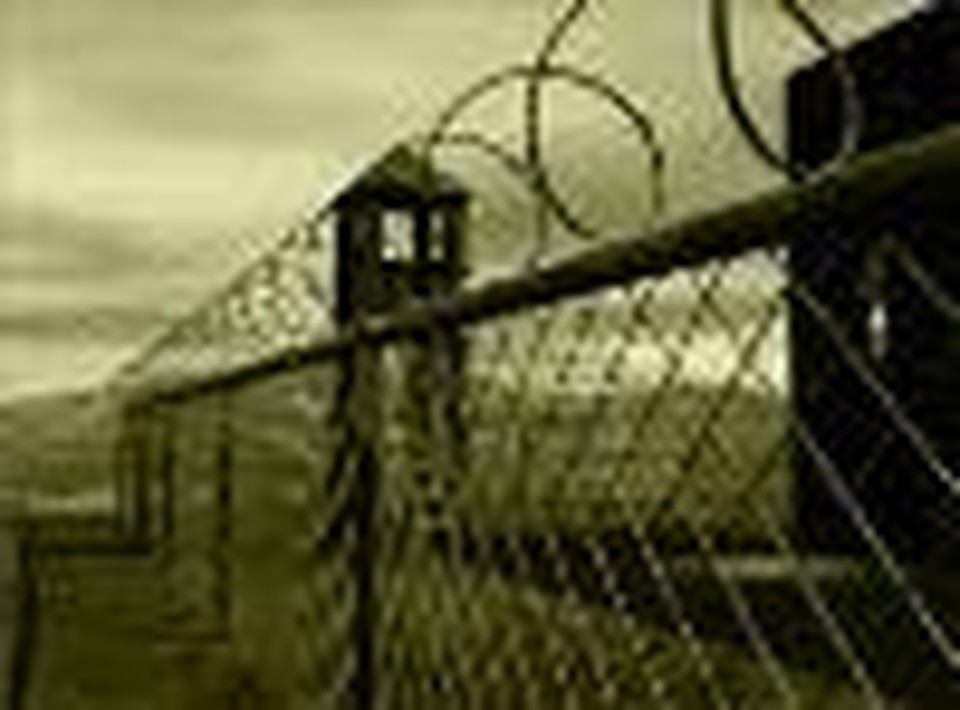
Shortly after her experience in the morgue with Margarita, Jeannine was invited to visit Bellavista Prison and preach in their chapel. Jeannine believed that God had prompted the invitation as a result of her question about what SHE could do. Jeannine had read about Bellavista prison. Commonly called the ''jaws of hell,'' Bellavista was built in 1976 to house 1500 inmates; by 1989 it had swelled to 6,600 hardened and heartless criminals.
Though frightened and feeling inadequate for the task, Jeannine knew that ''only the regeneration of the soul of man by Jesus Christ can transform a fallen society.'' Who would be there in the prison service? ''Hired killers and terrorists.'' Jeannine clung to a verse of Scripture -- Proverbs 28:1, ''The wicked flee when no man pursueth: but the righteous are bold as a lion.''
Behind Bars
Imagine her surprise, after she preached about King David extending steadfast love, to find twenty-three men, with tears streaming down their faces, move forward to receive Christ. That was the beginning. Since 1991, she has helped start a Bible training school in the prison. She spends two days a week inside the prison witnessing and teaching inmates. Under the seminary's sponsorship, The Bible Training Institute prepares spiritual leaders from among the inmates who come to Christ. The academic standards are high for the two-year degree program and the seminary dean awards the diplomas. Over 40 inmates study at the Bible Institute and close to 200 have graduated.
Because of Jeannine's knowledge of Colombia, - she was born there and grew up there - she, as a native Colombian, has been able to meet with law enforcement, political and prison officials to encourage better conditions (basic facilities such as toilets) for the prison and she witnesses to the prisoners and guards, too.
As a result of Jeannine's special calling to take the transforming message of the Gospel to the prisons of Colombia, she lives under the threat of death. Her interaction and outreach ministry to prisoners, ex-prisoners, and their families in Medellín is monitored by some of Colombia's most powerful drug lords, terrorists and hired assassins. Enemies follow her and trace her steps forcing her to regularly change her routes and routines.
Several years ago, the death threats came eerily close to reality. One of the inmates, who had professed Christianity and worked with the prayer group, gave a guerrilla commander false information about Jeannine and her colleague. When the information was passed along to a superior, a death sentence was decreed. When he found out about the death decree, the Holy Spirit convicted the inmate who had given the false information; he came to Jeannine in a panic to confess what he had done and to make it right. He took Jeannine and her co-worker to see the commander. Eventually, the accusations were disproved and the death threat lifted. When Jeannine was breathing more easily, she was reminded of the passage in Matthew 10:16-31, ''I am sending you out like sheep among wolves.''
A Miracle of God
Bellavista prison certainly qualified as a ''den of wolves.'' And, the Christian ministry within the prison walls is a miracle of God that began long before Jeannine arrived. Back in 1989, dead bodies on the floor and blood-splattered graffiti on the walls was common in the prison. Mindless mobs hacked victims, sometimes cutting off heads and gouging eyes. It was one of the bloodiest prisons in the world with innumerable riots and 30 to 60 murders a month. At its worse, even the guards refused to go inside the prison gates.
At that time Bellavista's riots threatened to spill over into the entire city. Many thought that the only solution to the mayhem was to send in the army. Reporters swarmed outside the jail expecting a massacre when the military took over and tried to crush the rebellion.
In the warden's office, though, a quiet decision changed everything. And, since 1990, there have been no riots and only eleven murders. What happened in 1989?
Instead of sending in the military, the warden gave permission for a small group of Christians to hold a prayer meeting inside the prison walls. Incredibly, the Spirit of God moved in that place and prisoners began surrendering their weapons to a former inmate turned volunteer chaplain. Jeannine explains, ''In the midst of a country racked by moral bankruptcy, hollow religion and war, God is moving in unprecedented ways. The Holy Spirit is giving life where death reigns.''
But, like most revivals and movements of God's spirit, the groundwork for the miracle had begun years before. That former inmate had been working in the prison for three years - arriving at 8 a.m. and spending the entire day inside with the prisoners right in the midst of the mayhem.
Bellavista Prison had become a training ground for the city's killing fields with the prison aisles becoming just another harsh dimension of Colombia's internal wars. ''Fiscal adjustments'' had gutted the military forces and created a police shortage. Crime and drug trafficking had increased dramatically. Military intelligence estimates reported during that time that three thousand contract criminals specializing in homicide, kidnap and extortion prowled the city and that over one hundred and twenty gangs were willing to kill for pay.
Colombia's second largest newspaper, The Colombiano, stated that ''homicide during the decade of the nineties oscillated between 20,000 and 30,000 cases [of violent death] PER YEAR.'' Paramilitary movements were engaging in guerrilla warfare and the Revolutionary Armed Forces of Colombia (FARC) were trying to topple the government.
The small revival effort inside the prison began in 1976 with Canadian missionaries who built a Protestant chapel in the prison and formed a prison glee club. In the intervening years, the Salvation Army, the Baptist church and Prison Fellowship joined in bringing the light of the gospel of Jesus Christ into the darkest corners of that desolate prison. When the warden gave permission to hold the prayer meeting in 1989, over 300 Christian inmates gathered as prayer partners, and together, these Christians were an incredible witness to God's power and the boldness of His people.
Through them revival spread throughout the prison. The changes at the prison since that day are dramatic and profound.
More than 150 believers pack the chapel at dawn every day. Scores of others meet twice a day in every patio. Each patio or pavilion has two or three elders, one of whom serves on the governing body of the Church behind bars. There is a daily radio broadcast that offers counseling and provides opportunities for inmates to tell their families about their transformations. The counseling service produced 50 calls during its first two hours of service. During weekend visitation, inmates hold evangelistic services for their families.
It's a Fallen World
After the planned attack against Jeannine, a former colleague, who had worked side-by-side with the Christians, expressed dismay at the depth of evil planned against them by an inmate who had worked among the Christians, Jeannine reminded them that we live in a fallen world where pride, ambition, fame, and money can ruin God's servants. ''Sin'' she said, ''destroys, but we are not to fear those who kill the body. We are to fear the sin that will destroy us eternally. Our greatest concern ought to be that we die to sin daily.''
Occasionally, as she ministers in the prison, Jeannine remembers the time when she was eleven years old. Her parents, Margaret and Harold Brabon were missionaries who raised their four children in Medellín. They were of the generation and missionary society (OMS International) that founded the seminary where Jeannine teaches. At eleven years of age, Jeannine heard the voice of God calling her to be a missionary following in her parents' footsteps. ''But I can't be a missionary,'' she said. ''I am not brave enough.''
Those who see her today know that she not only is brave enough, she has the boldness spoken of in her favorite verse Phillipians 1: 20-21. ''According to my earnest expectation and my hope, that in nothing I shall be ashamed, but that with all boldness as always, so now also Christ shall be magnified in my body, whether it be by life or by death. For me to live is Christ, and to die is gain.''
When asked to explain what is happening inside Bellavista, an inmate says, ''God chose what is foolish in the world to shame the wise, God chose what is weak in the world to shame the strong, God chose what is low and despised in the world, even things that are not, to bring to nothing things that are, so that no human being might boast in the presence of God.''
- Read past issues of the dot.commentary here.
- Visit the Beverly LaHaye Institute at www.beverlylahayeinstitute.org
Janice Shaw Crouse, Ph.D. recently coauthored the book, A Different Kind of Strength, with Beverly LaHaye. She served as a university professor, debate coach and academic administrator before becoming a Bush Presidential Speech Writer.
Originally published October 17, 2003.