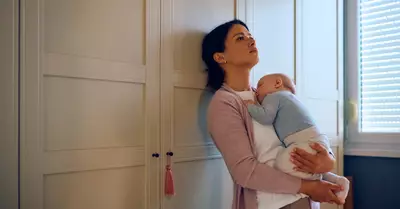
Once upon a time, the group seeing the largest increase in depression was adults over forty. Depression is now rising among children, and it’s striking them at younger and younger ages. Instead of progressively learning how to live fully and meaningfully, kids are becoming more worried and tentative and less able to grow through facing normal issues and conquering their challenges.
An anxious and fearful mindset is heavily linked to depression. Some kids, around 20 percent, are born with a more fearful pre-disposition than others. “They can be spotted in the womb; they have fast heartbeats. Their nervous systems are innately programmed to be over-excitable in response to stimulation, constantly sending out false alarms about what is dangerous.” Already, as infants and children, these kids see threats where others don’t. They tend to be shy, withdrawn, and lacking in social confidence; other kids see their vulnerability and often target them for bullying.
If this were the only information we had about such children, we might conclude that their lot in life was held in the cold hands of destiny and DNA. However, research shows that genetic programming isn’t inevitable:
At age two, none of the over-excitable infants wound up fearful if their parents backed off from hovering and allowed the children to find some comfortable level of accommodation to the world on their own. Those parents who overprotected their children—directly observed by conducting interviews in the home—brought out the worst in them.
Says Michael Liebowitz, clinical professor and head of the Anxiety Disorders clinic at New York State Psychiatric Institute:
[Children] need to be gently encouraged to take risks and learn that nothing terrible happens. They need gradual exposure to find that the world is not dangerous. Having overprotective parents is a risk factor for anxiety disorders because children do not have opportunities to master their innate shyness and become more comfortable in the world.
This cuts down two false parental assumptions. The truth is, constant scrutiny leads anywhere but toward innate confidence or inner strength. It makes kids self-conscious and even self-obsessed. It teaches them to bury their feelings and to lie about the emotions they do experience. They come to feel they have no real choice in the matter: The message sent by constant scrutiny is that the “right” emotions are the ones their parents want them to express. This gradually paralyzes the growth of any child, and it can do untold damage to boys, who lag behind girls in emotional intelligence. Broad denial of emotions is one reason today’s teenagers can seem so absurd. Even though what they’re hiding is in plain view, they feel they’re better off pretending it isn’t there—they’re desperately trying to get out from under the magnifying glass.
This treatment of children is usually well-meant but usually disastrous. It makes kids prone to some of the worst mental illnesses, and it weakens our social fabric by weakening young people to the point of cowardice. These children are more prone to follow destructive peer pressure, more susceptible to herd mentality, more passive against bullying and abuse, far less likely to defend another person, and unwilling to assert their will in questioning corrupt authority.
This last observation, an inability to recognize and differentiate between healthy and unhealthy authority, is particularly important to the work I do with passive men, whom I call Nice Guys. It can take them years to confront clear examples of workplace bullying or social abuse—some of which would likely be deemed illegal. When some never do confront it, they’re filled with shame and self-reproach, but they’ve been trained (often through an overprotected childhood) to rationalize away their emotions and to simply accept abusive treatment. Their will, their conscience, their dreams and desires—their being—was so overridden for so long by hovering parents that they became programmed to accept anything and everything that comes their way.
Another pitfall of overprotection is a heartbreaking irony: Because over-parented children are taught to obsess over themselves, they don’t learn how to connect with others. Helicopter parents, who think they are drenching their children with love, are raising lonely sons and daughters. The kids’ constant self-focus, developed under the tonnage of unending parental intervention, handicaps them in every social setting.
Self-focused kids—whether they’re shy and withdrawn or brash and mouthy—do not reach out to other people. They’re not friendly, so they don’t make friends well. Their near total self-consciousness appears to others as self-absorption. What they need is wise guidance and encouraging nudges. Problem is, that’s exactly what many overprotective parents find distasteful and don’t want—nudging their kids outward, even little by little, would negate their constant presence and persistent meddling.
And when they do allow their children to enter “the realm of others,” by demanding special consideration, they expect others to coddle their child. They tend to unleash harsh words and passive-aggression on those who don’t, whether grown-ups or youngsters. Such parents, mostly mothers, stack the deck against their own best interests as they contaminate play and turn their children into the pariahs of the kid world.
These lonely children tend strongly toward depression—again, they don’t learn how to think and choose for themselves, and their brain gradually becomes more and more unable to manage their situations. Furthermore, though, because their parents’ words and actions teach them that virtually everyone else is an enemy or an antagonist, they can also become unreasonably suspicious, or in a word, paranoid.
Timid, isolated kids see offense where no offense is given. For instance, an unintentional elbow in the back during recess is considered a calculated attack; the child who sees it that way is touchy, uppity…a potential wimp and a target for bullies. Kids who integrate well and understand the nuanced world of play get invited to play with other kids. Those who don’t are excluded, overtly or covertly, and that dangerous cycle can form very early—experts say sometimes as early as three years of age.
Social ties not only keep us at healthy distances from the cliffs of depression and anxiety, they also keep us tethered to the real world, grounded in the sometimes-hard-to-ascertain state of reality, especially when we’re under intense or prolonged stress. A good friend or network of friends can help keep us from sinking in many of life’s deep ends.
In the long run, the ability to maintain social ties is probably the best kind of life and health insurance. “This has already become part of the wisdom of the culture. Medical studies tell us that having friends, even animal ones, improves physical health among [for example] the sick, the disabled, and the elderly.”
One aspect of our immune system is particularly relevant to the shy child. He or she seems, broadly, more attuned to picking up negative signals than positive ones. A mildly negative event, like a look of disapproval from a friend, registers far more strongly than moderately positive events, or even strongly positive ones.
Dr. John Gottman, of the Gottman Institute, has found that a single look of contempt can outweigh five good acts. If this predisposition to taking predominantly negative feelings to heart is common in people generally, it’s that much more so in the hyper-sensitive child, one who lives in a world filled with various degrees of fear. This not only puts her even further behind in life, it also places her squarely in the path of another devastating force for overprotected children: Their timid, helpless disposition and countenance throughout the school day means they’re the kind of kids that attract bullies.
Next time: Overprotection and bullied victims.
Paul Coughlin is the author of numerous books, including No More Christian Nice Guy and No More Jellyfish, Chickens or Wimps. He also co-authored a book for married couples with his wife Sandy, titled Married But Not Engaged. His articles appear in Focus on the Family magazine, and he as been interviewed by Dr. James Dobson, FamilyLife Radio, HomeWord, Newsweek, C-SPAN, The New York Times, and the 700 Club among others. Paul is founder of The Protectors, the faith-based answer to adolescent bullying, which provides curriculum for Sunday Schools, private schools, retreats, and individuals that trains people of faith to be sources of light in the theater of bullying.
Visit Paul's websites at: http://www.theprotectors.org, and http://www.paulcoughlin.net
Visit
Max’s mom had a difficult upbringing that included physical and emotional abuse. She vowed that when she became a mother she would not perpetuate the same mistakes—she wanted her son to experience none of the pain she’d endured. Unfortunately, she failed to see the difference between debilitating suffering and the kind of day-to-day distress that gradually teaches children how to thrive in the real rough-and-tumble world.
They lived in relative ease and privilege, but Max’s mom lived as though every object and idea in existence could (and would) harm him. Her campaign to scrub his world of discomfort began when he was a newborn. She would search the inside of his sleepers for an imperfect seam. Anything with the hint of a rough spot was rejected and thrown away.
She verbally horsewhipped neighborhood kids if they hurt his feelings. She soon became known as the “crazy lady” up the street. If he had a complaint about a class, she was there in a moment, telling the teacher how bad she was at her job. She was the kind of mom educators love to see leave their school, the kind that makes good teachers leave the profession.
She had in her mind an immature mantra: Protect my son at all costs. And sadly, at least for a while, she succeeded—she smothered him. Her overprotective approach toward motherhood is reminiscent of Truman Capote’s epigraph in his last, unfinished work: “More tears are shed over answered prayers than unanswered ones.”
Her protection further isolated Max from the world of boys and men, who found him odd and his company distasteful. He didn’t act like a man in the making. Nor did he show much interest. He hung out on the sidelines of life, rarely saying or doing anything of substance. He dropped out of high school and sold drugs.
Max doesn’t remember being disciplined, and so he never acquired self-discipline. He also didn’t receive any parental consequences for his increasing criminal behavior. Neighbors complained, “Has anyone ever told him the word no?” Max was a product of his age, of good-intentioned parenting that followed this contemporary belief: Good self-esteem comes from always feeling good about yourself, from never feeling pain or discomfort, from having every potential risk screened and eliminated before it reaches you.
Obsessive hyper-management was like a moniker on a sweater: Good Mother. You could see it in her eyes and in her stride when she swooped into action on behalf of her son, the project into which she funneled her fears. She believed that the wake forming behind her—roiling with belligerence and insults upon those misfortunate enough to receive her abuse—was clearing the way to a brighter future for her only child.
Hers weren’t just everyday run-of-the-mill battles, the kind that make up the usual grind of life. From the tone in her voice, the resolve in her eyes, and purposeful heaviness in her stride, she seemed to see herself as a present-day Joan of Arc. Hers was a crusade: Good Versus Evil. How could anyone reproach such earnestness, such fervor, such seeming nobility?
But there was another reason she behaved this way. She needed her boy to fill a void in her. She was lonely. Because she ate through the goodwill of others, she burned through friends; however, Max wasn’t a flight risk. His dependency upon her made him a willing captive, a slave to her unmet desires, a needed companion to stave off the hell of isolation through the sin of emotional incest.
The current result of her hovering and bullying parental philosophy? Max is addicted to heroin, is in and out of prison, and sleeps in his car. He, like her, is fragile, broken, and depleted. He was overprotected, and now he is undernourished and underdeveloped. His scars, as with all emotional and spiritual scars, still contain wisdom and hard-to-decipher signposts pointing the way back to wholeness. Yet he doesn’t have the skills, perseverance, or courage to unearth them, study them, learn from them, and repent—he has no idea how to proactively turn away from lies and toward truth. He needs a soul transplant.
Many men, like me, struggle with parenting that smothers, though women are front-lining the charge in this obsession with riding roughshod over children. Some mothers have unfulfilled and frustrated romantic yearnings, energy from which is often channeled into hyper-parental vigilance, leading to highly enmeshed mother/son relationships that emasculate young men. Specifically, maternal overprotection leads to victimization: It is one of the most powerful predictors that the son will be picked on in school and that he will not offer resistance. When a boy’s mother drastically eliminates his exploration of the world and vicariously fights his battles, he will be perceived as a victim—in particular, a passive victim.
Overprotective parents:
~Interrupt their children often
~Tell their child what to think and feel, even telling them that
what they are currently thinking or feeling is wrong. (In Christian circles, they might be told, for example, that feeling anger is sinful.)
~Override their child’s initiative.
~Abruptly change topics of conversation.
~Tell their child to change his/her facial expression.
~Are only willing to discuss certain issues.
Today’s prevailing Christian worldview largely demands that a mother overprotect her sons, and she’s often regarded as negligent if she doesn’t. For a woman to raise a courageous child who has Christlike characteristics in his life, she must swim against the predominant subcultural mainstream and allow him to take meaningful risks through which to grow and mature.
As we saw with Max’s mom, loneliness is another common source for overprotection that carries with it the potential for overarching fear and degrees of paranoia. What’s so slippery about such behavior? It appears so sacrificial. It’s selfishness disguised as thoughtfulness.
Furthermore, a good desire to nurture, taken too far, can be far too much of a good thing. Here’s Dr. James Dobson’s gentle explanation:
From about three years of age, your little pride and joy
begins making his way into the world of other people…This
initial “turning loose” period is often extremely threatening
to the compulsive [often an overprotective] mother. Her
natural reaction is to hold her baby close to her breast,
smothering him in “protection.” By watching, guarding,
defending, and shielding night and day, perhaps she can
spare her child some of the pain she herself experienced
growing up. However, her intense desire to help may actually
interfere with growth and development. Certain risks must be
tolerated if a child is to learn and progress.
Contrary to our assumptions, kids who receive constant parental protection don’t do better in life. When they’re too often harbored from inevitable hardships and challenges, they do not develop a keen understanding of their own abilities and weaknesses. Sometimes they become overconfident, possessing a distorted sense of themselves; most of the time they lack confidence, some to the brink of social anxiety and clinical depression, prime targets for childhood bullying that can persist into adulthood.
These latter kids, over months and years of not being able to grow, have a vital life power gradually drained from them, making them unable to donate power to others and to live intentionally, redemptively. Some never fully recover. Others spend part or most of their adulthood “getting their life back,” or rather, becoming themselves for the first time; many of these do so only after devastating blows like divorce, career chaos, or bankruptcy.
Whether overprotected children become arrogant (over-confident) or self-diminishing (under-confident), they share the same malady: they focus too much on themselves, and not enough on others. This is a basic component of narcissism; narcissists of all kinds are socially inept, repeatedly displaying behavior that breaks relational ties with others, pushing them further into the pit of isolation.
The consequences of wrongly raising our kids can be deadly. It’s not so much that we need to do more. It’s that what we’re doing needs to be different. We need to change course.
Paul Coughlin is the author of numerous books, including No More Christian Nice Guy and No More Jellyfish, Chickens or Wimps. He also co-authored a book for married couples with his wife Sandy, titled Married But Not Engaged. His articles appear in Focus on the Family magazine, and he as been interviewed by Dr. James Dobson, FamilyLife Radio, HomeWord, Newsweek, C-SPAN, The New York Times, and the 700 Club among others. Paul is founder of The Protectors, the faith-based answer to adolescent bullying, which provides curriculum for Sunday Schools, private schools, retreats, and individuals that trains people of faith to be sources of light in the theater of bullying.
Visit Paul's websites at: http://www.theprotectors.org, and http://www.paulcoughlin.net
Visit
As Christians, we’ve been told and taught that we build integrity and character by avoiding sin. Part of that answer (the negative) is right, but in overlooking the other half (the positive), we sell our kids down
Courage, also known as fortitude, is the ability to confront fear, pain, danger, uncertainty, or intimidation, whether for ourselves or for others. Courage, one of the four “cardinal virtues” (along with wisdom, temperance, and justice) is pivotal, because in order to possess any virtue, truly, a person must be able to sustain it in the face of difficulty. This is why Winston Churchill called courage the “first of human qualities…because it guarantees all the others.”
Courage is the foundational virtue upon which others rest. Or don’t.
I believe we have avoided and minimized this dimension of character, in part, to settle our internal rumblings about our lack of virtue. Senator John McCain, former prisoner of war and author of Why Courage Matters: The Way to a Braver Life, implies that we set the bar for “courage” almost on the ground, just so we can think and say that we have it: “We say it takes courage to be different from the mainstream in our preferences in fashion, music, the length and color of our hair.”
And he says, we are not teaching our children what this foundational virtue really is.
If children are taught that simply being honest or doing the
best we can or appreciating what they have without
complaint is considered by their society to be an act of
courage, will they be more or less motivated to summon
the real thing in a crucible?
We know the answer to McCain’s rhetorical question even if we don’t want to admit it. His guidance for parents is even more pointed:
Parents who want their children to have courage usually
think of it in its physical expression first, and they try
to impart it to them by experience and encouragement.
When they fall from the horse we’ve set them
upon, we’ll encourage them to get back in the saddle.
Don’t be afraid of the ball, we tell them, trust your
reflexes and your glove. Don’t give up, keep trying,
you’ll get better. These are, of course, sensible
encouragements to a child. They need to be so
encouraged. But we’re not exactly teaching them
courage. We’re teaching them physical skills.
We’re teaching them to be strong. We’re helping
them acquire fortitude. We’re building their
confidence and giving them hope. These are
elements of courage in most instances, but not the
whole virtue. Their effect alone might only be to
give them daring, nerve. They might grow up and
climb mountains or become risk-taking entrepreneurs.
Not necessarily bad things. But is that all we think
courage is? Is that what we’re trying to teach them?
Without other instruction, they could turn out to be
Enron executives. They had daring, to be sure. But
they lacked ethics. They lacked a sense of honor, and
they lacked courage.
Here’s another way of thinking about this issue: How often do we diagnose a behavior as cowardice? For instance, what do you say after your son tells you about a bullying he witnessed and didn’t intervene, just stood there with the group? Have you helped him figure out that the sludge-like feeling gumming up his soul is a result of cowardice? Do you explain that cowardice is a normal but insufficient response to seeing someone unjustly treated or cruelly humiliated? Do you teach him that being wise and acting thoughtfully does not mean he is also to remain frozen, inert, and innocuous?
For some, the shame of cowardice upon their soul, mind, and heart lasts forever. Writes street evangelist Truxton Meadows:
I’m forty years old. And I’ve lived a lot of life and made
many mistakes. I have regrets but have reconciled them
in my life. The only nagging regrets I still have that
I can’t reconcile are the times that I could have stood
up for a kid that was getting bullied and I didn’t. I was
small and got picked on myself so I didn’t want to draw
the bully’s attention and sometimes joined in to fit in.
I regret that I never stood up for myself and others.
Many parents have never even had a conversation with their children about cowardice. Warning against its corrosive nature isn’t even usually on our parental radar, or included in many sermons. Instead, most of us are quick to warn our kids to avoid getting too involved (or involved at all) when someone is mistreated because of the collateral damage it may do to them. This is in direct defiance to how Jesus told us to live (see the parable of the good Samaritan in Luke 10). And we’re overlooking the far-reaching damage of cowardice itself: Ultimately, cowardice can be as destructive as drug addiction.
We don’t discuss how cowardice undermines our integrity and character, much less what God says about it. There are approximately thirty biblical examples of cowardice, and every one is a cautionary tale. Are you aware that even in many countries (such as
We don’t talk about cowardice with our children because we don’t really think courage is all that necessary in the first place. We also can’t bear the thought that our kids might exhibit cowardice. In fact, in this area, we’d rather be ignorant or uninvolved than engage the matter and help our sons and daughters go to work on it. We’re more worried about hurting our children’s feelings than we are concerned about cultivating hearts that don’t listen to fear when making decisions.
We all make mistakes, partly because going into parenting at first means going in somewhat blind. Most of us get (or at least feel) sucker-punched now and again. If you’re like me, prone to self-flagellation or condemnation, I want to encourage you, instead, to begin using that energy toward charting a better course. When we’re all racing in place on the same Tour de Fear hamster wheel, everybody loses—children and parents.
We’re afraid of falling behind. We’re worried our kids might not do as well as other kids. We’re terrified that we’ll fail, and that our children will grow up to be the everlasting proof of our inadequacy. Letting them learn and decide to make choices and take calculated risks feels wrong, broken somehow.
By living out of our fears, we’ve made parental panic culturally acceptable. But the apostle John, in proclaiming the truth of Jesus, makes clear that where love reigns, fear is clipped (see I John 4). Instead of building entire lives and families on a foundation of fear and frenzy, we can choose to equip and empower our sons and daughters for a future of fullness.
An anxious approach to life leads to an anxious life, a life prone to depression, instability, abuse, atrophy, and addiction. We need to look at the source of our parental anxiety, asking ourselves, which came first: deep-seated anxiety in kids, or overarching anxiety in parents? We also need to consider how our children can possibly fare well in life on their own if we persist in our unceasing advice, micro-structured decisions, and every-second protection.
Ultimately, kids need to learn how to fly, and we must ask: Just how strong can their wings get when they’re never allowed to use them?
Paul Coughlin is the author of numerous books, including No More Christian Nice Guy and No More Jellyfish, Chickens or Wimps. He also co-authored a book for married couples with his wife Sandy, titled Married But Not Engaged. His articles appear in Focus on the Family magazine, and he as been interviewed by Dr. James Dobson, FamilyLife Radio, HomeWord, Newsweek, C-SPAN, The New York Times, and the 700 Club among others. Paul is founder of The Protectors, the faith-based answer to adolescent bullying, which provides curriculum for Sunday Schools, private schools, retreats, and individuals that trains people of faith to be sources of light in the theater of bullying.
Visit Paul's websites at: http://www.theprotectors.org, and http://www.paulcoughlin.net
Visit
In my previous article, I discussed how misunderstanding and ignorance have too often led Christian parents to raise fearful, unassertive children. Now we reflect on how we came to that point.
Marital disintegration often creates fragile, timid, and wary children. If they ever had it at all, the parental strength they once relied upon to help them face their inner insecurities and outer-world concerns becomes disrupted and usually dismantled. Sometimes their fragility is concealed behind a fake toughness; what’s not hidden is a closed spirit that requires special healing to reopen.
Pop star Kelly Clarkson, who experienced this kind of home-life distress, wrote a dark and accusatory song that resonates in the hearts of many young adults who find themselves in a similar place. Her “Because of You” video shows a husband and wife at each other’s throats while a little girl watches. After verbal brawls, depression, breakage, and tears, the father moves out.
Clarkson is that brokenhearted little girl. The song’s poignant and painful chorus says that because of her parents’ choices, she stays on the safe side of life, has a hard time trusting herself and others, and lives in constant fear. In an online interview she admitted it was hard for her family to watch the video, but she says “Because of You” is more than a protest. “The song is about breaking that cycle [of domestic violence and divorce] and not carrying it on to the next generation. Kids are like sponges, and they imitate what they see. And sometimes that’s not fair because what we see is not good for us.”
It’s a phenomenal tragedy that divorce rates in the church aren’t markedly different from those in the general culture. At the same time, in recognizing the damaging effects of divorce and in seeking to stem its prevalence, the Christian community is among the few brave entities to confront the nefarious effects of divorce upon individuals and societies.
We need to learn how to start showing courage in other ways as well. Christian culture is prone toward “bubble living,” isolating (or thinking we’re isolating) ourselves from danger when sometimes what we’re really doing is trying to immunize against living real life.
We’re good at focusing on the negative: Jesus did say we’re not to be of the world. Yet we somehow manage to forget the positive: we also are to be in it (see John 17). Failure to recognize and apply this—indeed, many Christians seek to live out the opposite—contributes to the crisis of fragile and ill-prepared children. If they’re sealed in a biosphere for eighteen years, sure, they may stay “uninfected”…until they’re let out. Then, far from being immunized or inoculated, they’re prone to catch almost anything.
I’m still amazed by what I saw kids from Christian homes do when they got to college, away from their highly sheltered lives. They had professed to follow the Lord and receive His whole council, and they had lived such highly prescribed lives, but if their parents only knew half their exploits, they might, like Job, tear their clothing and sit in ashes. “Every fall,” observes John Portmann, professor of religious studies at the
By and large, we’re not debilitating our kids on purpose. Over the years I’ve slogged through a ton of negativity, and I’m insistent that guilt is not an acceptable synonym for parenthood. Nonetheless, often with the best of intentions, Christian and non-Christian parents alike are raising children who are passive, pleasant, and malleable rather than innovative, proactive, and bold. These “nice” children prevalently struggle with fear, anxiety, loneliness, and, later in life, relational instability and divorce. Our goal should be to create confident and truly virtuous kids who are capable of doing more than their part in obtaining an abundant life. These children become adults who lend their strength to others and help them obtain happiness as well.
I have coached soccer for both genders, mostly boys, for more than a decade. Some are home-schooled, most go to public school, and some come from private schools. The kids from religious homes are mostly Christian, some Jewish, or a mixture of religious expressions and beliefs. Some don’t go to a house of worship at all.
The only consistent difference I’ve noticed is that the kids who come from religious homes might swear less. If my kid doesn’t curse, we say to ourselves, I’m doing well. In that one sense, this does make them different, but in the larger picture of life, it’s a pathetic difference. Talk about straining at gnats and swallowing entire camels! (See Matthew 23:24.)
Jesus used this metaphor to describe errors the religious leaders of His day were perpetrating. They paid too much attention to minor matters and in the process ignored “weightier” matters like “justice, mercy, and good faith.” I sometimes do the same thing as a parent, and I’m not proud of the reason: I strain at gnats because in myriad ways it’s easier than teaching and living out for my kids a Christlike example of what matters most.
Swearing is the gnat some schools strain as well. My old high school, for example, held a summit among teachers and staff and decided that in the entire galaxy encapsulating tumultuous youth—which includes bullying so pervasive that an estimated 160,000
I’m not advocating swearing, especially taking the Lord’s name in vain. But instead of a primary emphasis on rearing children known for not swearing as much as their peers, what about producing children known for their love of justice? Children who, with this love, are trained in the shrewd ways of creating righteousness and peace? What about rearing warriors of light, the kind of kids with fortitude and perseverance to withstand the wicked peer pressure that pounds them and others? Give kids this kind of upbringing, and issues like swearing may well just take care of themselves. After all, Jesus said it’s what comes out of us that defines us and can defile us; a heart that produces blessedness and light cannot continue to produce profanity and darkness (Mark 7:14-23; Luke 6:44-46).
Here’s another difference I’ve seen as a coach, and it’s heartbreaking. Religious kids are far more inhibited than their secular peers, and in the wrong way. They’re less likely to put up a healthy boundary against another kid. They’re also less likely to defend another person, and most of them have been drilled from toddlerhood that all conflict is wrong.
Conflict-avoidance disguised as “patience” or “gentleness” is a false front; the vice of cowardice is frequently disguised behind a “forbearing spirit” and a false understanding of gentleness. A gentle person uses the appropriate amount of force and power. When gentleness needs to take a stance, it does, and it does so with grace. But gentleness is always truthful, as well; niceness favors pleasantry and manners over truth. Niceness is the drowning of force (sometimes a good thing), but it can also be the refusal to honor what’s right, the unwillingness to stand tall for any and all reasons.
The understanding that a gentle man still wields force is an eye-opening revelation to many men at my conferences, a revelation that often propels them into more godly living. Learning to use appropriate force in any given situation takes time and a cultivation of virtue. Trace the origin of the word virtue and you’ll see that one of its meanings is “force”: Virtue brings whatever energy and force is needful to a situation.
The belief that nice equals good is among the most amazing deceptions of our time, and it’s resulted in profound spiritual and relational degeneration as we’ve continued to atrophy behind the façade.
Next time we’ll talk about the terrible impact of cowardice and the terrific importance of courage.
Paul Coughlin is the author of numerous books, including No More Christian Nice Guy and No More Jellyfish, Chickens or Wimps. He also co-authored a book for married couples with his wife Sandy, titled Married But Not Engaged. His articles appear in Focus on the Family magazine, and he as been interviewed by Dr. James Dobson, FamilyLife Radio, HomeWord, Newsweek, C-SPAN, The New York Times, and the 700 Club among others. Paul is founder of The Protectors, the faith-based answer to adolescent bullying, which provides curriculum for Sunday Schools, private schools, retreats, and individuals that trains people of faith to be sources of light in the theater of bullying.
Visit Paul's websites at: http://www.theprotectors.org, and http://www.paulcoughlin.net
Visit
In the previous article I explained how today’s anxious parenting style is harming our children by creating fearful, narcissistic, and anxious children. Sadly, Christians with the best of intentions are leading the way to this wrong direction.
Let me explain. Are children aren’t becoming wimpy because we’re teaching them to be humble and training them to embrace patience. They’re going out into the world as wimps because we parents are ignoring the broader counsel of God, pushing away character traits that make us uncomfortable and pretending that being disengaged from the world is actually about holiness and purity, when more often it’s about fear, lack of preparation, and a lack of love.
Many of us have been following a set of principles that’s incomplete at best. This dangerous worldview, this outlook, is no one person’s creation. It’s no one denomination’s fault. It’s what ministers are told is the central thrust of our faith, the main principles to emphasize on any given Sunday. It’s what many of us have believed makes us believers. I call it The Official Script.
The problem with the Official Script is that it overemphasizes certain character traits at the expense of other important character traits. Here is a telling example. Jesus told his disciples that he was sending them into a dangerous world, as if they were sheep living among wolves. His advice? “Be wise as serpents, innocent as doves” (Matt. 10:16). He told those who dared to follow Him to be both streetwise and sin-free. Don’t hurt people, but don’t be a sucker either. But right now, the majority of sermons that parents and children hear are about becoming innocent as doves. The wisdom of serpents is largely discarded.
Because of this, we are ignoring God’s broader council, lopping off entire facets of truth about how life is meant to be lived—about what our heart and mind are to become, and about the choices our will is to make. I can’t overstress this: Usually our human intentions in all of this are for the absolute best. Nevertheless, by whatever name we call this way of life—Fortress Faith, Barricade Belief, Castle Christianity, Ivory-Tower Idealism— what we’re actually doing is replacing love with fear, goodwill with criticism, joy with anxiety, hope with worry, and strength with silence.
We’re often either marginalizing or largely eradicating such rugged virtues as wisdom, shrewdness, boldness, and courage (Interesting, the word Jesus used for wise in Matt. 10:16 can also be translated as cunning or shrewd. And courage’s opposite, cowardice, is listed in the Bible as a sin, equal with faithlessness, murder, fornication, sorcery, and lying [Rev. 21:8]). These aspects of integrity require an active and assertive approach toward life—but many Christians think being assertive is wrong. As a result, we’re bringing up our kids to be so sweet and compliant that I wouldn’t be surprised if the federal government and armed forces commissioned studies to determine whether or not children who grew up in churches are capable of defending our country. They may be forced to create another kind of Don’t-Ask-Don’t-Tell policy.
A football coach at a Christian high school told me it can take the better part of a season to convince his players that it’s okay to try hard in competing against your opponent. ‘‘Many think it’s wrong to,’’ he says, rolling his eyes. ‘‘Some of these boys think it’s wrong to tackle another person. Some of them I’ll never convince otherwise.’’
Why would teenage males believe it’s wrong to compete? Why would Christian school kids believe it’s wrong for them to set a boundary against an aggressive child or to be proactive, protective, and loving and defend someone being bullied? One primary reason is that we’re not showing them all of Jesus, the one who said, “Leave her alone” (John 12:7). Read the Gospels, and you see that, yes, Jesus is the Lamb who was offered as a sacrifice for us. But read Revelation, too; do we know and remember that He’s also the Lion, God’s Ultimate Warrior?
Jesus is meek—He said so himself. Meekness is synonymous with yielding and being submissive. But do we ever pause to ask ourselves, What is Jesus meek toward? We cannot read the Gospels and conclude that He was submissive to the will of man, which is always tainted with self-interest and is sometimes wicked. Jesus is submissive to His Father’s will. This is our calling, as well, and it’s what we should be teaching our children. And being submissive to our Father’s will sometimes brings us into conflict with this world.
Meekness isn’t false humility, meekness isn’t timidity, and meekness isn’t terror of conflict. Meekness is knowing who we are, believing that what God says is true, and then submitting to Him in obedience because we love Him in response to His love for us. Overall, that’s not what our children are receiving from us. Many of us are sending our children out onto life’s daily battlefield in fear that’s born from overprotection.
Making matters worse is how one study shows that 85 percent of people who attend church possess what can be described as a passive personality. Passive people are almost always fearful people who extend fake niceness. They are “kind to a fault.” Yet instead of learning how to be more like Jesus by becoming more bold and courageous, they hear sermons that encourage them to be even nicer and more pleasant, even when the come face-to-face with clear examples of cruelty, injustice and wickedness. For many, it’s the wrong prescription, like giving birth control to a diabetic. Passive people already play life too safe, and they go to churches that tell them to play life even safer, producing children who are even more in love with safety than the risk that accompanies genuine faith and purposeful and intentional living.
Our noble goal is to raise assertive—not passive or aggressive—children who are able to live abundant lives and are better able to love God and others. This requires helping our children to grow the tougher virtues, or what’s called the vegetables of the spirit. But for some Christian parents still reading from the Official Script instead of the gospel facts, encouraging kids to be more ruggedly righteous and to embrace virtues like boldness, tough self-love and tough other-love is a frightening mandate that borders on (and even crosses over into) unchristian behavior. The opposite is true. Furthermore, I’m not advocating the development of children who are selfish and mean—again, just the opposite.
I’m talking about children who are well-schooled in assertive living and are more likely to become powerful and redemptive forces for good. People who understand that in order to possess integrity that a person must be willing to able to use force justly, which is part of the original definition of integrity. Children who as adults are better able to handle their own tears and to help dry the tears of this world. Children who throughout their lives can love their neighbor and ‘‘encourage the timid and help the weak’’ (1 Thessalonians 5:14) through sharing their strength and goodness.
As I explained in both No More Christian Nice Guy and Married . . . But Not Engaged, what many of us consider to be manners or decorum, or being pleasant and considerate, is actually fear and passivity. This is vice disguised as virtue, and until we call it what it is and begin changing our belief and practice, we will carry this deception into our parenting, just as we carry it everywhere else.
I’m glad to say that a growing number of Christian parents are bucking the trend to overprotect their children, though they will appear a little odd. They are entering the fray, picking up their swords and raising their voices against the tides of both culture and church that weaken rather than empower us and our children. George Barna, in his provocative work Revolution, calls such people ‘‘revolutionaries.’’ A revolutionary might ‘‘feel like the odd person out’’ and be ‘‘embarrassed by language that promises Christian love and holiness but turns out to be all sizzle and no substance.’’
I think Barna’s right. Too many Christian kids have grown up believing that being nice and pleasant is synonymous with being good and righteous. They suffer from this shell game. For many, this indoctrination begins in Sunday School where they learn that “Jesus is your Savior. Now let’s make a rainbow.” It sounds odd to think that they should be making shields and swords instead, but this is the direction the Bible gives us, if only we can surmount our beloved infatuation with well-meaning overprotection.
Paul Coughlin is the author of numerous books, including No More Christian Nice Guy and No More Jellyfish, Chickens or Wimps. He also co-authored a book with his wife, Sandy, for married couples titled Married But Not Engaged. His articles appear in Focus on the Family magazine, and he as been interviewed by Dr. James Dobson, FamilyLife Radio, HomeWord, Newsweek, C-SPAN, The New York Times, and the 700 Club among others. Paul is founder of The Protectors, the faith-based answer to adolescent bullying, which provides curriculum for Sunday Schools, private schools, retreats and individuals that trains people of faith to be sources of light in the theater of bullying.
Visit Paul's websites at: http://www.theprotectors.org, and http://www.paulcoughlin.net
Visit Sandy's website for reluctant entertainers at: http://www.reluctantentertainer.com