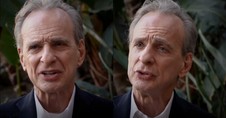

When Wesley Clark, a retired Army four-star general, announced his run for the Democratic presidential nomination, the Washington Post was moved to comment that Clark is "a work in progress." That much remains clear after several months on the campaign trail. On issues ranging form war in Iraq to abortion to economic policy, Clark still appears like a man looking for a platform even as he runs for the nation's highest office.
Any way you look at it, Clark's resume is impressive. He was first in his class at West Point, served with honor in a number of military postings, and then rose to be Supreme Commander of NATO forces in Kosovo. In addition, Clark was a Rhodes scholar and has connections to virtually every important constituency in the military and diplomatic establishment. His military career was controversial, and ended with a forced retirement. That said, we still do not know who Wesley Clark really is.
Oddly enough, Clark began the presidential race still registered as a Republican. Behind his meteoric candidacy for the Democratic presidential nomination stands former President Bill Clinton, who shares Clark's Arkansas roots and directed the policy Clark put into action in the Balkan crisis. Some political analysts believe that Clinton sees Clark as the only way to retain control in the Democratic Party, as former Vermont governor Howard Dean attempts to steer the Democrats in a very different direction.
In assembling his platform for the race, Clark repackaged himself as a Democrat who is strong on national defense, opposes the war in Iraq, and supports a host of liberal social policies. In the early weeks of the campaign, Dean revealed himself to be pro-gay rights and pro-abortion, and identified with the liberal establishment of the Democratic Party. His policy statements, though brief, tended to appear as if written by the Democratic Leadership Council on economic matters, and on social issues to be written by the constellation of liberal special interest groups that dictates terms to the Democrats.
On abortion, Clark had argued that he would "oppose measures that interfere with the ability of a woman and her doctors to make choices about her reproductive health." In another statement, Clark asserted that "every woman deserves complete information about and access to birth control so that families can be planned and so that every child is a wanted child." On the issue of partial-birth abortion, Clark appeared to be somewhat ambivalent. The told CNN: "I don't know whether I'd sign that bill or not. I'm not into that detail on partial-birth abortion. In general, I'm pro-life--excuse me, I'm pro-abortion rights."
A very different Wesley Clark showed up in an interview last week with the Manchester [New Hampshire] newspaper, The Union Leader. Clark said that he would never appoint a pro-life judge to the federal bench, citing the judicial precedent of the 1973 Roe v. Wade decision as his rationale. From that start, Clark then proceeded to launch a radical vision that goes beyond anything ever articulated by a major presidential candidate to date. "Life begins with the mother's decision," Clark argued. According to the news story: "The presidential candidate also told The Union Leader that until the moment of birth, the government has no right to influence a mother's decision on whether to have an abortion." This statement, whether premeditated or not, indicates the radical nature of Clark's position on abortion. He now argues that the government has no right even to influence a woman's decision concerning abortion--right up to the moment of birth.