
Declare Your Faith - Sign the "I Am a Christian" Pledge
E-MAIL NEWSLETTERS


There was an error processing this request. We cannot subscribe you to newsletters at this time. Please contact technical support with details.
Featured Sponsors
Sponsorship

About Albert Mohler

Dr. R. Albert Mohler, Jr., serves as president of The Southern Baptist Theological Seminary—the flagship school of the Southern Baptist Convention and one of the largest seminaries in the world. He is a theologian and ordained minister, as well as an author, speaker and host of The Albert Mohler Program.

Search The Bible   
Advanced Search
<< >>

Albert Mohler

Author, Speaker, President of the Southern Baptist Theological Seminary

Thursday, May 14, 2009

R-E-S-P-E-C-T: Should Christians "Respect" Other Religions?

The world we now know is marked by religious pluralism and the clash of worldviews.  The modern world brings individuals and groups of different belief systems into both proximity and potential conflict.  How should Christians respond when asked about this?  Should Christians "respect" other religions?

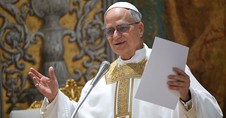
Headlines throughout the world announced this week that Pope Benedict XVI, while visiting Jordan, spoke of his "respect" for Islam.  This came on the heels of the Pope's notorious 2006 speech at Germany's Regensburg University.  In that speech Benedict quoted Emperor Manuel II, one of the Byzantine monarchs, who said:  "Show me just what Muhammad brought that was new, and there you will find things only evil and inhuman, such as his command to spread by the sword the faith he preached."

The outrage throughout the Muslim world was immediate and overwhelming.  The Pope issued clarifications and explanations, but Muslim outrage continued.  This week, with the Pope scheduled to make his first papal visit to an Islamic country, the sensitivities were high.

The Vatican's official transcript of the Pope's comments at the Amman airport records him as saying:

My visit to Jordan gives me a welcome opportunity to speak of my deep respect for the Muslim community, and to pay tribute to the leadership shown by His Majesty the King in promoting a better understanding of the virtues proclaimed by Islam.

There are so many different angles to this situation.  First, we have the spectacle of a Pope being received as a head of state.  This is wrong on so many counts.  Second, we have the Pope speaking in diplomatic jargon, rather than in plain and direct speech.  Third, we have the Pope speaking of "respect" without any clear understanding of what this really means.  Does the Pope believe that Muslims can be saved through the teachings of Islam?

Actually, he probably does -- at least within the context of a salvific inclusivism.  The Roman Catholic Church officially teaches that Muslims are "included in the plan of salvation" by virtue of their claim to "hold the faith of Abraham."

In the words of Lumen Gentium, one of the major documents adopted at Vatican II:

But the plan of salvation also includes those who acknowledge the Creator. In the first place amongst these there are the Mohamedans, who, professing to hold the faith of Abraham, along with us adore the one and merciful God, who on the last day will judge mankind.

The same language is basic to the current official catechism of the church as well.  Within the context of the document, this language clearly implies that Muslims are within the scope of God's salvation.  While the Roman Catholic Church teaches that Islam is both erroneous and incomplete, it also holds that sincere Muslims can be included in Christ's salvation through their faithfulness to monotheism and Islam.

Thus, when the Catholic Pope speaks of "respecting" Islam, he can do so in a way that evangelical Christians cannot.  Within the context of official Catholic teaching, the Pope can create a fusion of diplomacy and doctrine.

While evangelical Christians face a different context to this question, the urgency is the same.  We are not playing a diplomatic role as head of state, but we are called to be ambassadors for Christ and his Gospel.

In this light, any belief system that pulls persons away from the Gospel of Christ, denies and subverts Christian truth, and blinds sinners from seeing Christ as the only hope of salvation is, by biblical definition, a way that leads to destruction.  Islam, like every other rival to the Christian gospel, takes persons captive and is devoid of genuine hope for salvation.

Thus, evangelical Christians may respect the sincerity with which Muslims hold their beliefs, but we cannot respect the beliefs themselves.  We can respect Muslim people for their contributions to human welfare, scholarship, and culture.  We can respect the brilliance of Muslim scholarship in the medieval era and the wonders of Islamic art and architecture.  But we cannot respect a belief system that denies the truth of the gospel, insists that Jesus was not God's Son, and takes millions of souls captive.

This does not make for good diplomacy, but we are called to witness, not public relations.  We must aim to be gracious and winsome in our witness to Christ, but the bottom line is that the gospel will necessarily come into open conflict with its rivals.

The papal visit to Jordan points directly to the problem of the papacy itself and to the confusion of Roman Catholic theology on this very point.  To understand Islam is to know that we cannot identify Muslims as those who "along with us adore the one and merciful God."  To deny the Trinity is to worship another God.

Respect is a problematic category.  In the end, Christians must show respect for Muslims by sharing the Gospel of Jesus Christ in the spirit of love and truth.  We are called to love and respect Muslims, not Islam.
  • Email
  • Print
  • Discuss
Most Recent User Comments
Molie
5/21/2009 7:48 PM
One can only respect Muslims in the sense of deference to their rights or privileges of their chosen belief, and to acknowledge them with proper acceptance and courtesy. The same that would be extended to any human being regardless of belief, race, condition, etc. However, respect must be appropriately defined in this sensitive circumstance within a limited scope, not inclusive of respect in the sense of esteem or honor. As Christians we must never lose sight of or water down our belief that anything contrary to the Bible is completely of the evil one. Thus it would be synonymous to "respect" Muslims within the context of their belief as to extend respect to the evil one. There is no compromise on this.
refpil
5/20/2009 12:31 AM
Many Christians have forgotten total depravity. All people, without God's grace, are destined for destruction because of the sin nature inside them. It is God's grace in Christ that can reverse that destiny. Whether God chooses to save a person without explicit faith or not, it is only by Christ's work, not in a person's belief in monotheism. If not for saving souls, we proclaim the grace of Christ because God's grace is a cause of celebration. We say to the muslim, the atheist, etc "You are invited to a party!"
gbdill
5/19/2009 7:32 PM
I believe it's all about semantics. As a born-again Christian I respect ALL people and their religious belief systems, but I do not accept all beliefs as truth. In other words, I respect the people but do not accept their beliefs. As the saying goes, "Love the sinner, but hate the sin." I love Muslims, Hindus, and Buddhists, but do not accept their beliefs as truth and therefore reject their religious system of belief.