
E-MAIL NEWSLETTERS


There was an error processing this request. We cannot subscribe you to newsletters at this time. Please contact technical support with details.
Featured Sponsors
MOVIES Sponsorship

AVERAGE USER RATING

RATE THIS ARTICLE

  • Email
  • Print
  • Discuss
Search The Bible   
Advanced Search
Product photo

Looking Back on East Germany: Police State Nightmare Come True

John Podhoretz

The Weekly Standard

March 12, 2007

A look at the film "The Lives of Others," directed by Florian Henckel von Donnersmarck.

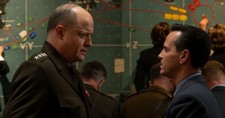
The pivotal scene in the magnificent new German movie The Lives of Others--which won the Oscar for Best Foreign Language Film last week--takes place in an elevator. The year is 1984, and the occupant of the elevator is a severe and profoundly intelligent senior functionary of the East German security service named Wiesler. A stray word about the inhumanity of Stasi interrogations, or a joke about the dictator Erich Honecker, is all Wiesler needs to hear to make a simple mark on a piece of paper that will ruin someone's life.

A soccer ball rolls into the elevator, followed by a towheaded boy. The elevator begins to rise.

"Do you work for the Stasi?" the little boy asks.

"What do you know of the Stasi?" Wiesler says.

"My dad says you're a bad man who throws people in jail."

Wiesler's lips twitch slightly, and as is his habit, he asks the question intended to destroy the boy's happiness: "What is the name of--" The audience tenses, expecting the boy to answer with his father's name.

Then, unaccountably, Wiesler pauses before finishing his sentence: "--your ball. What is the name of your ball?"

The boy protests that his ball doesn't have a name. He looks oddly at Wiesler, not knowing that the Stasi man, who has spent decades destroying families without a second thought, has just spared him unimaginable pain.

The question is: Why has Wiesler spared him? That is the subject of The Lives of Others, an immensely rich and gripping film about the moral awakening of two men.

Wiesler is a classic figure of evil--a remorseless and relentless force with all the power of the totalitarian state behind him, dedicated to ferreting out any sign of free thinking among his East German countrymen. He finds his opposite in a naïf named Dreyman, a successful playwright who has made a decent life for himself by never challenging, never opposing, and never even thinking dark thoughts about the Communist tyranny that rules over him.

The lives of Wiesler and Dreyman intersect because of a woman--Christa-Maria, the nation's best-known stage actress and Dreyman's girlfriend. Wiesler is in attendance at the premiere of Dreyman's newest play, a ghastly blend of Brechtian pseudo-profundity and labored socialist realism. Dreyman is thought to be above suspicion (in part because he's friends with Erich Honecker's daughter). But when Wiesler catches a glimpse of the playwright embracing his lead actress, he says that Dreyman ought to be watched. It's not clear what it is about the two of them together that disturbs Wiesler--jealousy, perhaps--but his suggestion is eagerly embraced.

Wiesler has spent much of his career instructing Stasi trainees in interrogation techniques. As such, he has learned a good deal about human nature--for instance, that an innocent man accused of a crime will get angrier about the injustice being done to him over time while a man with something to hide will despair and cry. But it turns out there is something strangely unworldly about Wiesler. Unable to form normal human attachments, he lives alone, watches Stalinist propaganda on television in his spartan apartment, and calls in prostitutes to whom he clings desperately. It never occurs to him that his assignment might not be because ideological purity must be maintained on the East German stage. Rather, the minister of culture is besotted with Christa-Maria and wants to secure an advantage with her.

1 | 2 | 3 | 4 | Next | All
Most Recent User Comments
aslouie
3/13/2007 2:33 PM
Personally, I think Lives of Others stands in sharp contrast to a similarly-themed movie made/released few years back by the name of "Goodbye Lenin." Now while some folks may defend the latter moreso than the former (something about the perceived stability done before the fall of the Berlin Wall, or the fashionable leftist nostalgia), something tells me that von Donnersmarck is trying to remind Germany (and pretty much the world) the old post-Holocaust adage of "never again."
I don't know how well this drama will be received outside of Germany (at least where Western leftist elites are concerned), I think "Lives of Others" must be told, as say other totalitarian stories of the Rape of Nanking variety: or at least something like what goes on in Castro's Cuba, post-colonial Africa under the likes of Robert Mugabe, and several others.
Sign up to post your comments

It's quick and easy to register with Crosswalk.com! Just fill out the short form below. You'll have the opportunity to post comments, and be more involved in our community and forums. Plus, with this one account, you can sign in anywhere in our network of sites displaying the Salem All-Pass logo, including Oneplace.com, Christianity.com, Lightsource.com, Crosscards.com, and more!