
Murtha Touts New Way to Stop Troop 'Surge' in Iraq
Randy Hall
Staff Writer/Editor
(CNSNews.com) - Rep. John Murtha (D-Pa.) plans to introduce legislation designed to halt the Bush administration's troop "surge" in Iraq by restricting military deployments - a move he is painting as one that will "support" U.S. forces.
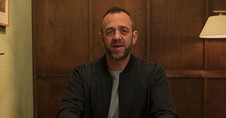
"The legislation I'm putting together ... puts restrictions on the president, on the administration, saying you can't send people back into battle until they've had a year at home," Murtha, a vocal critic of the Iraq war, who chairs the House Appropriations Subcommittee on Defense, said Thursday.
Speaking in an interview released on the anti-war MoveCongress.com website, Murtha said he would attach a provision to an upcoming $93 billion supplemental spending bill for Iraq and Afghanistan.
If passed, he said, the provision would be "the most important vote in changing the direction of this war," because it would "limit the options of the president and should stop the surge."
Apart from the year-at-home requirement, the provision would also state that combat troops "must have the equipment and the training, and they must be certified by the chiefs of the various services before they can go back," the congressman said.
Murtha added that his proposal would prevent the Bush administration from extending the term of enlistment for military personnel.
"Now, if they can't extend people, if they can't send people back that don't have equipment and so forth, they can't continue the surge," he said.
"If this resolution passes the House and the Senate, the president could veto it, but then he wouldn't have any money," Murtha noted. "What we're trying to do is make sure people understand we're supporting the troops, we're protecting the troops, but on the other hand, we're going to stop this surge.
"The other thing we're doing is saying, no permanent bases," Murtha said.
He did not elaborate but went on to talk about services enjoyed by U.S. troops in Iraq but denied to many Iraqis.
"Let's take, for instance, Saddam Hussein's palace - that's where our troops are living," Murtha said.
"They have everything they need. They have electricity, as they should. They have warm water. They have all the things that you need and we provide for our troops, and I agree with that," he said.
"But right around the outside is where the Iraqis live with nothing, and that's the thing that worries me," Murtha said. "When you see that 61 percent of the Iraqis say it's alright to kill Americans, that's part of the overall problem we face in winning the hearts and minds [of Iraqis]."
Regarding Bush's strategy to deploy 21,500 more troops in Iraq, the Pennsylvania Democrat noted that "surges have not worked in the past" because enemy forces "disappear, and then they come back later on. To think that a surge will work is, in my estimation, false thinking."
Instead, "we have to turn this over to the Iraqis," Murtha argued. "I remember meeting with some high-ranking officials in the White House, and they said, 'well, we'll do it if they don't do it.' That's not the answer. The answer is to make sure that we in effect make sure that they do it, not us.
"I think that we need to change the direction of the country," the congressman said. "We need to change the direction of the war. This resolution will start that."
'Slow bleed'
As Cybercast News Service previously reported, Murtha first called for a "redeployment" of U.S. forces in Iraq in November 2005.
While he has been criticized by Republicans for advocating a "cut and run" strategy, Murtha has also received praise for his stance on the issue. In January 2006, he was given a "pink badge of courage" by the anti-war group Code Pink, and he received the John F. Kennedy Profile in Courage Award later that year.
Murtha, whose war hero status and Abscam involvement were investigated by Cybercast News Service, ran for majority leader after Democrats won marginal control of Congress last November. He was easily defeated by Rep. Steny Hoyer (D-Md.).
Republicans reacted strongly to Murtha's proposals on Thursday.
"The Democrat strategy on Iraq is finally clear," Mike Duncan, chairman of the Republican National Committee, said in a press release. "They call it their 'slow bleed' plan," and it is "genuinely frightening."
"Instead of supporting the troops in Iraq or simply bringing them home, the Democrats intend to gradually make it harder and harder for them to do their jobs," Duncan said.
"'Slow bleed' is exactly the right name for this incredibly irresponsible and dangerous strategy," he noted.
"Cutting and running is bad enough," but this plan "is a cynical and dangerous erosion of our ability to fight the terrorists while we still have men and women on the ground in Iraq," Duncan added. "It will put their lives in far greater danger as resources slowly dry up. How can our troops operate without bases? How can they fight without backup?"
"Congressman Murtha might have big plans, but the real question is whether the rest of his caucus will go along with him," Julie Shutley, deputy communications director for the National Republican Congressional Committee, told Cybercast News Service.
"The Democrats have already demonstrated their squeamishness on this issue by opting for a debate this week on a non-binding resolution instead of a vote on legislation that would cut off funding and bring the troops home," Shutley said.
"The jury's still out on whether they will have enough intellectual honesty to expose the rift that exists in their own party and allow an up-or-down vote on troop funding," she added.
Make media inquiries or request an interview with Randy Hall.
E-mail a comment or news tip to Randy Hall.