
Declare Your Faith - Sign the "I Am a Christian" Pledge
E-MAIL NEWSLETTERS


There was an error processing this request. We cannot subscribe you to newsletters at this time. Please contact technical support with details.
Featured Sponsors
NEWS

AVERAGE USER RATING

RATE THIS ARTICLE

  • Email
  • Print
  • Discuss
Search The Bible   
Advanced Search

Syria, Lebanon Jittery Over Largest-Ever Israeli Military Drill

Julie Stahl

Jerusalem Bureau Chief

Jerusalem (CNSNews.com) - Israel is conducting its largest-ever emergency response drill this week, a nationwide exercise that was planned months ago. The exercise is producing jitters in Syria and Lebanon, although Israel officials have emphasized that this is only a practice run "with nothing hiding behind it."

The five-day drill is intended to help authorities assess Israel's preparedness in dealing with national emergencies -- particularly in the event of multiple chemical or conventional missile attacks.

It began on Sunday when Prime Minister Ehud Olmert announced the first mock scenario: Hizballah launching Katyusha rockets at northern Israel, followed by a second attack involving Syria and Hamas. The simulation included dozens of civilian "casualties."

Army, police, firefighters and emergency medical services are all participating in the drills as well as municipalities.

On Tuesday, sirens will sound throughout the country and schools will participate in the drill, sending students for bomb shelters or protected areas. Southern Israel has had plenty of practice already, as sirens sound nearly every day to warn of incoming rocket fire from the Gaza Strip.

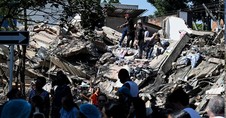
Other drills include rescuing "victims" from buildings hit by rockets; evacuating people with special needs; and an attack on a chemical plant in Haifa.

The drill stems from recommendations made by a commission that investigated the 2006 Israeli-Hizballah war, in which Israel was hit by some 4,000 missiles, virtually paralyzing the northern part of the country.

Just last week, press reports said Syria was expecting, and preparing for, an attack by Israel. Israeli officials said those reports were untrue -- that Israel had no intention of attacking.

"We have no secret plans. This drill is not part of anything else," Olmert said on Sunday. "It seems to me that the Syrians know this as well; they have no reason to analyze this drill differently."

On the contrary, Olmert said, Israel had offered to hold peace negotiations with Syria.

Nevertheless, in response to the Israeli drill, Lebanon put its military on high alert. Hizballah deputy leader Sheikh Naim Kassem charged that the exercise was "part of preparations" for an eventual war.

According to Israeli media reports on Sunday, Israel has warned Syria that it will be held responsible if Israeli or Jewish targets are attacked anywhere in the world in retaliation for the assassination of Hizballah arch-terrorist Imad Mughniyeh.

Hizballah leader Hassan Nasrallah has threatened revenge against Israel or Jewish targets anywhere in the world for the murder of Mughniyeh. Israel has denied any involvement in the Damascus car bombing that killed Mughniyeh in February, but Hizballah blames Israel all the same.

Syrian strategy

Analysts have said that neither Syria nor Israel wants a war right now. However, Syria apparently wants to create the impression that war is an option if Israel is not ready for peace talks, said Israel's former National Security Advisor Giora Eiland.

Eiland said that over the years, the Syrian regime has gone back and forth between peace talks and war talk.

From the 1980s to 1996, former Syrian President Hafez Assad's strategic goal was to take back the Golan Heights by military force. By the mid-1990s, Assad raised the idea of peace talks as a way to get back the Golan Heights, Eiland said.

Those peace talks collapsed in early 2000, and over the next six years, Assad's son Bashar Assad - who succeeded his father -- pursued neither peace nor a military option to get back the Golan Heights, Eiland said.

But following the 2006 Israeli-Hizballah war, during which Israel failed to stop rocket attacks on its civilian population and destroy the Iranian-backed terrorist organization, Syria decided that the possibility of war was not off the table, Eiland said.


Most Recent User Comments
Be the first to comment on this article!
Sign up to post your comments

It's quick and easy to register with Crosswalk.com! Just fill out the short form below. You'll have the opportunity to post comments, and be more involved in our community and forums. Plus, with this one account, you can sign in anywhere in our network of sites displaying the Salem All-Pass logo, including Oneplace.com, Christianity.com, Lightsource.com, Crosscards.com, and more!