
Follow us on Facebook

Recommend this article to your friends.

Comments

Observers of the U.S. Supreme Court have noted a disturbing pattern in recent court decisions: Some justices are citing foreign court decisions in framing their own interpretation of the U.S. Constitution. This amounts to an internationalizing of the United States Constitution and raises disturbing and difficult questions about the future of the U.S. Supreme Court and its stewardship of our nation's most fundamental document. Writing just last year, former judge Robert H. Bork issued an eloquent warning that America's rule of law was being subverted by a rule of judges. Furthermore, those judges are increasingly looking to foreign court decisions as grounds for pushing what amounts to a cultural revolution at the expense of the U.S. Constitution.

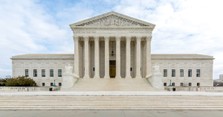
The question of foreign court decisions in the making of American law and in the work of the Supreme Court has spawned a lively debate in law journals and legal circles. Nevertheless, all that was eclipsed on January 13 when two sitting justices of the U.S. Supreme Court debated the issue before an assembly of lawyers and law students at the American University in Washington, D.C.

In a fascinating and revealing discussion, Justices Antonin Scalia and Stephen Breyer defended their own approach to constitutional interpretation and provided much-needed insights into how the justices of the Supreme Court do their work and debate crucial issues.

Public engagements between sitting Supreme Court justices are exceedingly rare. The Supreme Court has traditionally had something of an obsession with guarding its secrecy. Writing over 25 years ago, authors Bob Woodward and Scott Armstrong noted the Court's deliberate effort to hide its decision making process from public view. "For . . . nearly two hundred years, the Court has made its decisions in absolute secrecy, handing down its judgments in formal written opinions. Only these opinions, final and unreviewable, are published. No American institution has so completely controlled the way it is viewed by the public. The Court's deliberative process--its internal debates, the tentative positions taken by the Justices, the preliminary votes, the various drafts of written opinions, the negotiations, confrontations, and compromises--is hidden from public view."

Few citizens have actually visited the Court in order to observe the justices engaged in oral arguments. No television cameras are present, and the proceedings are off-limits to recording devices. So far as the public is concerned, virtually all knowledge about the Court's operations comes from reporters covering oral arguments.

But the oral arguments are only the public face of the court. The actual decision-making between the nine justices takes place in Wednesday conference sessions that are absolutely off-limits to anyone outside the justices themselves. As Chief Justice William H. Rehnquist has commented, "To anyone familiar with the decision-making process in other governmental institutions, the most striking thing about our Court's conference is that only the nine justices are present. There are no law clerks, no secretaries, no staff assistants, no outside personnel of any kind."

With all that as background, the Scalia-Breyer debate takes on increased importance. [Note that the debate is referred to as a "Scalia-Breyer" discussion, putting Scalia ahead of Breyer, rather than placing the names in alphabetical order. This is because the Court's regard for seniority is almost as obsessive as its concern for secrecy.]

Setting the terms of the public discussion, Justice Scalia delivered the first salvo. America doesn't have "the same moral and legal framework as the rest of the world," Scalia asserted. "If you told the framers of the Constitution that we're [trying to be just like Europe] they would have been appalled."

Scalia, who argues that foreign court decisions should have absolutely no influence in the interpretation of the U.S. Constitution, bases his argument on the fact that the Court's responsibility is to interpret the U.S. Constitution as the framers intended--not to go shopping for legal arguments that would support a justice's own interpretation, whether from domestic or foreign authorities.