
Robert Jensen is absolutely transparent in his atheism. "I don't believe in God," he asserts. That statement is simple enough, indicating a categorical denial in any belief in God.
Lest anyone mistake his atheism for mere theological confusion, Jensen went on to explain: "I don't believe Jesus Christ was the son of a God that I don't believe in, nor do I believe Jesus rose from the dead to ascend to a heaven that I don't believe exists."
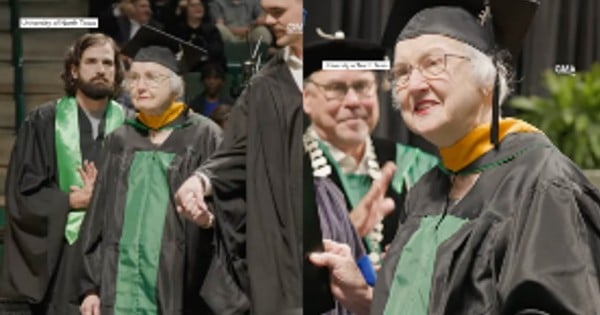
What makes these statements all the more significant is that they appear in an article entitled, "Why I am a Christian (Sort Of)," in which Jensen, a journalism professor at the University of Texas at Austin, explains why he joined St. Andrew's Presbyterian Church in Austin.
As Jensen relates his story, he explains that he has joined the church as "more a political than a theological act." In other words, Jensen sees the church of which he is now a member as more of a political than a theological institution.
"Standing before the congregation of St. Andrew's Presbyterian Church in Austin, Texas, I affirmed that I (1) endorsed the core principles in Christ's teaching; (2) intended to work to deepen my understanding and practice of the universal love at the heart of those principles; and (3) pledged to be a responsible member of the church and to the larger community."
Moving from that most minimal of confessional pledges, Jensen went on to claim: "So, I am a Christian, sort of. A secular Christian. A Christian atheist, perhaps. But, in a deep sense, I would argue, a real Christian."
Of course, arguing that it is so does not make it so. Robert Jensen is a well-known political activist whose championing of liberal causes is a source of regular controversy at the University of Texas and beyond. He appears to enjoy his role as a self-anointed provocateur, and in this move to join a church, he has provoked an outcry from both orthodox Christians and his fellow atheists.
Why, after all, would an atheist even want to join a church that identifies with Christianity? More to the point, how could any church that holds even a minimal sense of Christian identity allow an atheist to join?
Jensen makes an unconvincing case concerning his own motivations. He explains that "whatever my beliefs about the nature about the non-material world or my views on spirituality, I live in a country that is extremely religious, especially compared to other technologically advanced industrial nations." In some sense, Jensen appears to be making a "if you can't beat them, join them" argument.
The cynical dimension of Jensen's reason for joining the church becomes immediately apparent when he explains that, "since a vast majority of Americans define a 'good American' as one who holds to some religious faith, clearly there's an advantage to being able to speak within a religious framework in the contemporary United States."
The political motivation behind Jensen's move is openly acknowledged. "So, my decision to join a church was more a political than a theological act. As a political organizer interested in a variety of social-justice issues, I look for places to engage people in discussion. In a depoliticized society such as the United States – where ordinary people in everyday spaces do not routinely talk about politics and its underlying values – church is one of the few places where such engagement is possible."
Well, so much for Jensen's reasons for attempting to join a church. The larger and more important question is how any church could justify accepting an atheist to join the church? In his article, published in the March 12, 2006 edition of The Houston Chronicle, Jensen explains, "the pastor and most of the congregation at St. Andrew's understand my reasons for joining, realizing that I didn't convert in a theological sense, but joined a moral and political community. There's nothing special about me in this regard – many St. Andrew's members I have talked to are seeking community and a place for spiritual, moral and political engagement. The church is expansive in defining faith; the degree to which members of the congregation believe in God and Christ in traditional terms varies widely. Many do, some don't, and a whole lot of folks seem to be searching. St. Andrew's offers a safe place and an exciting atmosphere for that search, in collaboration with others."