
E-MAIL NEWSLETTERS


There was an error processing this request. We cannot subscribe you to newsletters at this time. Please contact technical support with details.
Featured Sponsors
COMMENTARY Sponsorship

AVERAGE USER RATING

RATE THIS ARTICLE

  • Email
  • Print
  • Discuss
Search The Bible   
Advanced Search

Christian Broadcasters Nervous about Fairness Doctrine

Mallika Rao

Religion News Service

August 8, 2008

WASHINGTON -- House Speaker Nancy Pelosi is making Christian broadcasters nervous.

Pelosi, D-Calif., recently said she supports resurrecting the Fairness Doctrine, a 1949 Federal Communications Commission policy that required broadcasters who sent out specific messages to set aside time for opposing views.

Such a move would "really make it impossible to preach the whole counsel of God," said Rich Bott, the owner of Kansas-based Bott Radio Network, which broadcasts Christian programming across 10 states.

It would also, he said, likely put him out of business.

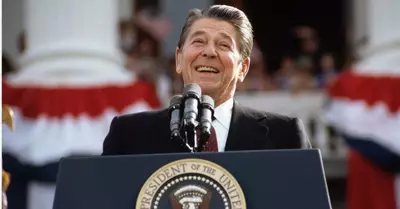
Put in place nearly 50 years ago, the doctrine was an FCC regulation that policed the airwaves at a time when there were few other sources of information. It never carried the full weight of the law.

By the 1980s, with the advent of cable television and multiple opportunities to air differing opinions, the policy fell out of favor and was finally ditched by the FCC in 1987.

While Pelosi hasn't offered legislation to reinstate the policy, she has signaled that she supports its revival, and said a bill introduced by Rep. Mike Spence, R-Ind., to permanently kill it will not be considered by the Democratic-controlled House.

If the Fairness Doctrine were to be reinstated by Congress, broadcasters would be legally forced to follow the old protocol: one-third of the airtime given to one opinion must be offered free-of-charge to opponents.

"We've been in broadcasting for over 45 years so we remember what it was like under the previous regime of the so-called Fairness Doctrine,"
Bott said. "What we had to do then would be impossible today."

A half-century ago, Christians were a distinct cultural and political majority and there were fewer dissenting views to accommodate.
Numerically, they still hold sway, but compete against large numbers of other faiths and points of view.

"If someone were to assert that God has ordained marriage as only between a man and woman that would be a controversial statement today,"
he said. "Someone will ask for time."

Such requests would place a unique strain on broadcasters, said William Van Alstyne, a constitutional law expert at the William and Mary School of Law in Williamsburg, Va.

"A newspaper can print a reply or an op-ed piece, but with broadcasting it's fixed. It's 24 hours that are divisible into so many minutes, and if you're devoting them to X you can't devote them to Y,"
he said. "If a broadcaster has to subsidize its opponents, and the station is listener-funded, they're going to lose a lot of money."

Silencing Christian radio is not the goal of lawmakers who are pushing the "fairness" bill. Their target? Rush Limbaugh and friends.

When last year's immigration bill failed in the Senate, Pelosi and other Democratic leaders blamed its demise on talk show hosts like Limbaugh, who they said galvanized the public against it. Former Republican Sen. Trent Lott's complaint that "talk radio is running America" made the rounds on the blogosphere while conservative radio pundits declared victory.

"Crushing the (immigration) bill had the feeling of a sort of crusade," said Mark Jurkowitz, associate director of the Project for Excellence in Journalism. In the week before the bill died, nearly 20 percent of time on radio and cable TV talk shows went toward discussing it, according to a study by Jurkowitz's office.

Liberal groups, however, don't necessarily support reinstating the Fairness Doctrine either, and say the political right's hold on the airwaves can be countered with healthy competition.

"It's not free speech. We don't support it, and most people on the left don't support it," said John Neurohr, press secretary at the Center for American Progress, a liberal think tank in Washington. "The bottom line is that we need to get better at talk radio."

Each week day, conservative radio tops progressive content by 100-to-1, logging in 2,570 hours a day last year compared to 254 hours of liberal radio, according to a study by the Center for American Progress.

Personalities like Limbaugh simplify "wonky" Capitol Hill jargon for millions of listeners, said Neurohr, while progressives tend to cling to the big ideas. Radio audiences feel the difference, and left-leaning radio still has far to go in catching up with right-wing listenership. 

The Fairness Doctrine would only create the illusion of a surge for liberal talk radio, Neuhrohr said, noting that some progressive hosts, like Ed Schultz, manage to bring in high numbers simply because they're entertaining.

Most critics say the doctrine is unlikely to be reinstated, and is being used by the left as an empty threat, and by the right as a rallying cry. Still, Christian broadcasters are bracing for its reemergence, said Frank Wright, president of the National Religious Broadcasters.

"This is not the time to despair," he said. "If all these bad things happen, we're going to sue immediately."


Copyright 2008 Religion News Service.  All rights reserved.  No part of this transmission may be distributed or reproduced without written permission.


Most Recent User Comments
karlkat
8/22/2008 9:13 PM
The FCC's statutory mandate to see that broadcasters operate in the public interest and Congress' reaffirmation, in the 1959 amendment to 315 of the Communications Act, of the FCC's view that the fairness doctrine inhered in the public interest standard, support the conclusion that the doctrine and its component personal attack and political editorializing regulations are a legitimate exercise of congressionally delegated authority. Pp. 379-386.

Section 315 [47 U.S.C. §315] Facilities for candidates for public office.
(a) If any licensee shall permit any person who is a legally qualified candidate for any public office to use a broadcasting station, he shall afford equal opportunities to all other such candidates for that office in the use of such broadcasting station: Provided, That such licensee shall have no power of censorship over the material broadcast under the provision of this section. No obligation is hereby imposed under this subsection upon any licensee to allow the use of its station by any such candidate. Appearance by a legally qualified candidate on any –
(1) bona fide newscast,
(2) bona fide news interview,
(3) bona fide news documentary (if the appearance of the candidate is incidental to the presentation of the subject or subjects covered by the news documentary), or………….
Sign up to post your comments

It's quick and easy to register with Crosswalk.com! Just fill out the short form below. You'll have the opportunity to post comments, and be more involved in our community and forums. Plus, with this one account, you can sign in anywhere in our network of sites displaying the Salem All-Pass logo, including Oneplace.com, Christianity.com, Lightsource.com, Crosscards.com, and more!