
Follow us on Facebook

Recommend this article to your friends.

Comments


February 26, 2009

BEIJING (Compass Direct News) – With China’s central government last December issuing a number of secret documents calling on provincial officials to strive to prevent massive unrest in a rapidly collapsing economy, observers are watching for signs of whether authorities will view Christian groups as a threat or a stabilizing influence.

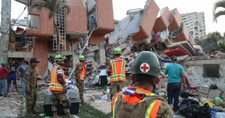
While the Sichuan earthquake last May proved that Christians were willing and able to assist in times of national crisis, raids on house church groups have continued in recent weeks.

The secret reports have come in quick succession. A central government body, the Committee for Social Stability (CSS), issued an internal report on Jan. 2 listing a total of 127,467 serious protests or other incidents across China in 2008, many involving attacks on government buildings or clashes with police and militia.

“Recently every kind of contradiction in society has reached the level of white heat,” the CSS warned in an earlier document issued on Dec. 16.

The document said some officials had “ignored the welfare of the masses … piling up pressure until the situation exploded,” and concluded that, “The relevant Party and State organs must … give daily priority to the task of getting rid of all the maladies which produce social instability and the present crisis.”

On Dec. 10, the Central Committee of the Chinese Communist Party and the National People’s Congress issued an internal document calling on senior provincial officials to make every effort to alleviate social and political problems exacerbated by the current recession.

On Dec. 12, the Ministry of Public Security authorized provincial officials to tighten control of all communications in the sensitive period prior to Chinese New Year, which this year fell on Jan. 25. Fearing turmoil as millions of newly-unemployed factory workers headed home for New Year celebrations, the government cancelled all leave for Public Security Bureau (PSB) officers, placed them on high alert and mobilized an additional 150,000 police and armed militia for the holiday period.

On Dec. 15, the public security ministry issued a further document calling for tightened security at government ministries, military bases, armament stores, state borders, airports and railway stations.

In its Dec. 16 report, the CSS warned that provincial authorities must try to resolve grievances by non-violent means before protestors begin attacking factories and government offices or stealing, looting and burning property.

The scale of demonstrations and riots has already reached frightening proportions. In the Jan. 2 internal assessment leaked in Hong Kong, the CSS said the 127,467 serious incidents across China last year involved participation of around 1 percent of the population. Of these cases, 476 consisted of attacks on government and Party buildings, while 615 involved violent clashes with police and militia, leaving 1,120 police and Party officials and 724 civilians killed or injured.

Church Monitored as 'Subversive'

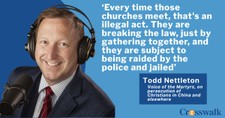
Concerned by the growth of unregistered house church groups in an uncertain political and social climate, the Chinese government has ramped up efforts both to identify Christians and to portray Christianity as a subversive foreign force.

Local governments in China last year reported on continued measures to prevent “illegal” religious gatherings and curb other criminalized religious activities, according to reports from the U.S. Congressional Executive Commission on China (CECC) on Dec. 20 and Feb. 2. (See www.compassdirect.org, “Tortured Christian Lawyer Arrested as Officials Deny Abuses,” Feb. 11.)

In recent months authorities have quietly gathered data on church growth using surveys at universities and workplaces, and called meetings at various institutions in the capital to discuss the supposed dangers of foreign religious influence. (See www.compassdirect.org, “Officials Grapple with Spread of Christianity,” Feb. 4.)

Raids on unregistered church groups have continued in recent weeks, with police perhaps prompted to ensure tighter controls on church activity. On Feb. 11, police arrested two South Korean pastors and more than 60 Chinese house church leaders from four provinces who had gathered for a seminar in Wolong district, Nanyang city, the China Aid Association (CAA) reported. The police also confiscated personal money, cell phones and books, and forced each person to register and pay a fine before releasing some of the elderly leaders.

Authorities held six of the detained leaders for several days but by Sunday (Feb. 22) had released all of them, Compass sources confirmed.

In Shanghai, police and members of the State Administration of Religious Affairs on Feb. 10 ordered Pastor Cui Quan to cancel an annual meeting for house church leaders, and then ordered the owner of the hall used by Cui’s 1,200-member congregation to cease renting it to Cui within 30 days, according to CAA.

Senior staff at Beijing’s Dianli Hospital on Feb. 6 ordered elderly house church pastor Hua Zaichen to leave the premises despite being severely ill, CAA reported. Government officials had refused to allow Hua’s wife, Shuang Shuying, an early release from prison to visit her dying husband unless she agreed to inform on other Christians, according to Hua’s son. After refusing their offer, Shuang was finally able to visit Hua on her release date, Feb. 8; Hua died the following day.

Both Shuang and her husband have suffered years of persecution for their involvement in the house church movement.

On Feb. 4, police seized Christian lawyer and human rights defender Gao Zhisheng from his home in Shaanxi province, CAA reported. At press time his whereabouts were unknown.

While other incidents have gone unreported, house church leaders in northern China told Compass in January that despite tighter restrictions in the current economic and political climate, they were optimistic about the ability of the church to survive and flourish.

Party Disenchantment Spreads