
Follow us on Facebook

Recommend this article to your friends.

Comments


July 2, 2010

(RNS) "All are welcome" is a common phrase on many a church sign and website. But what happens when a convicted sex offender takes those words literally?

Church officials and legal advocates are grappling with how -- and if -- people who've been convicted of sex crimes should be included in U.S. congregations, especially when children are present:

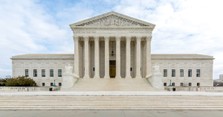
-- Last week (June 23), a lawyer argued in the New Hampshire Supreme Court for a convicted sex offender who wants to attend a Jehovah's Witnesses congregation with a chaperone.

"What we argued is that the right to worship is a fundamental right, and the state can only burden it if it has compelling interest to do so, and then only in a way that is narrowly constructed," said Barbara Keshen, an attorney with the New Hampshire Civil Liberties Union who represented Jonathan Perfetto, who pleaded guilty in 2002 to 61 counts of possessing child pornography.

-- On Monday (June 28), the Seventh-day Adventist Church added language to its manual saying that sexual abuse perpetrators can be restored to membership only if they do not have unsupervised contact with children and are not "in a position that would encourage vulnerable individuals to trust them implicitly."

Garrett Caldwell, a spokesman for the denomination, said the new wording in the global guidelines tries to strike a balance between protecting congregants and supporting the religious freedom of abusers in "a manifestation of God's grace."

-- On Thursday (July 1), a Georgia law will take effect that permits convicted sex offenders to volunteer in churches if they are isolated from children. Permitted activities include singing in the choir and taking part in Bible studies and bake sales.

The Rev. Madison Shockley, pastor of Pilgrim United Church of Christ in Carlsbad, Calif., whose church publicly grappled with whether to accept a convicted sex offender three years ago, said he hears from churches several times a month seeking advice on how to handle such situations.

"The key lesson for churches is this: The policy, however it winds up, must be a consensus of the congregation," Shockley said. "I talked to so many pastors who decided they're going to make the decision because they know what's theologically and spiritually right -- and that's absolutely the wrong thing to do."

Shockley's church will soon commission a minister to address prevention of child sex abuse; the church also distributes a 20-page policy on protecting children and dealing with sex offenders.

Shockley declined to say how the church handled its admission of a known abuser in 2007, citing the congregation's limited disclosure policy.

Beyond the thorny legal questions, theologians also find that there are often no easy answers to the quandary of protecting children and providing worship to saints and sinners alike.

"My own theology of forgiveness is not that it's a blanket statement -- 'You are forgiven; go and sin no more,'" said Rev. Joretta Marshall, professor of pastoral theology at Texas Christian University's Brite Divinity School. "Part of what we have to do is create accountability structures because damage has been done."

Sometimes, legal and religious experts say, crimes are so severe that convicted offenders must lose their right to worship.

New Hampshire Assistant Attorney General Nicholas Cort argued in court documents that Perfetto should not be permitted to change the conditions of his probation to attend a Manchester congregation because "restricting the defendant's access to minors was an appropriate means of advancing the goals of probation -- rehabilitation and public safety."

Barbara Dorris, outreach director of Survivors Network of those Abused by Priests (SNAP), said it may be possible for convicted offenders to attend worship if "proper safeguards are in place," but offenders "forfeit many rights when you commit this kind of a felony."