
Follow us on Facebook

Recommend this article to your friends.

Comments
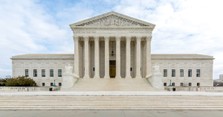
Members of both Houses of Congress dropped political rivalries and joined hands for a two-hour period of prayer, forgiveness and reconciliation in the Capitol Rotunda yesterday evening, to mark the first National Day of Reconciliation.

A congressional bill, S. Con. Res. 83, established the Dec. 4 observance so that members could voluntarily and humbly seek the blessings of Providence for forgiveness, reconciliation, unity and charity for all people of the United States, thereby assisting the Nation to realize its potential as the champion of hope, the vindicator of the defenseless, and the guardian of freedom.

"We are witnessing a move of God in our nation's capital unlike anything we have seen in recent years," said Dr. Frank Wright, executive director of the D. James Kennedy Center for Christian Statesmanship. "Even just three months ago I did not think that such a resolution could pass both houses of Congress. This event should remind all of us that truly our God is sovereign over the affairs of men."

Dec. 4 is a day for our nation's leaders to pray for the country, said Sen. Sam Brownback. "This day will facilitate a platform for renewing our commitment to live as one nation under God. The assembly will begin the much needed process of reconciliation not only in the United States Congress but throughout the nation as well."

Brownback pointed out that throughout U.S. history, proclamations have been issued by a multitude of presidents for thanksgiving, repentance, prayer, and fasting. For example, Congress first proposed a joint resolution on Sept. 24, 1789, which was intended to allow the people of the United States an opportunity to thank Almighty God for His many blessings on the American People. This proclamation was submitted to the president the very day after the Congress had voted to recommend to the states the final text of what was to become the First Amendment to the Constitution.

President Washington signed a joint resolution in 1789 declaring that a day of public thanksgiving and prayer be observed. This resolution assigned Thursday, the 26th of November 1789 as the national day to be set aside "by the people of these States to the service of that great and glorious Being who is the beneficent author of all good."

When George Washington was inaugurated as our first president, he went, accompanied by both Houses of Congress, to St. Paul's chapel to pray, according to Brownback. The decision to hold the service was the product of a joint resolution adopted by both Houses of Congress. And in 1789, the First Congress retained chaplains to offer public prayers at the beginning of each legislative day. This practice was reaffirmed to be constitutional in 1983 and continues to this day.

House Majority Whip Tom DeLay, one of the original cosponsors of S. Con. Res. 83, discussed it on the radio a few weeks ago. "The nation has come to a crossroads. And we have a decision to make, either we seek the face of God, and become one nation under God, or we push God aside for good, and who knows what's in store for this nation if we go that direction. It starts with the leaders of this country," DeLay said on "Concerned Women Today with Beverly LaHaye."

Although the bill was introduced originally in July, long before the terrorist attacks of Sept. 11, the meeting gained significant public support since that time.

Dr. James Dobson was joined on his national daily broadcast, "Focus on the Family," last week by DeLay, Brownback and Rep. Joseph Pitts - who all applauded this "historic" event.

"We need to recognize that the source of our blessing is not our superior wisdom, our superior resources, or our superior form of government," said Congressman Pitts. "The source of our blessings is God. As we recognize His sovereignty, His blessing on the country, and our lack of appreciation for that, hopefully it will help us humble ourselves and turn to Him."

Dobson praised the "National Day of Reconciliation" saying, "Our only hope is for a national revival, and perhaps this event will be the beginning of it. As the people of the United States pray ... my great desire is that we not only say 'God save us,' but that we pray 'God forgive us.' We've strayed from the moral principles that He's given us."

"This is not a ceremony," Dobson added. "It's not done for political purposes. It's not done for the cameras. This is a genuine petition to the Lord, asking Him to bless our land, to forgive us for our sins, and to bring national reconciliation with Him and with each other."

A number of churches in Washington, D.C. and all across America opened their doors for prayer during the event.