
Follow us on Facebook

Recommend this article to your friends.

Comments


March 10, 2010

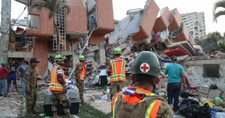
On the heels of an earthquake which devastated Haiti, a mammoth 8.8-magnitude earthquake shook Chile, killing at least 700 people. The quake was so massive, NASA scientists say it could shorten the length of a day by a little over one millisecond.

While Chile's seismic activity registered as the seventh-most powerful earthquake in recorded history, that power hasn't come close to motivating the kind of benevolent giving that Haiti experienced.

The reasons vary for the drastic difference in giving.

Perception

It is no secret that Haiti is a country in desperate need, even before the earthquake. Some experts say Chile, however, was more prepared for such a tragedy. Building codes are also far more stringent that those of Haiti.

"In the first few days, activity around giving to Chile does not seem to be as immediate or extensive as it was during the first few days post-Haiti earthquake," said Adriene Davis, Manager of Public Affairs of The Center on Philanthropy at Indiana University. "We don't know whether that will bear out in the longer term, or why that might be."

Davis speculated some may perceive the need to be not as great for Chile as it was for Haiti in relation to the relative scale of damage. Chile's preparedness and capacity to respond, especially when paired with more media coverage on the Haiti earthquake, could also be factors in increased giving for Haiti.  Still, Davis stressed that it is too soon to determine the exact reason for the giving disparity.

The Chronicle of Philanthropy concludes that giving is not only significantly slower, but also "at significantly lower levels than after the January 12 earthquake in Haiti." Donations for Haiti came in much faster and in greater amounts. A slim $250,000 was given by Americans three days following the Chile disaster - a drastic contrast to the nearly $97 million raised three days following the Haiti earthquake.

Haiti's quake left some 200,000 dead and thousands more homeless, prompting appeals to give from international relief organizations. And, as The Center on Philanthropy at Indiana University found, donations poured into the small country. The Center says donations from Americans have surpassed the $1 billion mark.

Donor Fatigue

Besides the differences in perceived need, many people have already given what they felt they could spare with Haiti.

The current economic downturn has many simply trying to maintain their own livelihood much less help those in need. While a sliding economy didn't seem to detour the generosity of donors for Haiti, supporting ailing Chile may cause tension on tight purse strings.

Convoy of Hope, who has patterned with Mission of Hope in distributing more than 7 million meals in Haiti since the earthquake, says it has seen a marked difference in giving for Chile.

"The response to Chile is much, much smaller compared to what it has been for Haiti. The Haiti earthquake had a feeling of ‘shock and owe,'" said Jeff Nene, Senior Director of Communications & Technology for Convoy. "The fact that it happened in such an under-developed country motivated people to give. People were amazed at the level of damage."  

Nene says Convoy of Hope continues to have a substantial presence in Haiti. Two Convoy personnel just deployed to Chile to evaluate the damage.

Government Stability 

Chile is known for being one of the more stable South American countries in regards to its government, infrastructure and economy.

Nene also said giving could be down because Chile's president initially declined international assistance - only to retract that comment the next day when it was determined death tolls were double what was initially thought.

Various Chilean newspapers reported widespread criticism for not agreeing quickly enough to offers of international aid and relief. Some social commentators went as far to say pride might have delayed a plea for help.