






Follow us on Facebook

Recommend this article to your friends.

Comments


April 15, 2009

Only days after the Abruzzo region was struck by a deadly quake, relief efforts in Italy have been focused on the emergency stages of relief aid. On Easter Sunday, a series of masses were held in the tent camps where the survivors are staying in an effort to offer hope to those who are grieving.

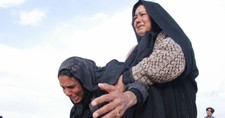
For the traditionally Catholic country, the holiday mood was understandably more somber than usual. At a time that would normally be characterized by joyous celebrations, people are dealing with loss, and trying to cope with grief. On Good Friday, the funerals of 205 people, including children took place.

“The significance of death and rebirth is present and will hopefully give comfort to the people in the earthquake zone. Tomorrow there will be a series of Masses in the camps were people are now staying. The director of Caritas L’Aquila will be one of those celebrating Mass tomorrow,” said Michelle Hough, a communications officer with Caritas Internationalis, on Saturday afternoon.

“People are obviously very shaken by what has happened. Some people have lost everything – their homes and everything in them – but they are managing to carry on. It will take a long time for their lives to get back to normal.”

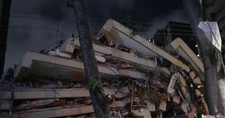
The earthquake caused the most damage to L’Aquila, a medieval mountain city northeast of Rome. It has a population of about 70,000 people. The latest reports indicate that 294 people were killed, over 1,500 were injured, and 40,000 are homeless. In the neighboring village of Onna, 38 of the 350 residents were killed.

David Darg, Director of International Disaster Relief for Operation Blessing, said the grief has been tremendous. “The difference that I see here, is it is different in a developed nation like Italy because the people seem to not be so used to dealing with crises like they are in the third world,” Darg said.

“Here in Italy, trying to talk to some of the people yesterday (on Wednesday), the people are so broken up by this. It is not something they are used to; it took them by such surprise, and it was so unexpected in a way.”

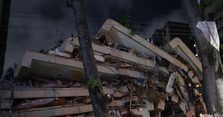
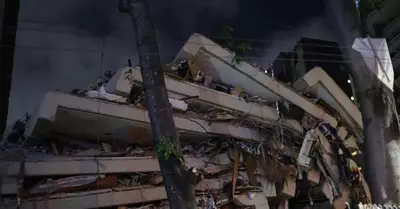
Many of the historic buildings in and around L’Aquila were damaged; some of have collapsed completely. The entire population of L’Aquila has been evacuated. Many people are living in camps; others are living in their cars near their homes so they can keep an eye on them to stop looters. The Caritas office in L’Aquila, as well as the house of Archbishop Giuseppe Molinari of L’Aquilia, were destroyed.

Caritas has been at the scene of the earthquake since it happened last week. The first few days were spent assessing the needs of the population. A coordination center was set up to manage the arrival and distribution of essential items such as food, clothes, hygiene items, sleeping bags and blankets. Caritas is now giving out emergency relief, providing psychological support by giving the traumatized population the chance to talk to experts and volunteers, and also coordinating the arrival of volunteers and emergency goods from all over Italy.

Other relief organizations, including the Italian Red Cross and Operation Blessing, have also been working since the quake to meet immediate physical needs and offer psychological support.

The Italian Red Cross is carrying out the relief efforts on the ground. Currently, they are running a total of four tent camps, with more than 4,000 beds, in Assergi, San Gregorio, Collemaggio and Centicolella. A fifth camp is housing Italian Red Cross disaster response workers.

As a result of the quake, the center of L’Aquila was completely devastated as well as nearby by Onna. Paganica was also severely affected. The people are still very vulnerable.

Caritas workers have seen firsthand the continuing effects of the first earthquake. “There have been an estimated 1,000 aftershocks since the main 6.3 magnitude tremor last Monday morning. Some of the aftershocks have been so strong that they’ve been felt in Rome (90 km away). The initial earthquake was also felt quite strongly in Rome – strong enough to wake many people up and cause cracks in some buildings,” Hough said.

Alex Mahoney, Manager of International Disaster Response for Europe, Asia, and the Middle East at the American Red Cross said relief aid efforts would continue in the months ahead, “The Italian Red Cross will remain in the region and in Italy. Relief efforts will probably be finished within a few months. The longer term recovery efforts will take years.”

In comparing this to other disasters, Mahoney said, “In disasters like this, it takes time – sometimes a few days – to get a full sense of the need.  There are differences too.  Italy’s earthquake is on a smaller scale than China’s last year, and Italy has a lot of capacity within the country to respond to disasters.  That’s why unlike China or Burma, international support in the form of relief teams or supplies has not been requested.”

According to Darg, not much has been left standing in Onna. He arrived Tuesday, a day after the quake hit, and immediately began delivering food, water and emergency supplies to the survivors. As he walked through the camps, he sensed an incredible amount of grief. 

“The quake took everyone by surprise. You have these families in the town of Onna that have not only lost their homes and their possessions, but they’ve also lost loved ones in the rubble. People died. Each person lost an average of three to four family members. One little girl I talked to was eight years old, and she lost her two younger sisters. Another woman lost three family members, and could hardly speak to us because she was in so much grief,” Darg said.

“They are really hurting right now, the grief is unbelievable. They’ve lost family members, homes, all of their money, and their possessions, and they are sleeping in the cold. They were going hungry. It’s everyone’s worst nightmare bundled into one.”


Ginny McCabe is an author, feature and entertainment writer from Cincinnati, OH. You may email her at gmwriteon@aol.com, or visit http://www.gmwriteon.com/.