November 6, 2009
STEELE, Mo. (RNS) -- At the beginning of an evening worship service at the First Assembly of God church, the Rev. Ryan Harris pitted teens against adults in a trivia game called Battle of the Generations.
Wednesday Night Alive is the church's outreach service to a swath of the city's troubled teenagers here in the southernmost tip of Missouri's Bootheel. After a few more games, worship began.
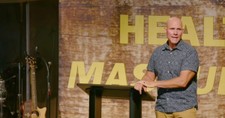
Harris, a husky 26-year-old wearing a sweater, untucked shirt and baggy jeans, led 20 teenagers and 20 adults in a few upbeat, contemporary praise songs, and then delivered the night's message.
"The gift of the Holy Spirit is placed upon you, it's placed inside you," Harris said, his voice thundering through his headset to the back walls of the tiny church. "The Holy Spirit gives you strength to stand up to those who don't want you to stay in school, who want you to try drugs, to try sex."
It's the Holy Spirit that provides Pentecostals with the practice that sets their movement apart from all other evangelical Christian churches: speaking in tongues, or glossolalia.
"The distinguishing feature of classical Pentecostalism is to say that unless you have spoken in tongues, you don't have this baptism in spirit," said Russell Spittler, emeritus professor of New Testament at Fuller Theological Seminary in California.
But during an hour of worship at First Assembly, no one audibly spoke in tongues, and elders in the Assemblies of God are worried about what a younger generation's more practical theology might mean for the future of the practice.
Speaking in tongues is so central to the 3 million-member, Missouri-based Assemblies of God, that denominational leaders voted unanimously to reaffirm it as doctrine, at the church's General Council meeting in August.
Reaffirmation of one of Pentecostalism's central tenets was necessary, according to the resolution voted on at the meeting, because speaking in tongues "has come under certain scrutiny."
Glossolalia has become the church's real battle of the generations.
Some young pastors say that while they recognize the foundational importance of speaking in tongues, other features of their faith are more helpful for their flocks.
Harris, who began preaching when he was 12, is a fourth-generation member of the Assemblies of God. His great-grandfather was a church pioneer who founded a Pentecostal camp meeting in Southern Illinois.
Harris has pastored First Assembly for two years, and he said audible glossolalia was heard just "once every two or three months" at the church.
"We do stress that the initial physical evidence of the Holy Spirit is speaking in tongues," Harris said. "But we do not encourage people to seek tongues. We encourage them to seek God and to seek the power of the Holy Spirit for witnessing. Tongues is just a byproduct of that."
Sentiments like that worry an older generation of Assemblies of God pastors.
"There's concern from our leadership that younger pastors are possibly taking their cues from other significant Christian movements like the emergent churches or user-friendly churches," said the Rev.
Boyd Brooks, 57, pastor of the People's Church, an Assemblies of God congregation in Arnold, Mo. "It's a legitimate concern that these churches are not being fully Pentecostal."
Brooks said one might hear speaking in tongues once a month in his church -- "Not as often as I would like," he said.
In a 2008 poll of Assemblies of God pastors, the church found that 56 percent strongly agreed with the statement, "I regularly teach our congregation about the concept of being baptized in the Holy Spirit."
But only 28 percent said they strongly agreed that "within worship services, our church regularly prays for people to receive the baptism of the Holy Spirit."
Pentecostalism is distinguished from other evangelical movements by its emphasis on Scripturally based "gifts of the spirit," including healing, prophecy and speaking in tongues.