
But the noise cannot distract Bernard Terlouw and the pilots from Mission Aviation Fellowship (MAF) from serving in their mission field. The need in Kenya is too great.
Weeks of post-election violence have turned Kenya into a quagmire of instability. Unrest has devastated the African nation’s once-thriving economy. Tourism has been torched. Even the Peace Corps has seen enough, announcing Tuesday it was withdrawing its remaining 58 volunteers, a decision that has locals worrying that other aid groups will pull out in the wake of the bloodshed that has engulfed Kenya since the disputed Dec. 27 election.
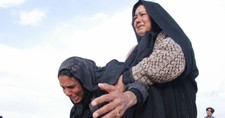
The fallout is being felt nationwide, in families who have lost loved ones – more than 1,000 have been killed and 300,000 forced from their homes – but also in the smaller details of daily life.
Terlouw, the MAF director in Kenya, shared how the violence, which has degenerated into ethnic skirmishes, is impacting lives.
An excerpt of Terlouw’s experiences:
In Nairobi anyone who can afford it lives on a compound, an area fenced by a wall, preferably with barbed wired on top and guarded by security personnel. One of these security guards, Edward Masengo, approached me one late evening. He was shy and apologized and reported that he had to take some days off. It appeared that on the other side of the country his father-in-law had passed away and the family insisted that he come over for the funeral. I was shocked.
“That is impossible,” I said. “The country is on fire.” There is fighting all over and you are a Kisii – you will have to travel through the areas of other tribes. If you don’t get stuck halfway you may even get yourself killed.’ He looked to me and in a calm voice explained to me that he needed to go.
“You are a mzungu (‘white man’), you do not understand,” he said. “It is the funeral of my father-in-law. My wife is there and I am told to come.” Thoughts ran through my mind. I wondered if I would try the “Let the dead bury their own dead” on him, but it was obviously inappropriate. But letting him go was clearly too dangerous. At that moment I sheepishly realized that as the director of MAFI would have other means of helping him. Would this justify a flight with one of our aircraft? A quick call to a member of our operations staff revealed that we had a flight the next day that would pass close to his village and one seat would be available. The arrangement was quickly made. Edward could not really grasp it so quickly. For him ‘flying’ was something for ‘members of parliament’.
“I am an askari, a guard,” he said. “How is this possible? God is so good.” The next day Edward reported to our hangar early, in his best clothes. We flew him safely over the troubled country. One day later I got his phone call. “I am at the funeral – thank you so much.”