
July 25, 2008
SANTA ANA, CA - Two brothers, a murdered father and an untold story of pain and forgiveness are the inspirations behind a six times award-winning documentary on the secret death of a prominent evangelical pastor in Iran, Haik Hovsepian.
The movie is the untold story of Iranian Christian martyrs, and Christian converts, who became the victims of their beliefs and paid the ultimate price – their lives.
Two brothers from Iran, Joseph and Andre Hovsepian, who made the documentary "A Cry From Iran" about the life and work of their father, recently joined international journalist Dan Wooding as guests on his Front Page radio program on KWAVE 109.9 FM in Santa Ana, California. (The interview will be aired again this Sunday, July 27, 2008, at 5:00 PM Pacific Time. It can also be heard on http://www.kwve.com/.)
Their documentary is the story of Bishop Haik Hovsepian, who was the superintendent of the Assemblies of God and, later in his ministry, the representative of protestant churches in Iran.
Joseph Hovsepian explained: “Living with him for twenty years of course I’ve had a lot of good memories from him, but thirteen years ago in 1994 because of his faith and all he did for Christians and defending them, he one day disappeared and then we found him stabbed to death because of his faith.”
Joseph continued: “After going through all the tragedy and comfort and different stages of forgiving (and) having a background in film industry, the idea of making this documentary started two years after the actual martyrdom. In 1996 we started gathering several documents and all the clips that I had shot when my dad was alive -- and at the time we didn’t think that those clips could become so vital and important and the world would see them -- but praise the Lord with the support of the Holy Spirit and family and churches we came a long way, and two years ago with partnership with Open Doors we could officially start producing this documentary fulltime working with my brother on the board, and as a result 'A Cry from Iran' has been born.”
On the question of who killed Haik Hovsepian, Joseph replied: “That’s a good question. We hope that the audience, after watching the documentary, can judge and know the answer for themselves. We haven’t pointed our fingers at any special person or group or government but, as we know, that our main enemy is the devil that works through people and not people themselves. But of course it’s been very, very hard, very sad at times. During the editing process our goal was focus, was to see beyond our pain and memories, and see what this film can do for the people in the west who appreciate their freedom and to the people in Iran to see that the martyrs names still go on.”
Andre Hovsepian said he was only ten years old when his father was martyred so he didn’t have as much memory as Joseph and the rest of the family did.
“But I do definitely have a lot of memories still and a lot of pictures of him in my head because I was ten years old and I lived with him for ten years, but definitely besides memory what I heard about -- his life from other members of the church, from other family members -- really impacted me so much. And of course after making this documentary spending sometimes twelve, thirteen, fourteen hours a day, at times I think I saw more footage from him and clips and pictures than I’d seen in my ten years.”
Wooding wanted to know what did Andre learn new about his father from making the movie? “When you started working on this movie 'A Cry' From Iran you must have been amazed that you found out all sort of new things about him,” said Wooding.
“Yes, I did actually, and one thing that stood out I would say (was) the amount of passion and the vision that he had, because everything I believe starts from one person’s vision and then does something to its community or results and is fruitful, and in the process of making this documentary I saw that vision that my dad had and at the end of course resulted in growing the zeal of Christians in Iran.”
Joseph Hovsepian said the documentary is narrated by a well known award winning voice-over who did the Verizon Wireless commercial a few years ago.
He pointed out that when some people think of documentaries they think of boring talk and a program full of talks, whereas a lot of audiences have already said "A Cry From Iran" is a docu-drama.
“We’re very glad that this film has not only won awards in the Christian awards but also has gone beyond that and even in the scope of human rights issues and freedom of religion, freedom of choice, has brought a lot of interest in (the situation in Iran), and we’re very excited about that.”
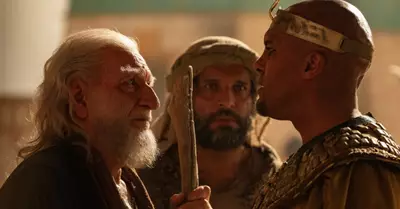
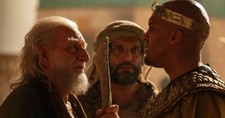
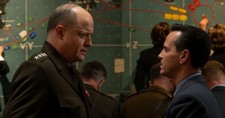
Joseph said they carried out a series of reenactments, shooting about two-hundred hours footage of his father, so in the last years of his life they had enough coverage. But the first part of his life and in covering the radical parts of country of Iran they had to reestablish (through reenactment), and the brothers had to travel to five countries and also five states in America.
“We have shot over thirty-five interviews and thirty-five hours of reenactment and the result has been fifty-five minutes of packed documentary, plus a lot of behind the scenes (footage).”
“Take us back to the period when there was all this trouble for your father. What led up to it?” Wooding asked.
Joseph responded that sadly the situation hasn’t changed that much from that day to the present.