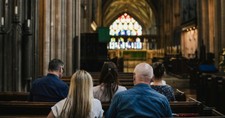

Islamicization. "No-go zones." Moral vacuum. Empty churches. Anglican schizm.
These are just a few of the phrases regarding the state of religion in England that have made their way across our desks here at Crosswalk in the past year. How much is really true?
Every American student is taught that our land was colonized by Christian Brits seeking a new life and freedom from a state-imposed Church, so it's interesting to consider our common roots, whether we're headed in the same direction just several years behind, and whether the roles have reversed several centuries later.
A couple months ago, thanks to Facebook, I regained contact with a college roomate, Tim Miller, who has lived in London for several years, doing ministry with his wife Jamie. I forwarded Tim many of the articles and columns about England & Religion (view the ones I sent him at the end of this interview) we'd run from various sources in the past several months, and asked him to read them and see how they jived with his experiences and encounters. He was happy to give Crosswalk readers the straight scoop as he's seen it first-hand...
***
Tim Miller: A disclaimer or two before I begin:
First, my experience is almost exclusively London-based. It would be an understatement to suggest that Scotts, Northern Irish, Welsh, and even English people living outside of London would have different points of view on a number of the questions you’ve given me to answer. That said, the one thing most of these groups have in common is their cynicism towards religion.
Second, I’ll approach your questions from two strands. One strand will be observations of the Muslim people we work with, the other will concern itself with our observations of the Brits we know, worship with, and live around.
Crosswalk.com: What is your role with the Salvation Army, and what ministry are you doing in the UK?
Miller: I actually have two roles with the Salvation Army in the UK. My actual title is Divisional Youth Officer which requires me to help with the oversight of the Army’s youth work around the city of London. This includes meeting with youth workers, helping to equip them through resources and training, holding them accountable in some cases, assessing their work in other cases, and also meeting with local Salvation Army ministries who are interested in getting started in youth work.
My second role is that of church planter. Shortly after moving to the UK, a Salvation Army-owned building became available in our neighbourhood and my wife and I were approached about starting a ministry there. Jamie is actually the director of our local ministry, and I officially serve as a volunteer but, as anybody who has ever church-planted knows, it is a full-time job that really should be attended by a small team of workers.
We actually started our ministry in the community by leading after-school educational activities that dealt with learning the English language. We were (still are) living and working in a community that had over 350 different languages represented which created a real barrier for young people who were trying to work their way through school. Not only was listening to English speaking teachers a barrier but, with no English speaking parents at home, homework was a real struggle.
Since that time we have also begun working with adults, offering English classes and a community support group that helps immigrants get their children enrolled in school, helps families get signed up for a local doctor, and also helps to translate English documents into different languages.