


Declare Your Faith - Sign the "I Am a Christian" Pledge
E-MAIL NEWSLETTERS


There was an error processing this request. We cannot subscribe you to newsletters at this time. Please contact technical support with details.
Featured Sponsors
RELIGION TODAY Sponsorship

AVERAGE USER RATING

RATE THIS ARTICLE

  • Email
  • Print
  • Discuss
Search The Bible   
Advanced Search
Recently On Religion Today
Seminary President Shares His Experience in Beijing

Seminary President Shares His Experience in Beijing

Katherine Britton

Crosswalk.com News & Culture Editor


August 22, 2008 

China’s communication about the Christians in its midst has left believers in other countries scratching their heads. Official statements and promises of Bibles during the Olympics contradict reports of crackdowns on house churches. Can both scenarios be true? Is the house church the only place where the Gospel is spreading?

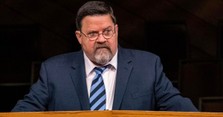
Dr. Mark Bailey, president of Dallas Theological Seminary, shared his thoughts with Crosswalk after he returned from a visit to Kuanjie Protestant Church in Beijing with President Bush.

Dallas Seminary recently began translating its online courses into Mandarin, becoming the only U.S. seminary that enables students in China to attend lectures virtually in their own language. These courses have put Dr. Bailey in touch with Chinese students abroad and in Beijing, and exposed him to aspect of Chinese culture that most Americans hear little about: China’s institutional church. The following is an excerpt from Crosswalk’s interview.

CW: Tell us about the church service at Kuanjie Protestant Church with the president in Beijing. What did you see there?

Bailey: This is my second time to Beijing, and I saw a service very similar to what I’d seen before. Obviously, things are different with security having swept the place and prepared for having the president there for two weeks, just like it would be in this country. But it was a very typical worship service as I had experienced in China before.

[There was] great singing, songs like “Onward Christian Soldier,” “I’ll Go Where You Want Me to Go, Dear Lord,” great evangelical prayers by Pastor Li (SP) at the Kuanjie church where we attended… The children’s choir that was the result of the work that a couple of churches in the States had done in doing an English in character form of VBS over there last summer, and they sang “Amazing Grace.” The Gospel was plainly presented in prayer, in song as well as in the preaching.

CW: That’s not exactly what Americans expect from a state-sponsored church. Do you find the church in any way tainted by its association with the state?

Bailey: China is a very complicated culture… in my experience, in all the times that I have either preached or spoken there in two different trips, nobody has ever asked me to control or censor my message or asked for a previous script of what I would say. I had absolute freedom to present the gospel straightforwardly, plainly, in churches. There are pockets of freedom that are developing. That’s what we’ve been praying for and what we’ve been dialoguing with the government and church leaders to accomplish there.

[In the past], we’ve used their translators, and we’ve used our own translators… and never has there been censorship or couching of the message that we have preached. That’s been our experience and we know that’s a measure of freedom that we hope would continue to spread.

In one sense, it’s interesting that in our country you have to get approval to be a church and to have a 501c organization through the IRS here. You can only build where they’ll let you in a zoning [area], you have to build according to code, and you have to have parking restrictions. We have more government involvement here than most people might recognize or might be conscious of, but that hasn’t limited us so far. The United States hasn’t limited our expression of worship. That’s what we would pray for over there, whether that’s for the registered or unregistered church.

CW: So you feel like in the registered church there isn’t any restriction on expressing your religion?

Bailey: Well, I think that there probably are in some different situations. [The government’s] biggest concern obviously is the cults, and making sure that money isn’t taken out of the culture and controlling rebellions and rebellious movements. There’s fear on both sides that goes back hundreds of years. There was the communist regime where Christianity obviously was outlawed, discouraged and prohibited, but that’s changing.

But I know that there’s a saying that anything you hear about going on in China is going on somewhere in China—liberty to great restriction. I’m sure it’s very regional and very selective.

CW: How was your interaction with the church members as Kuanjie?

Bailey: I remembered a number of the people and they remembered me, having been there two years ago at the church where we shared a service with the President. I went to another church service and met some new folks. We had mutual acquaintances—we have students as Dallas Seminary from both the house church and the registered church. I met a number of people who attended a church that one of our students had pastored before he came to do his masters and doctoral work at the seminary. And so, it’s great fellowship and great encouragement. [There are lots of] people who had studied here in the States—you know, doctors, lawyers—who are continuing to walk with the Lord. That was just great fellowship with them.

CW: Since the institutional church is so free and so open, at least in your experience, it seems funny that people would risk the persecution they face by joining a house church. Why do you think that is?

Bailey: I would stress that the openness in the registered church is probably regional, and even exceptional. I think that’s beginning to change. I hope it is. I think the years of distrust because of the heavy persecution, the limitation that has existed for centuries and for generations has created distrust on both sides – the fear of movements and rebellions, the fear of persecution on the other… Unless God miraculously heals it, I think that great divide is going to take a long time to heal. Again, the healing depends on whether genuine faith is allowed and the freedom to express that faith.

My belief, based on the life of Joseph and the life of Daniel, is that Christians should be able to exist and even serve in governments that are anything but Christian, anything but faithful. Joseph being second in command to Pharaoh, Daniel being second in command to Babylonian or Persian powers and still holding the faith – that’s the model that we ought to seek for. [That’s a model of] justice, righteousness and peace for all people.

CW: It seems like there are two different faces of China – one that is encouraging religion and the registered church, and one that is actively trying to stamp out house churches in different places. What do you make of these conflicting impressions?

Bailey: It’s exactly that—it’s conflicting. It’s a more extreme level of where Bible studies are allowed in certain school but they’re outlawed at others. You could have Christmas decorations in one place but not at another. It’s a conflicted society, and it’s as regional and local as the leadership. Everything happens, unfortunately, and too much of it in terms of the negative.

CW: What would you say of the religious culture in Beijing based on your own experience there?

Bailey: I think it’s a testament that the Gospel is not chained. You can’t stop what Christ said he would do when he said, ‘I will build my church and the gates of hell will not prevail against it.’ We’ve seen the great growth of evangelical faith in China, in the house church movement, for many, many years. And again there are pockets of that that are now developing in the registered churches. Some of them are quite evangelical, some of them are obviously not. In the house church, there’s evangelical movement and also cultish activity and strange behavior.

It’s not that the house church alone is righteous and the registered church is evil. There’s a mix of both that is really important to keep in mind. That’s why our prayers our to be for genuine believers, for them to have a winsome witness, a faithfulness in spite of persecution, and to sensitively and wisely be able to share the Gospel at all levels of the culture. That would be our prayer.

Dr. Mark Bailey is professor of Bible Exposition and president of Dallas Theological Seminary. Dallas Seminary will offer seven of its 20 online courses in Mandarin and enroll 60 students in the program this fall.

1 | 2 | 3 | Next | All
Most Recent User Comments
Sign up to post your comments

It's quick and easy to register with Crosswalk.com! Just fill out the short form below. You'll have the opportunity to post comments, and be more involved in our community and forums. Plus, with this one account, you can sign in anywhere in our network of sites displaying the Salem All-Pass logo, including Oneplace.com, Christianity.com, Lightsource.com, Crosscards.com, and more!