







Study Finds Heaven's Doors Are Open Wider

Study Finds Heaven's Doors Are Open Wider

Adelle M. Banks

Religion News Service


September 22, 2008

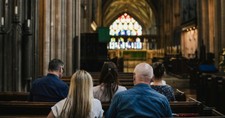
WASHINGTON (RNS) -- Heaven is no longer viewed as an exclusive place by many Americans, according to a new survey from Baylor University.

When researchers polled U.S. adults about who (and how many) will get into heaven, 54 percent of respondents said at least half of average Americans will make it through the Pearly Gates.

More than a quarter of those surveyed -- 29 percent -- said they had no opinion about the fate of the average American, a figure that mirrored those who thought "half or more" of nonreligious people would make it into heaven.

Rodney Stark, co-director of Baylor's Institute for Studies of Religion in Waco, Texas, said the findings represent a marked difference from earlier studies.

"I think that it's really just a ... broadening because of the cultural experiences of diversity," said Stark, author of the new book "What Americans Really Believe," which details the study's findings on topics ranging from belief in guardian angels to the practices of "irreligious" people.

"I know that when we did studies like this back in the '60s, the notion that only Christians could go to heaven, for example, was much more extensive than it is now."

The finding that many aren't sure about other people's eternal destination is particularly meaningful, the scholars said.

"It's kind of a good, American middle ground," said Stark. "Two generations ago, it would have been `definitely not.'"

Researchers found that while 72 percent of respondents said at least half of Christians will make it into heaven, the figures were lower for other faiths: Jews (46 percent), Buddhists (37 percent) and Muslims (34 percent).

"I think what you're seeing is a real level of religious tolerance," said Stark. "It's probably going to be higher 10 years from now."

The study, based on data collected last fall, also revealed that while 11 percent of the national sample said they had "no religion,"they may not correctly be termed "irreligious."

Researchers found that 20 percent of those reporting "no religion" said they have attended church, 56 percent said they had prayed, and 32 percent said they prayed "several times a week or more."

The survey's findings, like some from a recent (and larger) Religious Landscape Survey by the Pew Forum on Religion and Public Life, indicate a variegated religious picture of the United States that may challenge popular stereotypes and demonstrate openness to people of other faiths.

"It's kind of a complicated landscape," said Byron Johnson, co-director of Baylor's Institute for Studies of Religion. "It's much more complicated than I think people understand."

Another example of the expanding image of U.S. religiosity is in findings about mystical and religious experiences. Researcher Christopher Bader, for example, was surprised to learn that 55 percent of respondents said they had been "protected from harm by a guardian angel."

Though scholars don't know if people were referring to the actual sighting of an angel or a lucky near-miss car accident, they were struck by the range of people who acknowledged some experience of this kind.

"We found it among mainliners, evangelicals, black Protestants," said Bader, director of the Baylor Surveys of Religion. "We found it among people who said they had no religion but called themselves spiritual. It's one of those crossover experiences."

The newest findings are based on a national sample of 1,648 adults in the fall of 2007. The study's margin of error is plus or minus 4 percentage points. The data was collected by the Gallup Organization and the research was funded by the John Templeton Foundation.

Among other findings, the survey showed that:

-- Widows and widowers are some of the biggest tithers, with 17.6 percent giving 10 percent or more of their income to the church, compared to 8.6 percent of nonwidowed people.

-- People attending large churches (with more than 1,000 in thecongregation) are more likely to tithe, attend worship services weekly and believe that heaven and hell "absolutely" exist.

-- Those who attend stricter churches -- those tending to differ from secular society on issues such as abortion and homosexual behavior -- are more likely to tithe, attend worship services weekly and share their faith with others than attenders of less strict churches.

Copyright 2008 Religion News Service. Used by permission. All rights reserved.

AVERAGE USER RATING

RATE THIS ARTICLE

  • Email
  • Print
  • Discuss
Search The Bible   
Advanced Search
Most Recent User Comments
nayehieona
9/26/2008 6:07 PM
Greetings. In reference to "Heaven's Doors", we really shouldn't be surprised at the findings, should we?
The Bible states that in the End Times, people's hearts wlll wax cold. They will believe all manner of false doctrine and seducing spirits. The "I'm OK, you're OK mentality works fine in the secular world, but for the Christian... I for one will stand by John 3:16; "For GOD so loved the world, that HE gave HIS only BEGOTTEN SON. Whosoever believes in HIM shall not perish, but have everlasting life." To alter, deny or reject this basic tennant invalidates what the GOD of the universe has done.
I for one do Not want to be included with those who thought to usurp HIS Authority. It is time to stand up and be counted. "As for me and my house, we will Serve the LORD!"
Faith2Follow
9/22/2008 3:43 PM
The theological term "universalism" is ever growing in the church,directly or indirectly.We have sold the theory to the world. The fact remains, as much as people want to challenge or change it Jesus Christ is the only way to Heaven.
chronicler
9/22/2008 12:58 PM
Just goes to show that the church is really not doing what it was commissioned to do: go and tell, compel them to come in. The idea that we can go to heaven through any other means than the one provided by the Lord--Jesus' sacrifice on the cross--is leading multitudes down the highway to eternal separation from the Lord; a place called hell.
Sign up to post your comments

It's quick and easy to register with Crosswalk.com! Just fill out the short form below. You'll have the opportunity to post comments, and be more involved in our community and forums. Plus, with this one account, you can sign in anywhere in our network of sites displaying the Salem All-Pass logo, including Oneplace.com, Christianity.com, Lightsource.com, Crosscards.com, and more!

E-MAIL NEWSLETTERS


There was an error processing this request. We cannot subscribe you to newsletters at this time. Please contact technical support with details.
Featured Sponsors