
February 9, 2010
The earthquake survivors and stranded migrate north and east, following their bloodlines to open doors and open arms. They leave the devastation of Port-au-Prince knowing they still will be cared for, because a spirit of help hovers over Haiti.
"It is the Haitian culture. They are taking care of their own, even if it's a distant relative," said Mark Elliott, president of the board of directors of New Hope Missions, International. The Florida-based missions agency has served Haiti since 1989, mostly in the northern city of Cap-Haitien. "We found that to be true years ago. They are very family-oriented, just a precious people who live in one of the most horrendously oppressed nations on earth."
Most of the world's attention is focused on Port-au-Prince, the capital located 15 miles west of the epicenter of the Jan. 12 earthquake that measured a magnitude 7.0. Virtually everyone in the city (estimated metropolitan population of 2.5 million) has been affected by the disaster, but the earthquake's effects reached far beyond the city limits to every corner of the nation. In turn, every nook and cranny is reaching out to Port-au-Prince and its people. Northern and eastern cities are taking in refugees while also sending support to the capital.
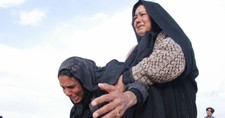
"All our pastors and families have lost loved ones," Elliott said. "Our Haitian administrator lost both parents. Our pastor lost four in his family, so everyone is suffering and grieving."
Yet there is little time available to mourn as the hurting and homeless need new places to stay.
"The refugee situation is in process," Elliott said. "We still don't know how many refugees have come into Cap-Haitien or where they will all stay. There is a small hospital, and beside that a gymnasium which currently is filled with refugees who came up from Port. A lot are trying to get medical assistance and sustenance. There is a migration taking place, but it's not easy to get there because of the distance."
The 175-mile trek from Port-au-Prince to Cap-Haitien, the nation's second largest city, is also hindered by roads and bridges damaged by the earthquake. But the homeless keep coming.
"It's too early to tell how much Cap-Haitien will swell as far at population numbers, but it's mind-boggling already," Elliott said. "They say the size of Port-au-Prince will never be the same, because people lost a lot and there is nothing to rebuild."
Robert Deeb is a native Haitian who now lives and works in Miami while his family remains near Port-au-Prince. The migration he saw while visiting Haiti in the days following the earthquake is different from the reports he is now receiving.
"At first the migration started well, but now it is slowing because people who don't have families don't know where to go," Deeb said.
The job of tending to the needs of the refugees can seem overwhelming, Elliott said. He shared a story of a pastor's wife and several family caring for 42 orphaned children by themselves.