Between 2001 and 2006, 98 new churches were planted in the city of Boston.12 In a city the size of Boston, 98 new church plants in a six-year time period is not spiritual death, it is spiritual life and vitality. Why was it, then, that the majority of the country viewed Boston as a spiritually dead place? Of the 98 churches planted during that six-year time period, “76 of them reported the language of worship. Of those 76 churches, almost half of them . . . [have] non-English or bi-lingual [services], 19 worship in Spanish, 8 in Haitian Creole and 9 in Portuguese.”13
In The American Church in Crisis, Olson notes that every region of the United States and every major Christian group (Catholic, mainline, evangelical) experienced a decline in total attendance between 1990 and 2005. The only group that saw a numerical increase was evangelicals in the Northeast region—due in large part to “the sharp increase in Asian, Hispanic, and other immigrant populations.”14 The perception nationally was that Boston was spiritually dead, because there was noticeable decline among the white Christian community. In contrast, there has been significant growth in the number of nonwhite Christians and churches in the Boston area.
At one point during my time in Boston, a group of very sincere young men and women came from a prayer group in the South to pray for revival in the city of Boston. They assumed that Boston was a spiritually dead and oppressed place. There was a sense of pity and concern expressed by these well-intentioned Christians for a pastor who was struggling in a city with such spiritual lifelessness. But that was not the Boston I knew. The Boston I knew was filled with vibrant and exciting churches. New churches were being planted throughout the city. Christian programs and ministries were booming in the city. But this spiritual vitality was not as evident among the white churches. The spiritual energy and dynamism in the city centered on the multiethnic, immigrant and ethnic minority churches. The work of the Boston Ten-Point Coalition (composed mostly of African American clergy) stifled youth-related violence throughout Boston. Haitian churches were involved in an effort to bring justice and fairness to nursing home workers. A Latino pastor and an African American bishop led the Christian community in spiritual revival for the city and for political change. Church planting efforts among Asian American young adults and campus ministries composed of Asian Americans flourished throughout Cambridge/Boston. Boston is alive with spiritual revival, particularly among the ethnic minority communities. But very few seem to recognize this reality, even as this trend begins to appear nationally.
The White Captivity of American Evangelicalism
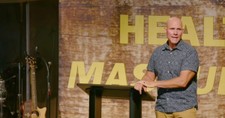
While the demographics of Christianity are changing both globally and locally, the leadership of American evangelicalism continues to be dominated by white Americans. During my years as a senior pastor of a local church, not a week would go by without my receiving an invitation to some sort of pastors’ conference. These national conferences would gather together the “experts” and the key leaders of American evangelicalism. Of the fifty-plus speakers (platform or workshop) scheduled for these conferences, there may have been one African American platform speaker and maybe one other nonwhite leading a workshop, but the rest of the speakers would be white. What is the message? The real experts in ministry are whites. Nonwhites may offer some expertise in specialized areas of ministry (such as urban ministry or racial reconciliation), but the theologians, the general experts, the real shapers and movers of ministry, are whites.