






But the noise cannot distract Bernard Terlouw and the pilots from Mission Aviation Fellowship (MAF) from serving in their mission field. The need in Kenya is too great.
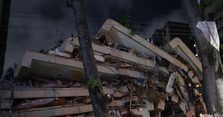
Weeks of post-election violence have turned Kenya into a quagmire of instability. Unrest has devastated the African nation’s once-thriving economy. Tourism has been torched. Even the Peace Corps has seen enough, announcing Tuesday it was withdrawing its remaining 58 volunteers, a decision that has locals worrying that other aid groups will pull out in the wake of the bloodshed that has engulfed Kenya since the disputed Dec. 27 election.
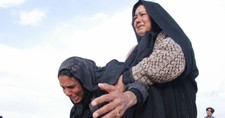
The fallout is being felt nationwide, in families who have lost loved ones – more than 1,000 have been killed and 300,000 forced from their homes – but also in the smaller details of daily life.
Terlouw, the MAF director in Kenya, shared how the violence, which has degenerated into ethnic skirmishes, is impacting lives.
An excerpt of Terlouw’s experiences:
In Nairobi anyone who can afford it lives on a compound, an area fenced by a wall, preferably with barbed wired on top and guarded by security personnel. One of these security guards, Edward Masengo, approached me one late evening. He was shy and apologized and reported that he had to take some days off. It appeared that on the other side of the country his father-in-law had passed away and the family insisted that he come over for the funeral. I was shocked.
“That is impossible,” I said. “The country is on fire.” There is fighting all over and you are a Kisii – you will have to travel through the areas of other tribes. If you don’t get stuck halfway you may even get yourself killed.’ He looked to me and in a calm voice explained to me that he needed to go.
“You are a mzungu (‘white man’), you do not understand,” he said. “It is the funeral of my father-in-law. My wife is there and I am told to come.” Thoughts ran through my mind. I wondered if I would try the “Let the dead bury their own dead” on him, but it was obviously inappropriate. But letting him go was clearly too dangerous. At that moment I sheepishly realized that as the director of MAFI would have other means of helping him. Would this justify a flight with one of our aircraft? A quick call to a member of our operations staff revealed that we had a flight the next day that would pass close to his village and one seat would be available. The arrangement was quickly made. Edward could not really grasp it so quickly. For him ‘flying’ was something for ‘members of parliament’.
“I am an askari, a guard,” he said. “How is this possible? God is so good.” The next day Edward reported to our hangar early, in his best clothes. We flew him safely over the troubled country. One day later I got his phone call. “I am at the funeral – thank you so much.”
Could this be justified? Of course. Why did it take so long for me to remember what Jesus taught us: “I tell you the truth, whatever you did for one of the least of these brothers of mine, you did for me.” Two days later another MAF flight, coming from that area, picked Edward up and brought him safely back to Nairobi.
While the anger of recent weeks has been triggered by the disputed tallying process and hasty re-inauguration of Mwai Kibaki as president, Terlouw also has witnessed the unveiling of deep tribal divisions.
“These divisions within the Kenyan society have existed for many decades, but have never been dealt with,” he said. “The confrontations between opposition demonstrators and police have been violent since the end of December, but we now see unconcealed tribalism; hatred over ethnicity and grudges over ownership of land, poverty and political power produce a volatile mix.”
Groups of young men control access to villages or areas of town. Kenyans are asked at road blocks for identification cards and are either given passage or perhaps beaten, depending on their tribal identity. A vicious cycle of revenge is spiraling out of control.
“Some days everything appears calm and almost back to normal,” Terlouw said. “However, you’ll be driving home on a normal afternoon and find yourself suddenly confronted by a contingent of riot police. Within seconds, trouble all around.”
During the initial days of conflict, MAF pilots evacuated threatened Kenyans as well as staff members from such organizations as Scripture Mission, International Committee of the Red Cross and Navigators, who were no longer safe in their homes. Things have calmed since then, but it’s far from quiet.
Jerry Dykstra, media relations director for Open Doors, said the outreach ministry so far has not been affected.
“We’re encouraged in that we hear of some positive signs,” he said, referencing the recent involvement of former U.N. Secretary-General Kofi Annan, who is mediating peace talks between Kibaki and his chief rival, Raila Odinga. Last week, negotiators at the talks agreed to act immediately to end the violence. On Tuesday, they began discussing deeper political issues, talks they plan to complete within two weeks.
“We’re encouraging people in the U.S to pray for peace and stability and for the church to take a very active stand in Kenya,” Dykstra said.
Kenya is nearly 75 percent Christian, but there are pockets of persecution by Muslims in coastal and northeast regions, Dykstra said. The fear among some is that radical Islamic groups will see the current conflict as an entrance for extremist views that could influence the nation.
“We need unity among Christian churches. It is a necessity,” Dykstra said, adding that Christians should be agents of peace and hope during these uncertain days.