How Abraham Lincoln's Faith Shaped His Pursuit of Justice


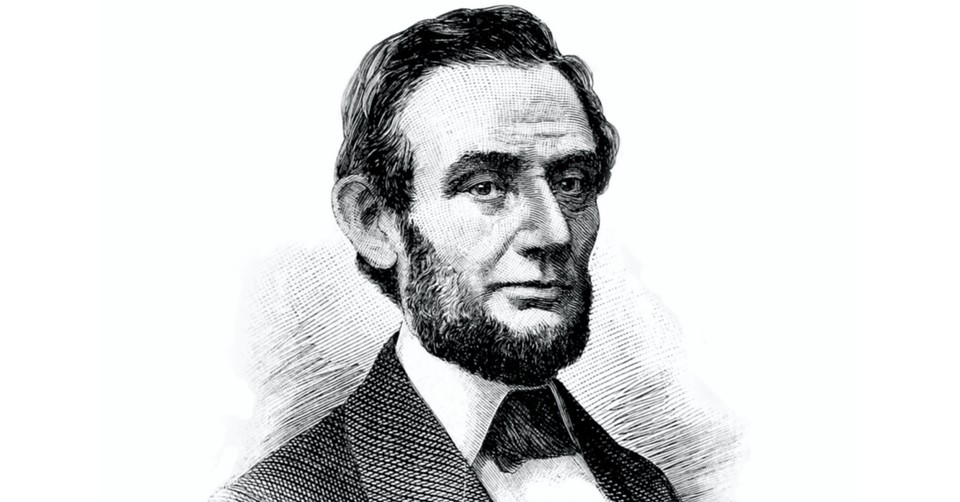
As Americans, when we consider a leader who brought justice and led with moral courage, the name Abraham Lincoln often comes to mind. For many of us, Lincoln is considered a beloved President of the United States of America. Yet, his highly disputed election, with him seen as the anti-slavery candidate, is attributed to triggering the secession of Southern states and the start of the Civil War.
Lincoln, born in a Kentucky log cabin in 1809, grew up in poverty. Mostly self-educated, he worked as a lawyer and state legislator before becoming the president who would lead our nation through the devastating Civil War. Nicknamed “The Great Emancipator,” Lincoln was sworn into office on March 4, 1861, as the 16th President of the United States, during an era of intense national crisis, ushering in the Civil War just weeks later on April 12, 1861.
A Nation Divided
With states at odds over slavery, on January 1, 1863, Lincoln issued the Emancipation Proclamation, declaring forever free all slaves within the Confederacy. Writing:
“And by virtue of the power, and for the purpose aforesaid, I do order and declare that all persons held as slaves within said designated States, and parts of States, are, and henceforward shall be free; and the Executive government of the United States, including the military and naval authorities thereof, will recognize and maintain the freedom of said persons.”
Thomas Jefferson and The God Who Gave Us Liberty co-author and historian Dr. Jerry Newcombe writes, “During the Civil War, the nation was tested. It could easily have perished. It could have easily split into many nations, not just two. Once the division became permanent, it could have easily have divided up further.”
President Lincoln called for April 30, 1863, to be a day of national humiliation, fasting, and prayer, writing:
“All this being done, in sincerity and truth, let us then rest humbly in the hope authorized by the Divine teaching, that the united cry of the Nation will be heard on high, and answered with blessings, not less than the pardon of our national sins, and the restoration of our now divided and suffering Country, to its former happy condition of unity and peace….”
Lincoln is credited with telling his biographer, Noah Brooks, “I have been driven many times upon my knees by the overwhelming conviction that I had nowhere else to go. My own wisdom, and that of all about me, seemed insufficient for the day.”
What Does Biblical Justice Require of People?
President Lincoln’s words align with Isaiah 1:17’s definition of biblical justice and the moral courage it requires of us, to: “Learn to do right; seek justice. Defend the oppressed. Take up the cause of the fatherless; plead the case of the widow.”
Newcombe writes that when Lincoln delivered his famous speech on the Gettysburg battlefield on November 19, 1864, “he was harkening back to the Declaration of Independence, saying, ‘Twelve score and ten years ago, our fathers brought forth on this continent, a new nation, conceived in Liberty, and dedicated to the proposition that all men are created equal.’”
Courageous Christianity co-author and historian William J. Federer writes, “History is filled with accounts of people suffering… but then, stirred by the Spirit, little nobodies rise up, small in their own eyes, but big in faith and courage, to speak truth to power and to resist evil.”
Seeking Healing for Our Nation
In Lincoln’s Second Inaugural Address, given on March 4, 1865, he addressed the reality and the anguish of the Civil War, stating:
“ …As was said three thousand years ago, so still it must be said, ‘the judgments of the Lord, are true and righteous altogether.’ With malice toward none; with charity for all; with firmness in the right, as God gives us to see the right, let us strive on to finish the work we are in; to bind up the nation’s wounds; to care for him who shall have borne the battle, and for his widow, and his orphan—to do all which may achieve and cherish a just and lasting peace, among ourselves, and with all nation.”
Lincoln’s Life Cut Short
Although Lincoln’s life and second term as president were cut short by assassination, his moral courage and efforts to right wrongs and bring justice to the people of the United States of America still stand true today, despite differing and dividing opinions in our nation.
Federer writes that at Lincoln’s funeral, the Rev. Phineas D. Gurley, D.D., pastor of the New York Avenue Presbyterian Church, quoted Lincoln as saying: “Gentlemen, my hope of success in this great and terrible struggle rests on that immutable foundation, the justice and goodness of God. And when events are threatening, and prospect very dark, I still hope that, in some way which man cannot see, all will be well in the end, because our cause is just, and God is on our side.”
Lincoln’s legacy is not soon forgotten, as a statue in his honor stands tall at the Lincoln Memorial in Washington, D.C. The United States 25th President, William McKinley, said of Lincoln: “The purpose of God, working through the ages, were, perhaps, more clearly revealed to him than to any other….He was the greatest man of his time, especially approved of God for the work He gave him to do.”
As Lincoln called for a divided and suffering nation to be restored, so can we, by answering God’s call to seek justice for those in our lives, our nation, and the world, and to walk with moral courage, fulfilling God’s will on earth.
Foundations of Freedom Video:
Photo credit: ©Getty Images/Wilshire Images
This article is part of Salem Media's Foundations of Freedom series.
Lynette Kittle is married with four daughters. She enjoys writing about faith, marriage, parenting, relationships, and life. Her writing has been published by Focus on the Family, Decision, Today’s Christian Woman, kirkcameron.com, Ungrind.org, StartMarriageRight.com, and more. She has a M.A. in Communication from Regent University and serves as associate producer for Soul Check TV.
Originally published July 08, 2026.