Do Christian Weddings Have to Take Place in a Church?


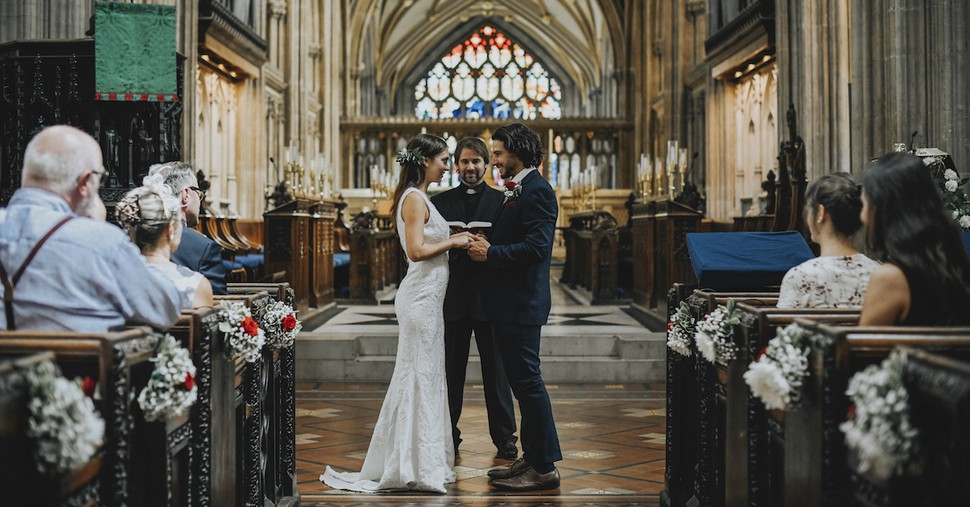
Church weddings account for less than half of all weddings in the United States today, though they were once the norm. This is the case while approximately 60% of Americans still identify as Christian, though that number is declining. The likelihood of a church wedding varies by denomination. Catholics are the most likely to still get married in church at 60–70%, and Protestants from mainline denominations are the least likely at 30–50%. Evangelical, non-denominational Christians fall somewhere in between. While there are understandable reasons for marrying elsewhere, reclaiming a church setting offers several unique benefits. If you are a Christian couple considering a church wedding, this article highlights four reasons to reverse the trend and choose one.
First, marriage in a sacred place, the church, signifies the couple’s understanding that marriage is a sacred act. While culture might describe marriage as a commitment or civil union, the church uses stronger language. Marriage is a covenant before God—a promise that not only involves the couple, but God himself. In the Catholic Church, it is one of seven holy sacraments; that is why Catholic Church wedding rates are the highest. Having a wedding in church pays homage to the spiritual implications of what happens when couples wed; the mystery of their spiritual union becomes tangible in an expressly sacred place.
Historically, churches were designed as sacred spaces. For example, many travel to see the breathtaking Gothic cathedrals throughout Europe. It’s hard to believe the years and man-hours it took to create their stone and stained-glass art. Artisans spent their whole lives refining and dedicating their skills to the glory of God. It’s a sacred feeling to stand in a space that glows with heavenly light, often from windows that tell the biblical story. These impressive cathedrals, designed in the form of a cross, communicate both the vast and salvific work of God. They were designed to elicit our humility and reverence.
Christians in the United States worship in formal cathedrals, local parishes, historic Protestant churches dating back to the Revolution, school gyms, convention halls, and country churches, among other places. God meets Christians in these spaces and beyond, but each of them holds a special designation as a gathering place for God. It is here that Christians gather for worship, and Christian wedding ceremonies are intended to be services of worship too. Thinking about marriage as a service of worship reminds Christians to choose their spouse carefully—pick someone you’d readily stand before God with! Through church marriage, couples ground their ceremony in worship and invite others to take part.
There are, of course, understandable reasons why Christian couples have chosen to marry elsewhere. First, the Bible is clear that the church is composed of people, and people can travel! Christian couples have enjoyed personalizing their service in meaningful ways at custom venues. They have also used destination weddings to bring their families together for celebratory, memorable experiences. Second, they have still retained Christian elements in their ceremonies. The majority of couples still use a pastor to officiate, include a scripture reading, a prayer, and mention God in their vows. Even adherence to this pattern is changing, however. As vows become less formalized and pastors may or may not officiate the ceremony, for instance, the shift away from an institutional church wedding is clear. A return to a church wedding is not only a return to a sacred space but also to the sacred structure of the service.
Second, when a wedding takes place in the church, a new union is born precisely where it is meant to be supported and nourished. God crafted marriage to be a healthy, stable lifeline for both spouses as they experience the highs and lows of life together. As a covenant with God, marriage is also a tool that God uses for blessing and refinement. The couple has a special ability to glorify him through their union. Learning to love another like Christ loves the church is a muscle that must grow and can be tended by the church. God can strengthen the couple through their prayers, nurture them through his word, and offer counselors through his church to aid them in their trials. While two become one in marriage, the third strand of the cord is God, and God can help make the union stronger (Ecclesiastes 4:12).
The value of the church’s aid is a timely reminder. Statistically speaking, marriage faces real challenges. The marriage rate has declined, while cohabitation is up. The adultery rate is roughly one in five married people, and 35–45% of first marriages in the United States end in divorce. Because a healthy Christian marriage can be such a blessing, we can be sure it won’t be easy! The enemy who comes to steal, kill, and destroy will test it, but God can protect it and help it thrive. A thriving marriage is one vehicle for his redemption. Christian marriage should point both spouses’ hearts back to God, because God can heal and bless the couple through their covenant, which is designed to mirror his unconditional love. The church can support the couple’s love through biblical preaching, Bible study, prayer, support groups, and counseling, for instance.
Churches offer something unique in difficult times. A Catholic friend told me that she had been frustrated because her church had not approved her off-site wedding many years ago. Catholic weddings outside of the church require a special dispensation, or approval, because marriage is considered a Catholic sacrament. She paid for an outside priest to perform their ceremony, for they were sold on their alternative venue. Sadly, that frustration had stayed with her. When I explained why the church had likely answered her that way, she encouraged me to write this article. Understanding the church’s "no" as actually a bigger "yes" to support the couple can shift things.
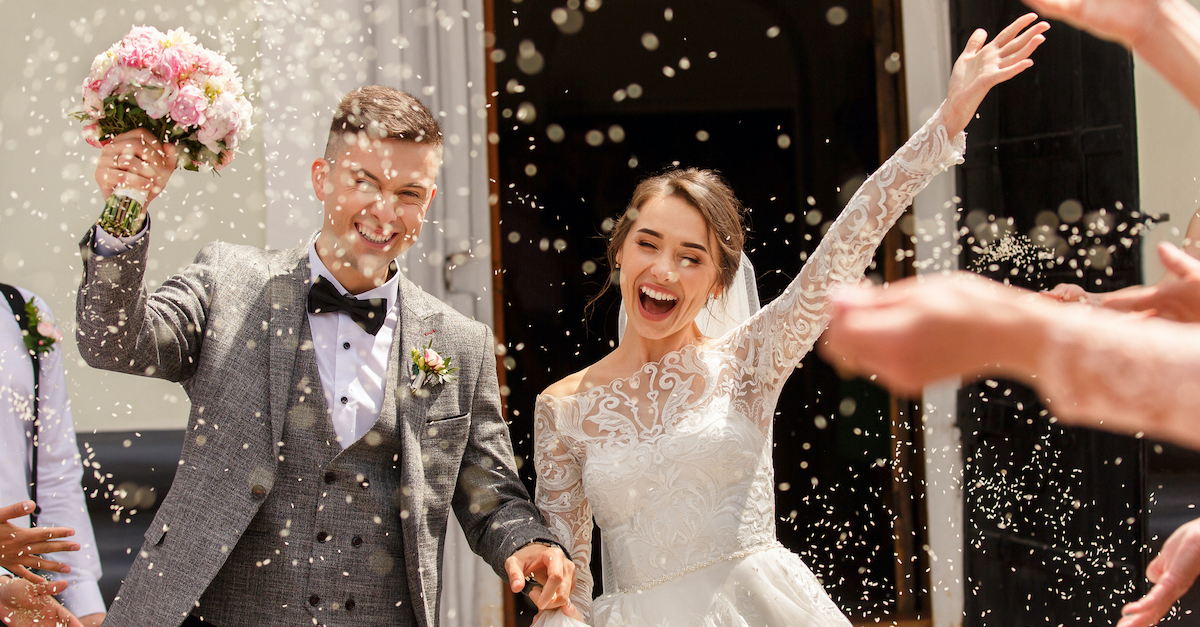
A third reason to get married in the church is because it links marriage to a tradition that’s centuries-old. Marriage in the church was once the standard Christian practice. There is something special about stepping into a place whose tradition links you to generations past as you wed. That connection to other people is represented by the bride having “something borrowed” on her wedding day. There is a solidarity that comes from people standing beside you and from those who have gone before you—especially when you are excited, but your knees are shaking! Just as a bride might wear her grandmother’s wedding dress or choose a ring that’s an heirloom, there is meaning in shared history as a new family is born through your vows.
While I was excited to get married in the Presbyterian church of my youth, I remember wanting to walk down the aisle to an Enya song. I found it ethereal and meaningful, especially since I had listened to the song with my fiancé. It used to come on the radio during our wedding planning. While our presiding pastor sympathized, the church rule was that only traditional hymns or classical music could be played in the old Gothic cathedral ceremonies. I was frustrated and even a little hurt at the time.
We subsequently chose Pachelbel’s Canon in D. Now, we rarely hear the Enya song come on the radio through our streaming service. We still hear Pachelbel’s Canon in D, however, in orchestral concerts and formal services today. I feel differently about the song now. The song is more meaningful because it has had other touchpoints in my life, and I also value its history in a way that I didn’t before. Could it be that you might discover the same? Couples can balk at the sometimes “cold” requirements of an institutional, church wedding, especially when they are already feeling pulled in so many different directions during their planning. However, there are usually valid reasons behind the vetted framework of church services.
Fourth, in addition to connecting the couple to past generations, marriage in the church is an important milestone in a couple’s own faith journey. I am still rooted in my home church, even though I am a minister who has served in many different places. I was confirmed, preached my first sermon, got married, was under care for ordination, and baptized our first child there, among many other memories. Marriage is a special step among others that can dot a faith journey. In church, we celebrate with others during happy times, like weddings and baptisms, and feel God’s love from others during sad ones, like the loss of someone close. We are believers in Christ, and his body—the church—binds us together.
Church marriage reflects an appreciation for the community that Christ calls us to be active members of. In an age of rising anxiety, depression, and loneliness, this call to community has increasing countercultural value. Just as a person isn’t an island, marriage wasn’t designed to be either. Getting married in the building where you attended Sunday school, heard your first sermon on marriage, or have been in awe of that older couple who still worship holding hands is inspiring. It allows the church to be not just a building, but “your” building—a place where you belong, God sees you, and you play a part.
A friend of mine once asked me to baptize her child during a playdate. “Can’t you just go baptize him in the bathtub?” she asked, as her son was happily playing. Her family was not attending a church, but she knew that baptism was important. I explained that as a Protestant pastor, I wasn’t supposed to perform a baptism outside of a formal worship service. In my tradition, an important element of a child’s baptismal service is a community coming together to support the child in prayer and promising to help raise the child in faith. My friend sadly lost her child several years later, but she had connected with a church. That church held its arms around her and her family in that time—support that could have only come from community connection.
Christians benefit from a sacred space, church support from that very place, a link to past generations, and a connection to other events in their own faith life when they marry in a church building. These four reasons to get married in church are not exhaustive; there are certainly others, just as there are understandable reasons for choosing otherwise. The most important parts of a Christian ceremony are God and the people, regardless of where the wedding occurs. But as the numbers decline in the pew, an understanding of the value of a church setting holds weight. While the majority of Christians do not have to marry in church, that doesn’t mean they shouldn’t. The intentional choice to have a church wedding is one powerful way to reflect humility—a posture of the heart that positions the couple to receive blessings only God can provide, both at the moment of their union and beyond.

Originally published April 27, 2026.