Does Santa Have a Place in a Christian Family’s Christmas Celebration?



The first time we took our oldest daughter to see Santa Claus at a local shopping center in Anchorage, Alaska, she was terrified, fighting us tooth and nail not to be taken over to see him.
She wanted nothing to do with this long-bearded man in a red velvet-looking suit. All her resistance paid off, too, as I looked for an unassuming way out of the complex, embarrassed by her outcry and weary from her struggle, an exit route where she wouldn’t have to see his rosy-cheeked face again.
Who can blame her, though, because she was just a toddler, too young to know whether she should embrace Santa Claus or run the other way, which she did. The acceptance of Santa is something taught to us as children, and over the years, either to love him or be totally against the idea of Santa and his prominence in the Christmas celebrations.
And it’s true, because Christ is the focal point and reason for our Christmas joy, as Luke 2:10 reveals. “But the angel said to them, “Do not be afraid. I bring you good news that will cause great joy for all the people.”
Jesus is absolutely the reason we rejoice at Christmas, but is it possible as a Christian family to also enjoy Santa Claus?
The True History of Santa Claus, aka St. Nicholas
As a Christian parent, it can be challenging to mesh the holiness of the birth of Jesus Christ with the presence of jolly ole St. Nicholas, also known as Santa Claus and Kris Kringle.
Yet, in author and historian William J. Federer’s book, There Really is a Santa Claus - History of Saint Nicholas & Christmas Holiday Traditions, we can find what we need to bridge the connection by reading the true life story of the life of Nicholas and how, over time, stories of his holy, generous life were embellished into a worldwide legend.
Federer shares the historical account of Saint Nicholas’ life, and how, down through the ages, his story was transformed through the centuries into the Santa Claus celebrated around the world today.
More remarkable than many of us have ever heard or known, “St. Nicholas is the most renowned saint in Greek Orthodox tradition, as St. Peter is in the Catholic tradition,” writes Federer. “Greek Orthodox tradition tells of Saint Nicholas being born around AD 280, the only child of a wealthy, elderly couple who lived in Patara, Asia Minor (present-day Turkey). When his parents died in a plague, Nicholas inherited their wealth. Nicholas generously gave to the poor, but he did so anonymously, as he wanted the glory to go to God.”
The Centuries Metamorphosis of St. Nicholas
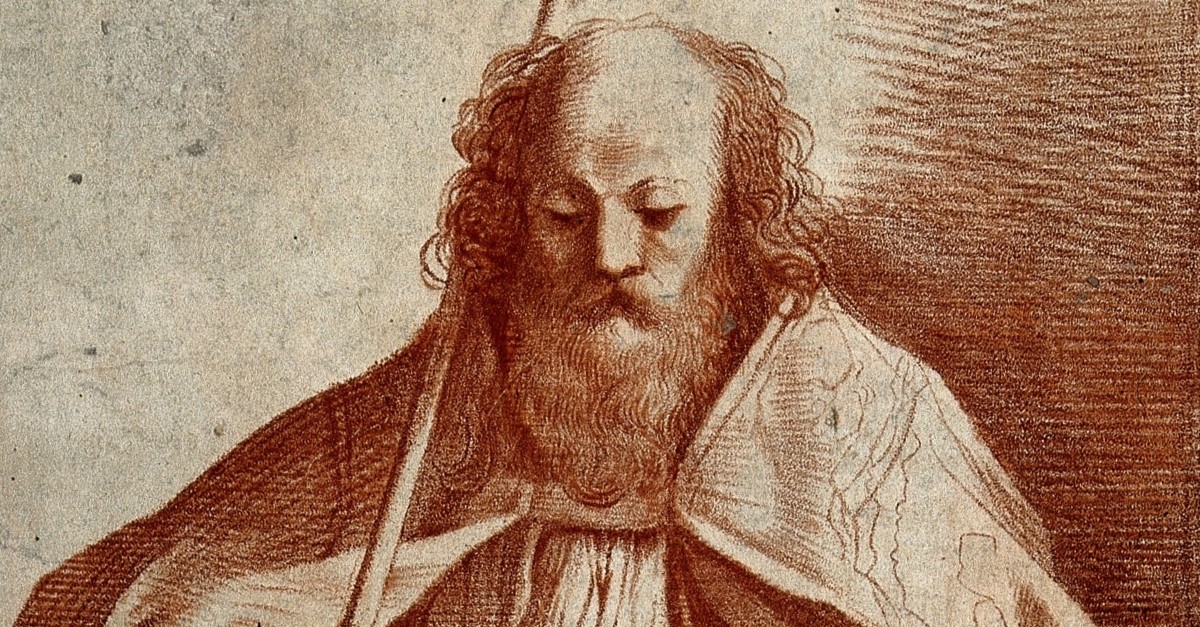
Sadly, as many true historical stories are altered and revised from the truth to a falsehood, centuries ago, Western Europeans, including the Dutch, Italians, Germans, and early American colonists, revised the true story of St. Nicholas into the modern-day version of Santa Claus we know today.
Over the years, the true story of the devout Christian life of St. Nicholas, who so humbly and quietly helped the needy, saw miraculous answers to his prayers, stood up for godly political leaders, and suffered persecution for his faith, has been transformed to the commercialized story of Santa we know today.
More about the True St. Nicholas and the Stories behind Our Christmas Traditions
In looking at the life of St. Nicholas, we can pass on the truth of his godly character, which has led to us enjoying Christmas traditions today. By tying the truth of his actions to the modern-day celebrations, we bring clarity to how his life was influenced and led by the story of Jesus coming to earth to be our Savior.
As 1 John 4:14, St. Nicholas agreed with the following: “And we have seen and testify that the Father has sent His Son to be the Savior of the world.”
The following are seven ways St. Nicholas’ life testified to the Savior of the World, Jesus, and influenced Christmas celebrations around the world.
1. St. Nicholas Visited the Holy Land
Most of us haven’t heard of Saint Nicolas visiting the Holy Land. Federer explains, “After Nicholas had given away all his money, he decided to go on a pilgrimage to the Holy Land, where he intended to join the secluded Monastery of Sion. Before making his final vows to join, somehow the Lord impressed upon him ‘not to hide his light under a bushel.’ He decided to go back to Asia Minor, but not before visiting the birthplace of Jesus.”
Even renowned and beloved American author Mark Twain wrote in his Innocents Abroad, 1869, of St. Nicholas visiting the Church of the Nativity: “This spot where the very first 'Merry Christmas' was uttered in all the world, and from whence the friend of my childhood, Santa Claus, departed on his first journey, to gladden and continue to gladden roaring firesides on wintry mornings in many a distant land forever and forever.”
2. St. Nicholas Gained the Nickname Kris Kringle
Santa Claus’ nickname, “Kris Kringle,” originated from the German pronunciation of the Christ Child, which is “Christ kindl,” a term that evolved over the centuries to become pronounced as “Kris Kringle.”
3. St. Nicholas Originated Gift-giving and Hanging Stocking Traditions Began
Federer writes how St. Nicholas is behind the origin of the secret, midnight gift-giving and hanging stockings by the fireplace.
4. St. Nicholas’ Giving Led to the Creation of Nativity Scenes
“By 1223, so much attention was being given to gift-giving during the Christmas season that Saint Francis of Assisi wanted to refocus the people’s attention back to the humble birth of Christ,” writes Federer.
To redirect them, Francis created the first ‘crèche’ or nativity scene, creating a humble manger of farm animals with the attention being on Joseph, Mary, and baby Jesus, to highlight John 1:14 of how the Son of God came to dwell among men: “And the Word became flesh and dwelt among us."
5. St. Nicholas’ Gift Giving Led to Giving Gifts on December 25
The great Reformer, Martin Luther, was also concerned about the distraction of “Saints Day,” and gift giving, effectively putting an end to them, including the popular December 6, “St. Nicholas Day.” Additionally, since Germans love being generous and giving gifts, Luther shifted the focus of gift-giving to December 25, in the hope of emphasizing the truth that all gifts come from the Christ Child.
6. St. Nicholas Returning Once a Year to Give Presents to Good Children Is Based on the Return of Christ
Catholics teach that St. Peter is at the Gates of Heaven, so the Greek Orthodox tradition developed from the prophecy that Jesus would return at the end of the world to judge the living and the dead, riding a white horse, and that the saints would return with him, riding white horses.
Because St. Nicholas was such a special and favored saint among the people, the Dutch embellished the story to have him returning once a year for a mini-judgment day, to check on the children and see if they were “naughty or nice” and on or off the right track in life.
7. St. Nicholas’ Story Was Changed to Elves, the North Pole, and More
Federer writes, “Over the centuries, the story evolved. The Lamb's Book of Life and the Books of Works were turned into the Book of the ‘Naughty and Nice.’ The angels turned into elves. Saints came from heaven, the New Jerusalem, the Celestial City -- which turned into the North Pole. And whereas near the Arctic Circle in Finnish Lapland, northern Scandinavian Peninsula, there were few horses, St. Nicholas rode a reindeer.”
Why St. Nicholas Has a Place in Christmas History
As parents, we can teach our children the truth about St. Nicholas, because it’s a story worth telling and is behind many of our Christmas traditions today.
Federer adds, “Though much has been added to the story throughout the centuries, underneath it all, there really was a godly, courageous Christian Bishop who lived in 4th-century Asia Minor, named Nicholas. Most notably of all, St. Nicholas was very generous, giving away all his money to help the poor in their time of need, and doing it anonymously, as he wanted the credit to go, not to himself, but to God alone!”
Looking back on history, we see how St. Nicholas is credited with many of our present-day Christmas activities and beliefs, and also for leading many to believe the beautiful story described in John 3:16: “For God so loved the world that He gave his one and only Son, that whoever believes in Him shall not perish but have eternal life.”
The true St. Nicholas didn’t take us away from Jesus, but led us to His manger. As Federer points out, this Christmas, we can share with our families and those around us seven true characteristics of the real St. Nicholas:
-St. Nicholas was a believer in Jesus Christ, a true Christian.
-St. Nicholas ministered to and met the needs of the people through his giving.
-St. Nicholas suffered greatly, being imprisoned in Rome rather than deny his faith in Jesus.
-St. Nicholas believed in the Holy Trinity of Father, Son, and Holy Spirit.
-St. Nicholas preached godliness, purity, and sanctity of life.
-St. Nicholas confronted corrupt leaders.
-St. Nicholas selflessly and generously gave all his wealth to the needy, anonymously, so that the credit would go to God and not himself.
Related:
5 Reasons to Just Say 'No' to Santa
Will Kids Question Jesus if They Believe in Santa?
Source: Federer, William J., There Really is a Santa Claus - History of Saint Nicholas & Christmas Holiday Traditions, November 24, 2002, Amerisearch, Inc., pp. 1-300
Lynette Kittle is married with four daughters. She enjoys writing about faith, marriage, parenting, relationships, and life. Her writing has been published by Focus on the Family, Decision, Today’s Christian Woman, kirkcameron.com, Ungrind.org, StartMarriageRight.com, and more. She has a M.A. in Communication from Regent University and serves as associate producer for Soul Check TV.
Originally published December 05, 2025.