God and the Big Bang


Listen or Read Below:

Audio By Carbonatix
The idea of the Big Bang was first put forward by Dr. Edwin Hubble, the man after whom we named the Hubble telescope.
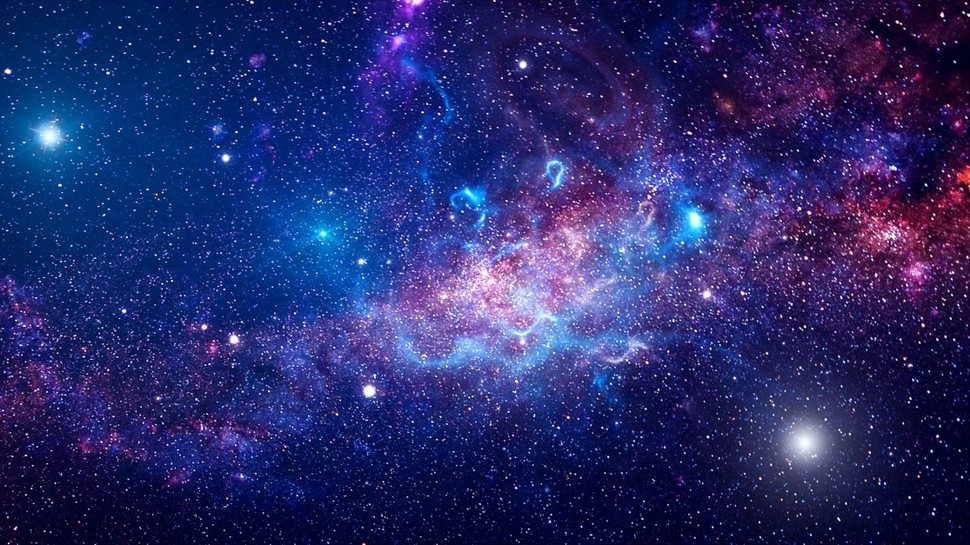
His theory was that, at one time, all matter was packed into a dense mass at temperatures of many trillions of degrees. Then, about 13.8 billion years ago, there was a huge explosion. From that explosion, all the matter that today forms our planets and stars was born, and the universe was created.
Hubble’s idea was confirmed through what was then called the discovery of the century. On April 24, 1992, the Cosmic Background Explorer satellite, better known as COBE, gave stunning confirmation of the hot Big Bang creation event.
In many ways, it really was the birth of modern cosmology.
Now, we already knew that something cannot come from nothing.
We also now know that the universe isn’t eternal. It had a beginning.
Yet according to the science of the Big Bang, something did come from nothing.
And that raises all kinds of questions.
God-type questions.
Because you can’t just say that everything began with the Big Bang and act as if, somehow, you’ve explained the origins of the universe, because that still doesn’t explain where the matter that exploded came from. Or what or Who exploded it. If you want to put the Big Bang in lay terms, here it is: Where did the stuff that got “banged” come from, and who “banged” it? Something – or Someone – someway, somehow brought that first matter into existence from nothing, and in such a way that it exploded into the universe.
Something outside of space and time, since space and time didn’t even exist before the Big Bang. Which, science says, cannot have happened by the current laws of physics. Which means we’re talking about something outside of the laws of physics. Something outside of all natural phenomena.
There’s a category for that. If it’s outside of natural phenomena, it’s called supernatural, which puts us in God territory.
This is why George Smoot, head of the COBE satellite team who won the Nobel Prize in physics for his work, noted that when the COBE satellite had measured the ripples in the microwave background radiation that gave confirmation to the Big Bang Theory, it was “like looking at God.”
And why Dr. Robert Jastrow, professor of astronomy at both Columbia University and Dartmouth College, director of the Mount Wilson Institute and manager of the Mount Wilson Observatory, and for 20 years director of NASA’s Goddard Institute for Space Studies,
made the following comment regarding the COBE findings and the Big Bang confirmation: “Now we see how the astronomical evidence leads to a biblical view of the origin of the world.”
Some might say: “Well, physics just hasn’t found the answer to the ‘something from nothing’ mystery yet. You can’t just jump to God.”
Maybe.
But as one of the leading physicists of our day, Alan Guth at MIT, has written, even if you could come up with a theory that would account for the creation of something from nothing through the laws of physics,
... you’d still have to account for the origin of the laws of physics.
So where does that leave us when it comes to God and the Big Bang?
It leaves us with God.
Sources
See James Emery White, Christianity for People Who Aren’t Christians (Baker).
Related Article
Joe Rogan Questions Big Bang, Says ‘Jesus Makes More Sense’
Photo Credit: iStock/Getty Images Plus/mik38
James Emery White is the founding and senior pastor of Mecklenburg Community Church in Charlotte, NC, and a former professor of theology and culture at Gordon-Conwell Theological Seminary, where he also served as their fourth president. His latest book, Hybrid Church: Rethinking the Church for a Post-Christian Digital Age, is now available on Amazon or from your favorite bookseller. To enjoy a free subscription to the Church & Culture blog, visit churchandculture.org where you can view past blogs in our archive, read the latest church and culture news from around the world, and listen to the Church & Culture Podcast. Follow Dr. White on X, Facebook, and Instagram at @JamesEmeryWhite.
Originally published April 30, 2026.