Losing Weight 'God's Way'


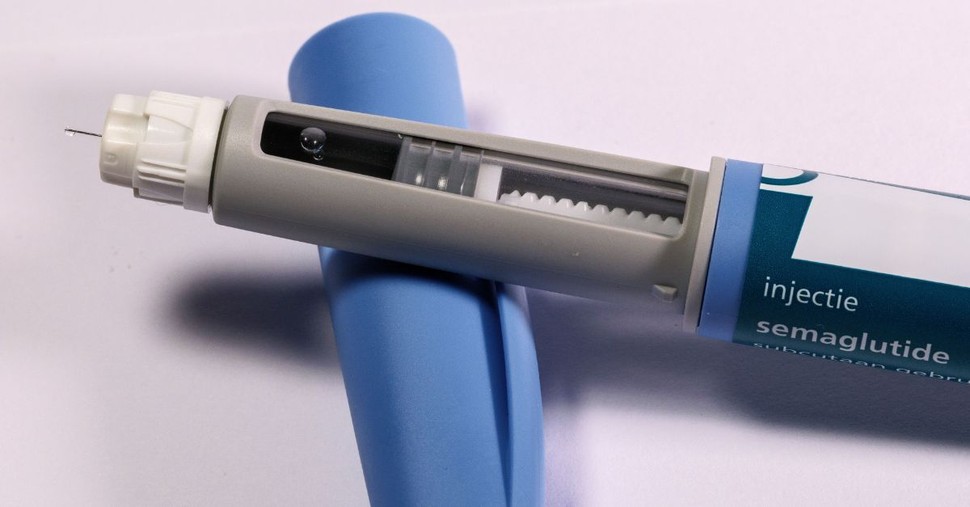
GLP-1s are a new class of weight-loss drugs, with brand names like Ozempic, Wegovy, Mounjaro and Zepbound. You take a pill or self-inject, and you feel full faster and stay feeling full longer.
Right now, in the United States, 42 percent of adults and nearly 20 percent of children suffer from obesity. That’s just on the basis of BMI (body mass index). Newer clinical definitions incorporating waist measurements and fat distribution suggest rates of obesity could actually be significantly higher.
Being overweight is linked to more than 40 major chronic conditions, including type 2 diabetes, heart disease, stroke and certain cancers. Annual healthcare costs related to obesity in the United States total nearly $173 billion.
In 2024, only 3 percent of Americans were taking advantage of these drugs. Two years later, according to a Gallup poll that was just released over the summer, 15 percent have reported taking them. That’s about one out of every seven adults in the U.S.
And it’s working. Coinciding with the rise in the use of GLP-1s has been a drop in self-reported obesity rates. Diabetes rates have also flattened.
Bracketing off the cost of the drugs and the small number who might experience gastrointestinal side effects, who could be against such a breakthrough?
Some say, God.
They talk about losing weight “God’s way” and how you shouldn’t take a “devil shortcut.” That the only way to heal your relationship with food is through God’s Word. That you’ll never experience true transformation using a syringe.
I couldn’t disagree more, and quite frankly, find the rhetoric dripping with spiritual pride and even cruelty. There is no place for Christians to go online and attempt to shame other Christians for using a GLP-1.
Let’s start off by understanding the contributing factors to obesity in the United States. Yes, diet and lifestyle are factors. The high consumption of ultra-processed, calorie-dense foods, paired with a sedentary lifestyle, will result in weight gain. And yes, those are choices that can be related to discipline and self-control as we strive (or should strive) to treat our bodies as what they are—the temple of the Holy Spirit.
But there are also social and environmental barriers, such as limited access to affordable, fresh foods and safe outdoor recreation spaces, particularly in lower-income or rural areas. Anyone who has ever shopped at a grocery store knows that eating healthy is more expensive than eating poorly. Fresh vegetables and fruits, organic foods, wholegrain breads, meats from the deli vs. processed packaged cuts, fresh fish... these are what are best for you to eat, but they are also the most expensive. My wife and I went pretty full-on Mediterranean in our diet at the beginning of the year, and we both have lost weight, but it’s not cheap.
A third factor, beyond diet and lifestyle and social and environmental barriers, is just plain biological elements. A complex interplay of genetics, underlying medical conditions, sleep disruptions and certain medications can all play a part in weight loss and weight gain. Bottom line, it’s not just a matter of willpower and discipline.
But let’s tackle the “God’s way” argument that somehow it is spiritually advantageous, if not superior, if you lose weight in what is deemed the hard way versus an easier, or assisted, way. And that to get assistance is to bypass God.
Yes, God calls us to bodily self-control with food and drink. Gluttony is a sin and has classically been listed as one of the seven deadly sins, along with such things as lust, anger and pride.
Yes, our bodies are temples of the Holy Spirit, and we are called to treat them as such.
Yes, someone can make food their god, and that is a spiritual matter to deal with, just like people can make money their god.
Yes, true, inner, spiritual transformation of any kind is not simply about a pill or a needle—and never will be.
But I would wholeheartedly reject using those truths to conclude that taking a GLP-1 is morally or spiritually wrong or some kind of unspiritual shortcut that should be avoided at all costs. Everyone I know who is taking one of these drugs, who is a Christian, is doing it because they know their body is the temple of the Holy Spirit. They have often struggled with weight their entire life, and it’s been a real physical and spiritual battle.
These people have tried so many ways to lose weight. They have prayed faithfully and worked hard. And now, for the first time, medical help has come their way—something that assists their hearts’ desire to honor God with their bodies. They don’t want to find a way to be a glutton and lose weight. They don’t see these drugs as a way of pursuing a life that dishonors God without consequences. They are simply getting the support and help they so desperately need.
If you believe that a Christian should never accept help for anything that has a spiritual dynamic or component to it, or receive support for something that may need discipleship or inner transformation to accompany it; if you believe that struggles or goals in that area should never receive any outside assistance in any way lest you take a wrongful shortcut – if that’s your thinking –
... then we should never help an alcoholic or drug addict to wean themselves from alcohol or opioids with medical assistance or even counseling. It would mean we should never tell someone addicted to pornography to use any kind of technological tool or accountability app to help them avoid temptation or break their addiction.
That would be doing it the “easy” way, and “God’s way” has to be the hard way—the way that does not receive any kind of outside help or assistance. In other words, tackling some of our deepest issues “God’s way” becomes a euphemism for doing it in isolation, without support, without assistance,
That is simply not biblical. The Bible clearly teaches that we need others to help overcome the struggles and sins we face in life. The great “one another” passages in the Bible are clear on this, including specific admonitions to “Spur one another on toward love and good deeds” (Hebrews 10:24) and to “Strengthen one another” (Romans 14:19). The way God works is often through the support, help and healing of community.
But that’s not all.
God’s way has been, from the first day of creation, to endow men and women to think and explore and create. Built into the very creation narrative of Genesis is our mandate to fill, subdue and rule. It tells us that we were given every plant, every animal, every tree for our creative use.
Medical breakthroughs in medicine have always been a great testimony to that and bring glory to God. Indeed, one of the specific gifts of the Holy Spirit is the gift of healing. In 1 Corinthians, where the spiritual gift of healing is named, it’s in the plural. Meaning, it literally reads “gifts of healings.” This suggests that it could mean any number of healings—emotional, psychological, physical. The gift of healing could be given to someone who is a medical doctor, therapist or counselor. Or a scientist in a research lab.
If something can come along and help us with any of our attempts to live a life more glorifying to God – not in place of God, or in place of our desire to honor God – but alongside God and our heart for Him, then I cannot see it as anything but a good thing. And to shame people for it is as misguided as shaming people who battle chemical depression and need to take an antidepressant or a diabetic who takes insulin.
All to say, if GLP-1s can serve as an aid, a supplement, an encouragement, to reach a target weight, which is then accompanied by a prayerful desire to honor God with your body and make the kinds of lifestyle changes someone knows they need to make, then God bless it.
And I believe God does.
Photo Credit: ©Pexels.com/HaberdoedasPhotography
Sources
Christopher Rowland, “Americans Are Taking GLP-1 Drugs in Record Numbers,” The Washington Post, July 7, 2026, read online.
Kelsey Kramer McGinnis, “Christians Debate Drugs vs. Discipline in the Age of Ozempic,” Christianity Today, September/October 2026, read online.
Originally published September 28, 2026.