The Puritans


As we approach the 250th birthday of the United States, it might be helpful to remember the story of American Christianity. There are three founding influences that continue to shape us to this day: Puritanism, revivalism, and slave religion. In this, the first of three blogs, let’s talk about Puritanism.
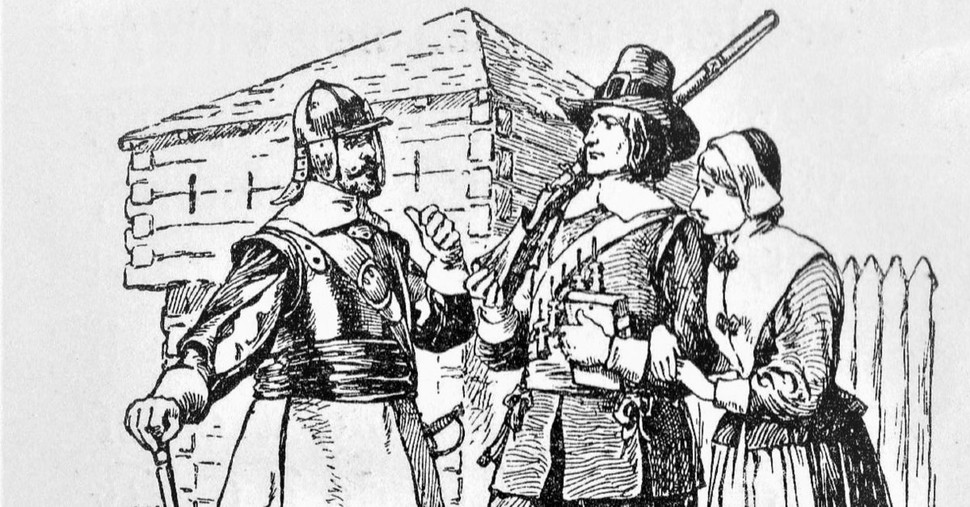
The Puritans were people who fled England for religious freedom. Specifically, they were English Protestants in the 16th and 17th centuries who sought to “purify” the Church of England of any and all Roman Catholic practices. Even though the Church of England was a product of the Reformation, it didn’t go far enough. Or at least, the Puritans didn’t think so.
Some Puritans left England for New England, particularly in support of the Massachusetts Bay Colony. They left with a vision. It was the vision of “chosenness” and “special blessing” from God, a vision that has remained with many Americans to this day. In the words of John Winthrop in 1630, “We shall be as a City upon a Hill.”
As historian Conrad Cherry writes:
Throughout their history, Americans have been possessed by an acute sense of divine election. They have fancied themselves a New Israel, a people chosen for the awesome responsibility of serving as a light to the nations.... It has long been... the essence of America’s motivating mythology.
But that wasn’t all the Puritans brought to America. They also brought a free-market spiritual entrepreneurialism.
If there is a dominant force shaping the contours of American Christianity, it is, without a doubt, democratization. As historian Nathan Hatch has written, the democratic spirit deeply affected popular religious movements – and especially Christianity – in three respects:
First, there was the denial of the age-old distinction that set the clergy apart as a separate order of men. Anyone could “minister.” They did not need to work through a church or ecclesiastical body.
Second, ordinary people were empowered to take their deepest spiritual impulses at face value rather than subjecting them to the scrutiny of orthodox doctrine, or whether it may have been upheld by an ecclesial body. Further, those who chose to minister did not have to be subject to oversight. The democratization of American Christianity is the story of “how ordinary folk came to... defend the right of common people to shape their own faith and submit to leaders of their own choosing.” So not only were leaders turned loose, but so were the followers.
Third, there was little, if any, sense of limitations. There was a dream that a new age of religious and social harmony could flow from their efforts.
And democratization took hold.
And it worked.
The free-market mindset helped to ensure the vitality of American faith. It’s often been pointed out that while Christianity in Europe (often under state churches) declined, in America, where religion was turned loose, it flourished. Namely, because it allowed for innovation.
That really was the heart of the separation of church and state that became part of America’s founding constitution. It wasn’t to keep the church out of the state; it was to keep the state out of the church. It was a direct rejection of the state churches of Europe.
You want to start a church; you can start a church. You want to start a new denomination, have at it. You want to do things differently, go for it.
This led historian Sydney Mead to call America “The Lively Experiment.”
And that experiment led to the next shaping influence of American Christianity.
Revivalism.
Sources
John Winthrop, A Modell of Christian Charity (1630).
Conrad Cherry, God’s New Israel: Religious Interpretations of American Destiny.
Nathan Hatch, The Democratization of American Christianity.
Photo Credit: Getty Images/Christine_Kohler
James Emery White is the founding and senior pastor of Mecklenburg Community Church in Charlotte, NC, and a former professor of theology and culture at Gordon-Conwell Theological Seminary, where he also served as their fourth president. His latest book, Hybrid Church: Rethinking the Church for a Post-Christian Digital Age, is now available on Amazon or from your favorite bookseller. To enjoy a free subscription to the Church & Culture blog, visit churchandculture.org where you can view past blogs in our archive, read the latest church and culture news from around the world, and listen to the Church & Culture Podcast. Follow Dr. White on X, Facebook, and Instagram at @JamesEmeryWhite.
Originally published June 08, 2026.