Impact of the Death of the Penny on the Public: Is it Leading to a Cashless Society?


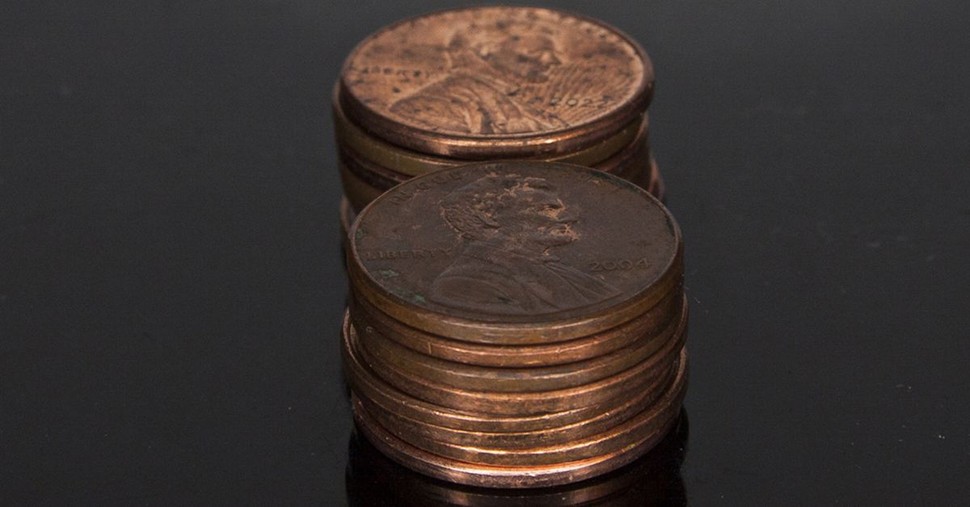
Cutting waste, fraud, and abuse has been one of the declared hallmarks of the Trump administration. When it was discovered that it cost 3.69 cents to produce each 1 cent penny (this includes materials, facilities, and overhead), legislation was set in motion to stop the production of the penny. This move was expected to bring the U.S. government $56 million annually because of the savings in reduced material costs, according to the U.S. Department of the Treasury. So the last penny was minted on November 12, 2025.
232 Years of Pennies
“Today the Mint celebrates 232 years of penny manufacturing,” Kristie McNally, Acting Mint Director told the United States Mint. “While general production concludes today, the penny’s legacy lives on. As its usage in commerce continues to evolve, its significance in America’s story will endure.”
Even though pennies will no longer be minted, they are still accepted as legal tender. It’s believed that 300 billion pennies are still in circulation, and that this is well over what’s needed in commerce and trade. However, most banks are either no longer issuing rolls of pennies or are rationing them. That being said, what some might view as such a small change to the American monetary system is causing a great deal of frustration and complication for retailers.
Complications Associated with Ending Penny Production
“Both the retailer and the consumer are in a very difficult position,” Rob Karr, president and CEO of the Illinois Retail Merchants Association, told the Chicago Sun Times.
While the majority of retailers will choose to round transactions up or down to the nearest nickel, tax time is expected to bring on a new set of complications.
“If your total is $10.73, including tax, [and I] charge you $10.70, but I have to report tax on the $10.73 — it’s creating a problem for the retailer, and it will create a problem under audit,” Karr said.
The only way to get around this is to push customers to pay with a credit or debit card, because these electronic transactions are exact and don’t require making change.
There is also some talk of getting rid of the nickel because it costs even more to make a nickel than it does to make a penny. In 2024, it cost the U.S. Treasury 13.8 cents to produce each nickel.
Digital Payments, Cashless Societies, Microchip Implants
The convenience of digital payments seems to be driving many countries in Europe to embrace a cashless society. Some of the front runners for pushing toward a cashless society include Sweden, the United Kingdom, Finland, the Netherlands, Norway, and China, according to Zimpler.
Germany and Sweden may be the front runners for those who want to take things a step further and have a microchip (about the size of a grain of rice) implanted under their skin in connection with ease of digital payments. As of 2018, up to 3500 people in Germany embraced having these tiny microchips implanted under their skin for easier access to locations such as their office, home, or the gym, according to Euro News.
Likewise, up to 4000 Swedes have embraced the chip technology for similar conveniences, including commuters who travel by train in Sweden. Sweden’s largest train company allows commuters to use the chip technology rather than paying their fare in cash.
Surveillance and Digital Payments
While it all looks convenient on the surface, there are also opportunities for governments to have greater control over the surveillance and finances of its people. For example, in 2019, it was reported that protestors in Hong Kong feared using their metro cards because of the threat that they might be tracked.
In something that hits a bit closer to home, back in 2023, Fox News reported that Bank of America released records to the FBI of all transactions via credit or debit card that happened on or around the day of the 2021 Capitol riot. Thankfully, a whistleblower alerted Congress, and an investigation of the FBI and Bank of America’s actions ensued via a House Judiciary Committee.
The push toward a cashless society may well pique the interest of students of Bible prophecy. Revelation speaks of a coming day when the Antichrist will be empowered to unite the world under one monetary system, one government, and one religion. Revelation 13:11-18 speaks of a mark that people will be forced to take on their hand or head in the last days, and people won’t be able to buy, sell, or trade without it. While no one is being forced that we know of at this time, the technology is being set up for such an event to occur.
Bible Prophecy teacher David Jeremiah suggests that, “This mark could be an actual physical brand, but it could very easily be connected to the technological advances being made today.”
Related Article
JD Vance Declares Affordability Awaits Americans in 2026
Photo Credit: ©Getty Images / Bill Tompkins / Contributor

Originally published December 29, 2025.