Why Christians Need Sabbath in an Exhausted Culture


Listen or Read Below:

Audio By Carbonatix
Brought to you by 
Key Points
- New CDC data show that fatigue is widespread among American adults, especially younger adults and women.
- Scripture presents rest as part of God's created rhythm rather than a reward we receive only after finishing everything.
- Sabbath reminds Christians that human beings have God-given limits and do not have to carry responsibility for everything.
- Choosing to stop can become an act of trust that acknowledges God remains in control when our work pauses.
- Healthy rhythms of rest, worship, receiving, and connection can help Christians resist defining their worth by productivity.
In a recent CDC report, nearly three in four American adults (72%) reported feeling very tired or exhausted on at least some days over the past three months, with younger adults reporting frequent exhaustion most often. The study concludes that 1 in 6 (16.6%) experience frequent fatigue, with women reporting higher rates (20%) than men (13%). From stress at work to work limitations, social restrictions, depression, and anxiety, these findings point towards an important culprit we’ve all ignored for much too long: forgetting how to rest.
From the beginning of Creation, God built the Sabbath into the rhythm of our world (Genesis 2:2-3), but we, as humans, have forsaken it. And while God commanded His people to stop from their work and remember their dependence on Him (Exodus 20:8–10), Jesus also reminded us that “the Sabbath was made for man” (Mark 2:27). So what does this mean for us living in the 21st-century world? And more importantly, how might recovering the practice of Sabbath help Christians resist nonstop productivity, accept our God-given limits, and rediscover rest as an act of trust rather than something we have to earn?
Why Do We Treat Rest Like Something We Have to Earn?
It might seem hard to believe, but we as human beings were never meant to run ourselves ragged and live without stopping. Modern culture, however, sings another tune. We’re obsessed with productivity, doing and being more, and allow ourselves to rest only after everything is finished. The reality is, nothing is ever finished, is it, friends? There will always be another task to complete, another chore to accomplish, and another workout plan to follow. But is treating rest as something we get to after we’ve achieved it really God’s design? Absolutely not.
Society may scream, “do more,” “be productive,” “make the most of every minute,” “burn the candle at both ends,” “grind your gears.” But God says, “rest here,” “take a break, “ “work hard and do what you can, but leave the rest to me.” Even God Himself rested after creation—not out of His necessity, but ours. Remember, God never grows weary, famished, or tired. He rested because it was part of the rhythm He established and put in place for us. It was meant to be something we could benefit from as we live our best lives.
No matter what culture says, rest isn’t a reward for the good things you’ve done, checking every item off your list, or finishing all the times. Rest is a necessary and needed part of being human. And it’s a gift God desires to give you: “He gives sleep to His beloved” (Psalm 127:2).
What Does Sabbath Teach Us About Our Human Limits?
Unlike the world around us, the practice of the Sabbath pushes back against the idea that our value is measured by our productivity—AKA, what we do. The truth is that we are limited human beings. We’re limited in time, energy, and all the things we can accomplish. Just think about it.
Human beings need sleep, food, water, community, exercise, and fun to flourish. We can’t work endlessly, and as hard as we might try, we can’t control every outcome. But sometimes, we grow weary because we sure as heck try! We aren’t just doing too much, but we believe that everything is dependent on us.
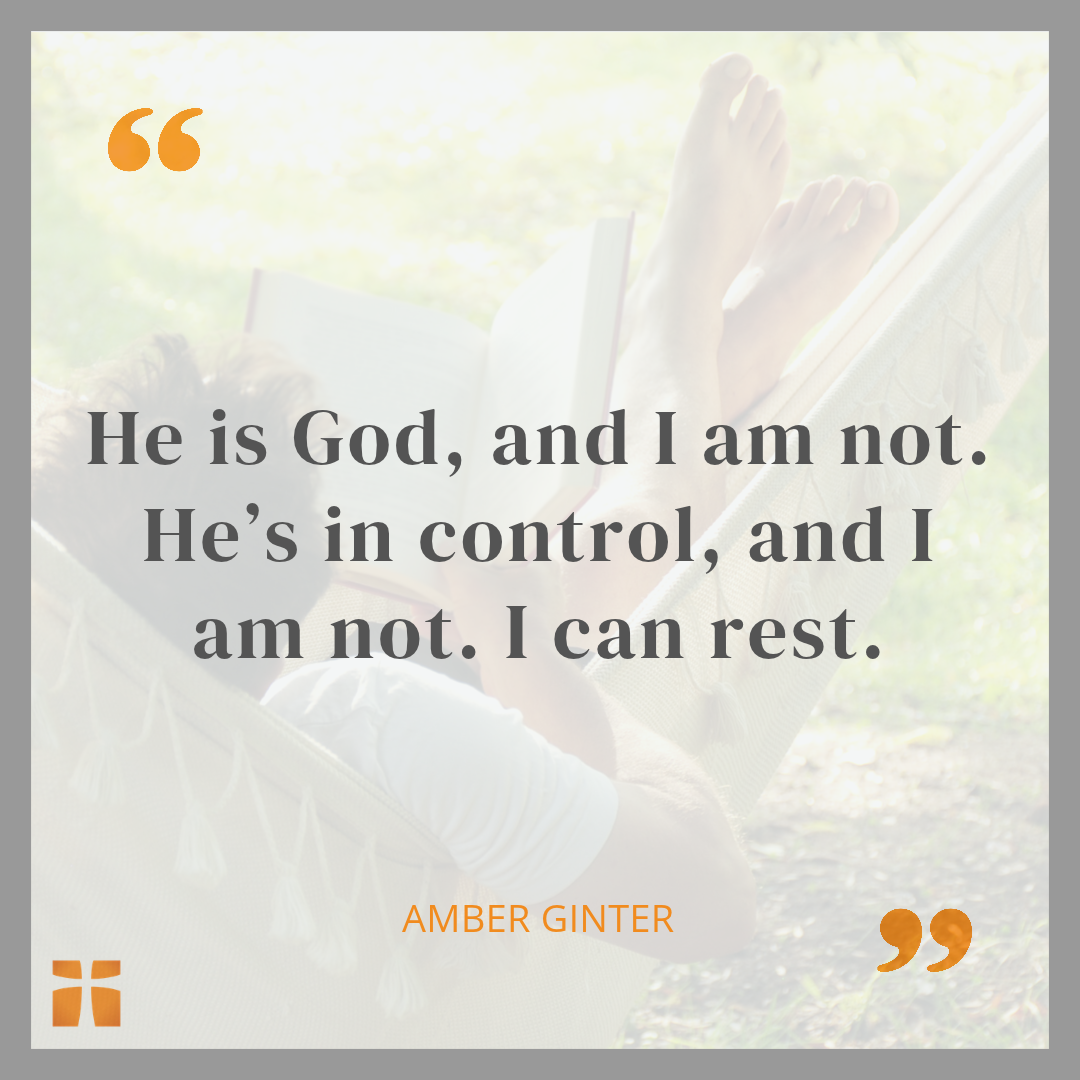
Choosing to observe the Sabbath isn’t just a deliberate stopping point; it’s where we can acknowledge that He is God and I am not. He’s in control, and I am not. I can rest. And He will keep the world still spinning.
In Exodus 20:8-10 and Psalm 46:10, we read these words:
“Remember the Sabbath day by keeping it holy. Six days you shall labor and do all your work, but the seventh day is a sabbath to the Lord your God. On it you shall not do any work, neither you, nor your son or daughter, nor your male or female servant, nor your animals, nor any foreigner residing in your towns” (Exodus 20:8-10, NIV).
“He says, 'Be still, and know that I am God; I will be exalted among the nations, I will be exalted in the earth '” (Psalm 46:10, NIV).
Accepting your limits doesn’t mean you’re weak or lazy; it means you’re aware of your need for trust in Someone beyond yourself. Because the Sabbath doesn’t just permit us to be God’s creatures, it gives us permission to lay down the belief that we’re capable of doing everything.
Why Is Rest an Act of Trust in God?
If you believe the Sabbath is important but still struggle to implement it, you’re not alone. Many of us think rest has value, but taking action to pursue it is on a whole different level. Even more so, we can struggle to actually do it because stopping feels irresponsible, impossible, or unachievable in the world we live in.
What really happens when we stop working? When the emails go unanswered? The laundry piles up? The project takes longer than expected?
These are just a few questions I’ve asked myself. But the world doesn’t suddenly become manageable when we rest or don’t. The Sabbath asks us to trust God with what we can’t accomplish. It asks us to physically stop and acknowledge that we can’t do it all, but we can have faith in the one who can.
Matthew 6:25-34 says it this way:
“Therefore I tell you, do not worry about your life, what you will eat or drink; or about your body, what you will wear. Is not life more than food, and the body more than clothes? Look at the birds of the air; they do not sow or reap or store away in barns, and yet your heavenly Father feeds them. Are you not much more valuable than they? Can any one of you by worrying add a single hour to your life ?“And why do you worry about clothes? See how the flowers of the field grow. They do not labor or spin. Yet I tell you that not even Solomon in all his splendor was dressed like one of these. If that is how God clothes the grass of the field, which is here today and tomorrow is thrown into the fire, will he not much more clothe you—you of little faith? So do not worry, saying, ‘What shall we eat?’ or ‘What shall we drink?’ or ‘What shall we wear?’ For the pagans run after all these things, and your heavenly Father knows that you need them. But seek first his kingdom and his righteousness, and all these things will be given to you as well. Therefore do not worry about tomorrow, for tomorrow will worry about itself. Each day has enough trouble of its own” (NIV).
It’s a lengthy passage, but it hits me every time. “Not worrying” isn’t that simple for someone with clinical anxiety. But Jesus’ words here are to comfort, not condemn us! He doesn’t want us to be consumed by what tomorrow holds when we haven’t even made it through today. And yet that’s exactly what we do when we keep checking off tasks instead of taking time to pause, be still, and rest.
Obedience to the Sabbath doesn’t mean we don’t have responsibilities and throw our to-do list out the window. It just means that we find our security in Christ and not in what we achieve. As we practice, rest can become a tangible reminder that God still loves us when we’re not producing, and that He can always handle what we can’t. In order to experience Sabbath as a gift, not an obligation, however, we need to see it in practice.
What Can Sabbath Rest Look Like for Christians Today?
While the Sabbath doesn’t have to look the same for everyone, it should be an intentional space for you to pause, receive, worship, and rest. Maybe for you that includes long walks, time with your dog, or just being alone. For others, it might be taking a run, going on a hike, or attending a dance class. What matters is that it recharges your well and enables you to connect with the Lord. Here are some examples to get you started.
Pause- In order to rest, you do have to stop ceasing. This means stepping away when possible, even if for just a few minutes, putting the phone or laptop down, silencing unnecessary notifications, and resisting the urge to fill every moment. Learn to just be.
Receive- Once you’ve created this space, enjoy the silence. Eat a meal slowly, go outside, read something for fun, take a nap, or enjoy a hobby without turning it into something productive.
Worship- While it doesn’t have to take up the entire day, your Sabbath should incorporate time with God. This could be going to Church, praying, journaling, reading Scripture, or just meditating on who God is and what He’s done.
Reconnect- This step won’t be necessary for everyone, but sometimes a good Sabbath means eating with friends or family, having meaningful conversations, or spending time with those who remind you that you’re more than what you produce.
There’s a common misconception that obeying the Sabbath means doing nothing. On the contrary, it’s intentionally stepping away from our work and the striving that comes with it so that we can return rested and even more focused. So today, start small. You don’t have to feel guilty for not resting. But try one simple step.
How Can We Rest Without Turning Rest Into Another Task?
If a full day of rest is impossible, start with a few minutes or hours. Identify what most consistently consumes your schedule or pulls you into work mode and re-evaluate as needed. Set boundaries with work and choose a hobby that gives your life meaning. Be cautious not to turn rest into another item to check off your list. The goal isn’t to become “good” at resting, but to remember who God is and who you are.
In a culture where exhaustion is praised and burnout is normal, choose to rest. You don’t have to earn it. God freely gives it to all who will choose to trade their tiredness for a gift only He can give. We may not be immune to the pressure to constantly produce, but Scripture gives us a different rhythm, and it’s never a waste of time. Sabbath is an opportunity to trust God, receive His goodness, and remember that our lives are about more than what we produce.
Prayer
Dear God,
Even though I try to live like I can do it all, I know I can’t. Please help me to stop running and start resting in you. Show me what obeying the Sabbath looks like in my life, and thank you for the gift. I love you, Lord. Amen.
Agape, Amber
Frequently Asked Questions
What does the Bible say about rest?
Scripture presents rest as part of God's created rhythm and repeatedly reminds believers that their security and worth do not depend on endless work or striving.
What is Sabbath rest?
Sabbath involves ceasing from ordinary work in order to rest, worship, remember God's provision, and acknowledge our dependence on Him.
Why did God rest on the seventh day?
Genesis describes God ceasing from His work of creation on the seventh day and blessing that day as holy. God did not rest because He was exhausted, but His rest establishes an important biblical pattern.
How can Christians practice Sabbath rest today?
Christians can intentionally step away from work and striving, spend time with God, enjoy restorative activities, connect with others, and remember that their worth is not measured by productivity.
Is rest the same thing as laziness?
No. Biblical rest recognizes human limits and receives God's provision, while laziness neglects responsibilities. Faithful work and intentional rest can both be part of a healthy Christian life.
For Further Reading
- Sabbath Rest Offers Relief in a World That Never Logs Off
- What Burnout Retreats Reveal about Modern Exhaustion
- How Is Jesus Our Sabbath Rest?
- 5 Verses to Help Create Sabbath Rest in Our Busy Lives
- What Does the Bible Say About Rest?
Photo Credit: ©GettyImages/petrenkod

Originally published October 20, 2026.