What a Tiny Bumble Bee Reveals About Honoring God’s Creation



Key Points
- The rusty-patched bumble bee’s protected habitat reminds Christians that even small creatures have God-given purpose.
- Creation care is not a political trend but part of humanity’s original calling to tend and steward what God has made.
- Scripture shows that God notices and values the details of creation, from cattle and birds to insects and sparrows.
- Gratitude in small things trains our hearts to see God’s goodness and respect His design.
- Christians can honor God by considering how everyday choices affect the people, creatures, and world He created.
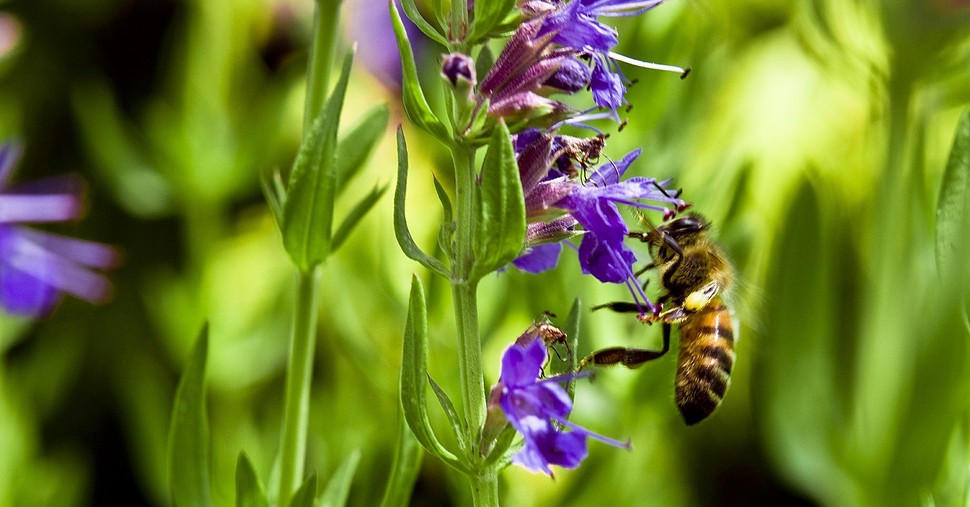
The United States recently designated 1.5 million acres of land as a critical habitat protection for the rusty-patched bumble bee. This bee, once found throughout nearly half the country, is now found in only 13 states.
What Makes the Rusty-Patched Bumble Bee Important?
What’s so special about this bee? Well, it has a unique way of shedding pollen, tightly gripping plants, and vibrating its muscles, which is the only method of pollination that enables plants like tomatoes, peppers, and blueberries to grow. Meanwhile, these bees pollinate 65 plant species, which plays a critical role in balancing a diverse ecosystem to protect and sustain insects, birds, and flora.
For Christians, the protection of a small endangered bee is a reminder that creation care begins with honoring the God who gives purpose to every part of what He has made.
Why Should Christians Honor All of God’s Creation?
In a world where ideas of conservation and saving the planet have been egregiously politicized, it’s easy for Christians to shrug off the value of the most seemingly insignificant facets of creation. But one of the first commandments God gave to humans was to care for and nurture everything in the garden:
“God blessed them and said to them, ‘Be fruitful and increase in number; fill the earth and subdue it. Rule over the fish in the sea and the birds in the sky and over every living creature that moves on the ground.’” Genesis 1:28 (NIV)
“The Lord God placed the man in the Garden of Eden to tend and watch over it.” Genesis 2:15 (NLT)
“So the LORD God formed from the ground all the wild animals and all the birds of the sky. He brought them to the man to see what he would call them, and the man chose a name for each one.” Genesis 2:19 (NLT)
We serve an intentional God who finds not only purpose but beauty and joy in the small things, like the rusty-patched bumblebee. Thus, we can find spiritual significance through small acts of care. Christians can reflect on how pollinators support food systems, why creation’s interdependence matters, and how God often works through things the world overlooks.
With that in mind, let’s look at several instances in Scripture where God placed special emphasis on smaller bits of creation, teaching us to find rhythm and purpose in life’s everyday, little moments:
How Can Small Things Teach Us Thanksgiving?
In Psalm 50:9-11,14 (NIV), God says, “I have no need of a bull from your stall or of goats from your pens , for every animal of the forest is mine, and the cattle in a thousand hills. I know every bird in the mountains, and the insects in the fields are mine… Sacrifice thanks offerings to God, fulfill your vows to the Most High.”
Here, the Psalmist is sharing God’s emphasis on the practice of thanksgiving.
He is reminding His people that all of creation is His, from the large cattle to the tiny insects, so it isn’t the size of the sacrifice that matters most. Rather, the depth of the sacrifice comes from the state of the sacrificer’s heart.
A person who sacrifices from a truly thankful heart recognizes God’s might and power in His salvation, and he also recognizes God’s mercy and grace that sustain the tiny moments. In today’s modern world, that might look like thanking God for a baby that finally settles for a nap, a kind stranger who pays for your coffee, or a work assignment being pushed back a few days.
It could be saying thanks for a new sprout in your garden, a rainbow after the rain, or a smile from your spouse. Saying thanks for the little things shifts your focus, allowing you to actively look for goodness in them. In turn, this mindset allows you to understand that everything is God’s, and as such, we should tend, preserve, and be grateful for the tiniest of details He has given us.
How Does Christ’s Heart Teach Us to Notice the Overlooked?
The reason so many Jews, God's own people, missed Jesus and never saw Him for who He truly was came from a man-made narrative they tried to force upon Him.
Their idea of the Messiah was one of brute force that shouldn’t be missed. They expected an ancient concept of the medieval knight—a gallant man in shining armor riding a trusty steed. Everything about the Messiah was supposed to scream, “I am here to conquer Rome!”
It was a political victory many Jews had long sought: freedom from earthly oppression. So when Jesus preached a salvation from sin, one that was nothing about overthrowing Rome’s regime, they missed Him and the gift He offered.
They didn’t want a Christ who counted the sparrows, as we see in Matthew 10:29-31 (NIV): “Are not two sparrows sold for a penny? Yet not one of them will fall to the ground outside your Father’s care. And even the very hairs of your head are all numbered. So don’t be afraid; you are worth more than many sparrows.”
The heart of Christ has always protected the least of these, and it has always been most concerned with the people and things we count as unimportant or “in the way.”
In our pride, we often forget that God hand-fashioned every living thing, and that certainly includes the rusty-patched bumblebee.
Why Should Christians Consider the Consequences of Small Actions?
Each of us knows that actions have consequences, but how often do we pause to consider just how far down the line our choices will impact others?
Sure, we play out the effects of big decisions, whether right or wrong, but what about when we tell a white lie, litter, or speed down a back road?
Odds are, we won’t see any big, immediate consequences, but either way, we will have dishonored God’s creation and His calling for us to respect and glorify Him in everything we do. We will have done exactly what Adam and Eve did—disobeyed in the most basic, seemingly harmless way, but today’s rebellion remains equally catastrophic to the soul.
Consider the warning God gave the children of Israel in Numbers 32:23 (NIV): “… you may be sure that your sin will find you out.”
Friend, God doesn’t act as a vicious reaper waiting to destroy anyone who sins. Instead, He acts as a father, the best father, who begs His children not to sin because He knows that this earth has consequences for sin. Nature herself will tell on you when you have wronged her.
So the next time you are prepared to casually neglect God’s calling to protect His creation and respect the time and beauty God designed it with, pause and thank God, instead, for the very thing you are looking to manipulate, toss to the side, or abuse—no matter how small or insignificant.
Practice a heart of gratitude for a God who is intentional in everything He makes and longs to shield from sin’s potency. Consider the heart of Christ and imitate His love for the very people and things we consider unnecessary. Challenge yourself to truly think before you act, admitting where your choice for convenience or personal gain will harm others, no matter their earthly significance.
Live a life that respects the God-glorifying purpose in all things, great and small.
The rusty-patched bumble bee may seem small, but Scripture reminds us that no part of creation is outside God’s notice, care, or purpose.
“All creatures look to you to give them their food at the proper time.
When you give it to them, they gather it up;
when you open your hand, they are satisfied with good things.
When you hide your face, they are terrified; when you take away their breath, they die and return to the dust.
When you send your Spirit, they are created, and you renew the face of the ground.
May the glory of the Lord endure forever; may the Lord rejoice in his works—
he who looks at the earth, and it trembles, who touches the mountains, and they smoke. I will sing to the Lord all my life;
I will sing praise to my God as long as I live.
May my meditation be pleasing to him, as I rejoice in the Lord…” Psalm 104:27-34 (NIV)
Frequently Asked Questions about Creation Care and the Rusty-Patched Bumble Bee
- Why should Christians care about the rusty-patched bumble bee?
Christians should care because God created every living thing with purpose, and stewardship includes honoring even the small parts of creation that sustain life. - What is creation care?
Creation care is the biblical responsibility to tend, protect, and wisely steward the world God made without worshiping creation itself. - What does Genesis teach about caring for creation?
Genesis teaches that humanity was placed in the garden to work it, watch over it, and exercise responsible stewardship under God’s authority. - How do small creatures reveal God’s design?
Small creatures reveal God’s design by showing interdependence, beauty, order, and purpose in details we often overlook. - How can Christians practice creation care in everyday life?
Christians can practice creation care by giving thanks, reducing waste, planting pollinator-friendly flowers, avoiding careless harm, and making choices that honor God’s world.
For Further Reading
- What Is God’s Creation? How Are Christians Supposed to Care for It?
- The Christian Responsibility to Care for Creation
- What Is the Church’s Responsibility in Creation Care?
- Why the Kiwi Bird’s Comeback Reminds Christians to Care for God’s Creation
- 20 Prayers of Gratitude and Thanksgiving to Give Thanks to God
Photo Credit: Pixabay/lucianaeris

Originally published August 03, 2026.