Does Science Offer Evidence for God? ‘The Story of Everything’ Examines the Case


For teens who grew up in church, college can be the place where aggressive secularism collides with everything they have been taught – prompting some to question whether faith can withstand intellectual scrutiny.
That is one reason the scientist behind a new documentary, The Story of Everything, says the film may resonate especially with students facing tough questions. It lands in theaters April 30 for a one-week run.
Aimed at the broader market but especially relevant for students navigating academic environments, The Story of Everything argues that science does not undercut belief in God but instead points toward a Designer, using credentialed experts and a serious, accessible approach to make its case.
It’s based on the popular book Return of the God Hypothesis by the Discovery Institute’s Stephen C. Meyer, who is featured prominently in the film alongside such philosophers and scientists as John Lennox, Jay W. Richards, and Peter Thiel. Christian apologist Lee Strobel is an executive producer.
“Many times when students get to university, they get scientific atheism rammed down their throats – and they're proselytized by or ridiculed for belief in God by professors,” Meyer told Crosswalk Headlines, adding that the film provides young people of faith “confidence that what they believe is true.”
The Story of Everything is not a traditional apologetics film built around Scripture but instead a science-focused documentary that explores the history of ideas about the universe’s origins and presents new research arguing that an intelligent Designer best explains all of it. Brian Bird (When Calls the Heart) produced it.
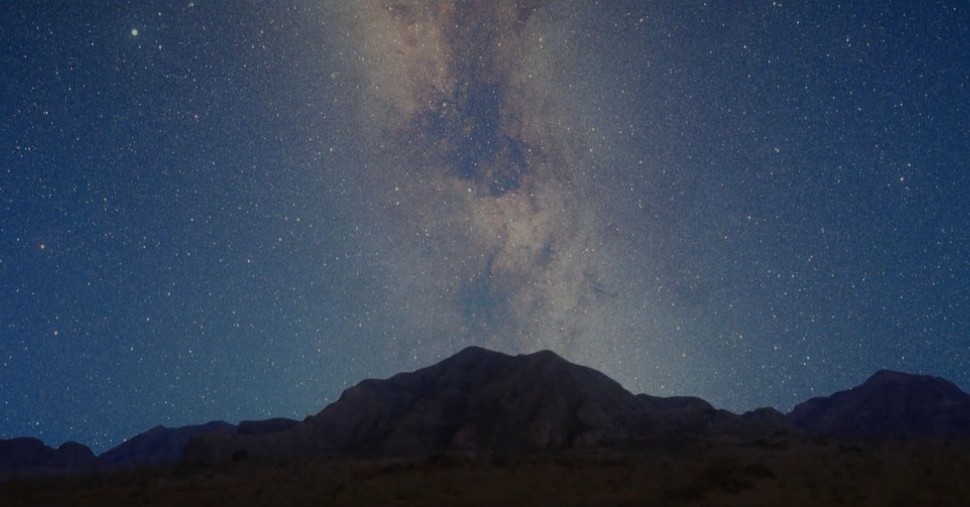
“I argue that the idea of a theistic designer provides the best explanation for the major discoveries that we've made about biological and cosmological origins,” Meyer said, noting there is strong evidence the universe had a beginning and could not have existed eternally – and that it “has been fine-tuned for life against all odds from the beginning.”
“You need a transcendent cause which is capable of a volitional act to bring the universe into existence at a discrete moment in time. And that sounds an awful lot like God.”
Another strong argument for an intelligent designer, Meyer said, involves the intricacies inside every living cell.
“Bill Gates has said that DNA is like a software program – but much more complex than any we've ever devised,” he said. “We know that software comes from a programmer, so the discovery of information in a digital form at the foundation of life suggests a master programmer for life.”
Meyer avoids declaring that science “proves” God and instead prefers more measured language, saying it “points to” God.
“But it's a strong point,” he said. “The difficulty with the word ‘proof’ is that, strictly speaking, the only disciplines that prove things are mathematics and logic.”
He believes the film will strengthen the faith of believers – and he prays it will open the hearts and minds of skeptics.
“I get a lot of mail from people who have physics degrees or biology PhDs – or professors who were skeptics, who read Return of the God Hypothesis and have changed their mind,” he said. “And we think the film can do the same thing.”
Related Article
7 Awe-Inspiring Signs of God’s Majesty in the World Around Us
Photo Credit: ©Fathom
Michael Foust has covered the intersection of faith and news for 20 years. His stories have appeared in Baptist Press, Christianity Today, The Christian Post, the Leaf-Chronicle, the Toronto Star and the Knoxville News-Sentinel.
Listen to Michael's Podcast! He is the host of Crosswalk Talk, a podcast where he talks with Christian movie stars, musicians, directors, and more. Hear how famous Christian figures keep their faith a priority in Hollywood and discover the best Christian movies, books, television, and other entertainment. You can find Crosswalk Talk on LifeAudio.com, or subscribe on Apple or Spotify so you never miss an interview that will be sure to encourage your faith.
Originally published March 24, 2026.