Robert J. Morgan Explains Why Hymns Still Matter in a Fleeting Music Culture


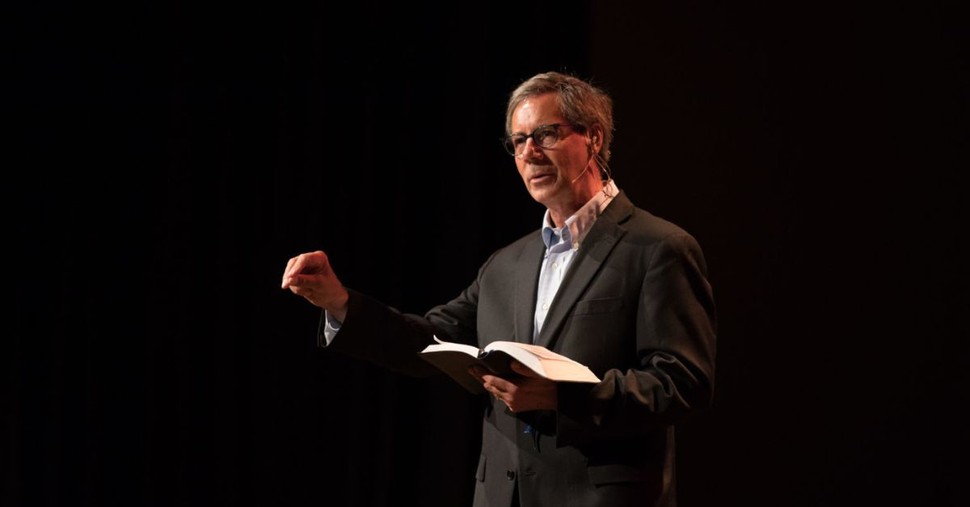
Author and pastor Robert J. Morgan is a fan of modern Christian music, but he’s also on a mission to help believers sing and celebrate the great hymns of the past – convinced the church loses something significant when it jettisons its musical heritage.
Morgan’s latest book, The Origin of Hymns (Thomas Nelson), tells the inspiring and hope-filled stories of 50 beloved hymns that Christians have sung for decades, and in most cases, for centuries. It’s being released in an age – the 21st century – when music is often treated as quickly replaceable.
The book serves as a companion to the upcoming film I Can Only Imagine 2, which tells the inspiration behind MercyMe’s 2017 hit Even If. That modern song (2017) included a line from Horatio Spafford’s classic hymn It Is Well with My Soul.
The book even appears briefly in the film, despite the fact it wasn’t written until after the movie was shot. Late in production, the I Can Only Imagine 2 team realized viewers might want a deeper look at the subject referenced in the story, so they recruited Morgan – an expert on the subject who has written extensively about hymn history.
“I like the newer music, but I don't want us to lose the hymns,” Morgan told Crosswalk Headlines. “I'm a champion for churches singing both the newer and the older music – we can do that. The church has always done that.”
Morgan’s book features the text of 50 hymns along with the stories behind them. The collection includes Fanny Crosby’s Blessed Assurance (1873), Charles Wesley’s O for a Thousand Tongues to Song (1739) and Isaac Watts’ O God, Our Help in Ages Past (1719). Such songs are “rich in theology [and] have been a blessing to millions of people through the decades and the centuries,” Morgan said.
He described hymns as “versified theology.”
“It is a small bit of Bible study that is put in verse form and can be sung. It is singable theology,” he said, explaining the difference between a hymn and other styles of Christian music. “A lot of songs may take some particular truth and repeat that truth over and over again with repetitious lines – and maybe there's only one or two points that the hymn tries to make. But a really classic hymn will not do a lot of repeating. It will have great theology woven from the Bible.”
The 1823 song Holy, Holy, Holy is one such rich hymn, Morgan said, describing it as a theological “progression” of truth from beginning to end.
“A hymn is a structured bit of theology that we sing for the uplifting of our soul and for the glory of God,” he said.
When Christians and churches stop singing hymns, Morgan said, they lose their connection to the past.
“The biggest thing we lose is longevity,” he said. “... If you went to a church that has a contemporary song in the order of service and you sang it, you're probably not going to be singing in a year from now. The shelf life of today's popular songs is very short, and the result of that is, since they don't last very long, it’s almost like disposable worship music. They don't become embedded in our minds over a long period of time.”
But when churchgoers sing a song throughout their lives – from age 10 to age 80, for example – it becomes rooted not only in their minds but in their souls, Morgan said. He compared it to the biblical Israelites singing the Psalms.
“That's tremendously important as we get older. And especially if we battle illnesses and diseases or mental illness, it's that deeply embedded lyrics of our hymns that sometimes stay with us longer than anything else,” he said. “So by dispensing with the hymns, we're not only dispensing with some rich theological truths that have come out of great sermons and Bible studies from the lyricist – but we're also losing the longevity that we need to get songs of the Lord deeply into our hearts and minds.”
By studying hymns, Morgan said, Christians also learn church history and gain insight into the faith of believers who came before them.
“To understand the whole sweep of the history of hymnody is to understand the history of Christianity, and when we sing the hymns, we are adding our voices to the great chorus of the generations that are praising the Lord even now around the throne.”
Related Article
10 Great Christian Hymns and Their Histories
Photo Credit: ©RobertJMorgan.com
Michael Foust has covered the intersection of faith and news for 20 years. His stories have appeared in Baptist Press, Christianity Today, The Christian Post, the Leaf-Chronicle, the Toronto Star and the Knoxville News-Sentinel.
Listen to Michael's Podcast! He is the host of Crosswalk Talk, a podcast where he talks with Christian movie stars, musicians, directors, and more. Hear how famous Christian figures keep their faith a priority in Hollywood and discover the best Christian movies, books, television, and other entertainment. You can find Crosswalk Talk on LifeAudio.com, or subscribe on Apple or Spotify so you never miss an interview that will be sure to encourage your faith.
Originally published February 10, 2026.