How George Washington's Faith Shaped His Leadership


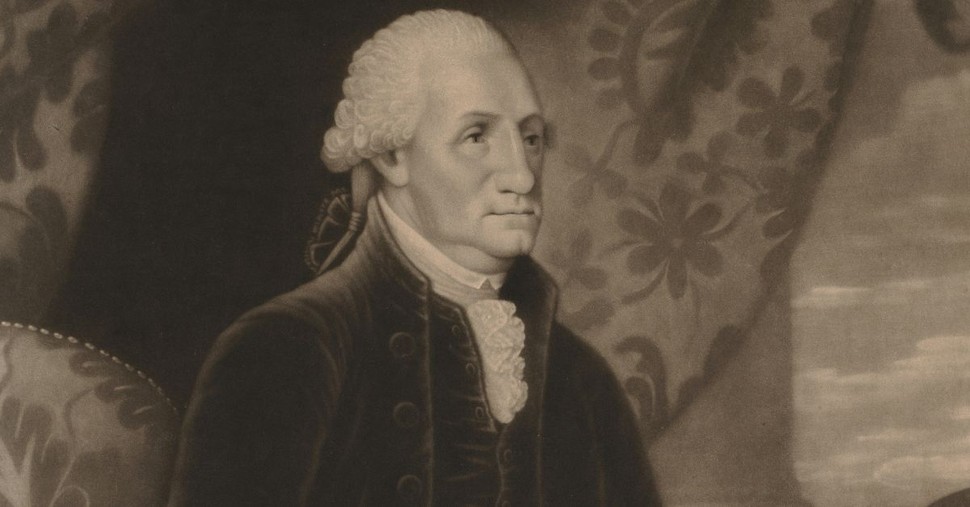
For many of us, our first knowledge of George Washington is the story of his confession of “I cannot tell a lie,” as a child to his father, concerning chopping down a cherry tree. Yet it turns out that one of the most famous stories about his life was fabricated in 1806 by a traveling minister, bookseller and biographer, Mason Locke Weems, author of "The Life of Washington."
Still, despite it being a myth, Washington is known for his faith, which began at an early age. Although his father’s death as a child brought his formal education to a sudden end, Washington continued to read and study books throughout his life.
Historian and Providence Forum Executive Director, Dr. Jerry Newcombe, co-author of the best-selling book, "George Washington’s Sacred Fire," writes that, “One of the books that most impacted the young George Washington was called 'Rules of Civility and Decent Behavior,' a collection of 110 maxims written in late 16th-century France.
The maxims were largely based on Biblical principles and were very popular in Washington’s day, with him even transcribing these precepts in his own hand by the age of 16.”
He was known to have based his life on these rules, measuring himself by them with a fear of the Lord, believing they pleased God.
In raising her son after the death of his father, Washington’s mother, Mary Ball Washington, at 37 years old, is quoted by biographer Benson J. Lossing as saying, “She submitted to the Divine Will with the strength of a philosopher and the trustfulness of a Christian.”
Washington Highly Respected by His Peers
Washington’s faith, moral character, and leadership abilities became evident early on in his military career. In his early 20s, he joined the colonial military, was appointed Major in the Virginia militia and promoted to Colonel to lead troops in the French and Indian War.
In his early 40s, Washington attended the 1st Continental Congress in 1774, as well as the 2nd Continental Congress in 1775, where, in the Assembly Room in Independence Hall in Philadelphia, Pennsylvania, Massachusetts delegate, John Adams, nominated Washington to serve as the Commander-in-Chief of the rag-tag American Army.
About Washington, Benjamin Rush, an American Revolutionary and one of America’s Founding Fathers, wrote, “He has so much martial dignity in his deportment that you distinguish him to be a general and a soldier from among ten thousand people.”
Highly respected by his fellow delegates for his military reputation and level of expertise, they voted unanimously to appoint Washington to lead the men willing to risk their lives to gain liberty and face the most formidable army and navy in the world.
As Adams noted, “This appointment will have a great effect in cementing the union of these colonies. The general is of the most important characters of the world; upon him depend the liberties of America.”
Washington expressed his feelings of inadequacy to the Congress at the task before him and wrote in a letter to his wife, Martha, “I hope my undertaking this service is designed to answer some good purpose. I rely confidently on that Providence which has heretofore preserved and been bountiful to me.”
“Thomas Jefferson assessed Washington as a man with a 'great and powerful mind’ characterized by sound judgment and prudence,” writes Newcombe, also co-author of "Thomas Jefferson and The God Who Gave Us Liberty."
Washington Understood Faith Shaped Leadership
Unlike some leaders throughout history, as the Commander of America’s army and the first President of the United States, Washington understood how leadership in a free nation is a duty and a trust.
With faith-shaped leadership, he recognized that there is a difference between ownership and authority. Of how he, too, was one of the people, and how, rather than him fighting to rule America, he fought for America to rule itself.
In a June 12, 1783, letter to the governors of all 13 states, Washington wrote:
“I now make it my earnest prayer that God…would most graciously be pleased to dispose us all to do justice, to love mercy, and to demean ourselves with that charity, humility, and pacific temper of mind, which were the characteristics of the Divine Author of our blessed religion, and without an humble imitation of whose example in these things, we can never hope to be a happy nation.”
Dr. Peter Lillback, founder of Providence Forum and co-author of "George Washington’s Sacred Fire," states that Washington believed, “Christianity is absolutely essential for a republican form of government, because it is self-government. It takes a moral people to have a republic that protects liberty. All of that reflects Washington’s view of his Christian faith and how important that Christian faith was for the kind of government that he was establishing.”
More than many, Washington understood the importance of a nation’s reverent dependency on God, and that virtue in leadership required faith in Him.
Washington’s Transition from Commander to President to Citizen
As a national hero, Washington’s transition from Commander of America’s army to the first President and Commander-in-Chief of the United States seemed well-earned and fitting.
Historian and author, George Bancroft, often referred to as ‘the father of American history, wrote, “All hearts turned with affection toward Washington. This is he who was raised up to be, not the head of a party, but the father of his country.”
As well, Newcombe considers the day Washington humbly transitioned from President to citizen, peacefully transferring the presidency to John Adams, as one of the most important and significant days in world history, noting that throughout history there have often been bloody transitions, from the first ruler to the second, because power is what people struggle over.
“George Washington pushed away power,” points out Newcombe. “He didn’t seek power for power’s sake. He sought to faithfully serve and told us we should imitate Jesus to have good character.”
Foundations of Freedom Week 8 Video:
Photo Credit: ©TheClevelandMuseumofArt/Unsplash.com
This article is part of Salem Media's Foundations of Freedom series.
Lynette Kittle is married with four daughters. She enjoys writing about faith, marriage, parenting, relationships, and life. Her writing has been published by Focus on the Family, Decision, Today’s Christian Woman, kirkcameron.com, Ungrind.org, StartMarriageRight.com, and more. She has a M.A. in Communication from Regent University and serves as associate producer for Soul Check TV.
Originally published August 17, 2026.