The Faith and Courage That Shaped John Adams' Fight for Freedom


Listen or Read Below:

Audio By Carbonatix
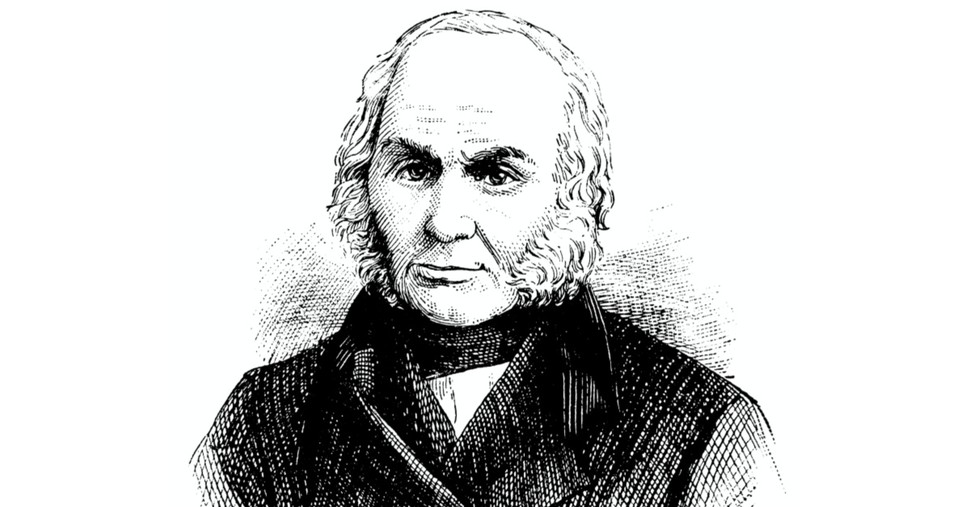
John Adams, one of America’s Founding Fathers and a signer of the Declaration of Independence, who went on to become our first vice president and second President of the United States, was a man who loved God, dearly loved his wife, and passionately loved freedom.
Born October 30, 1735, in Braintree, Massachusetts, Adams, although his father insisted on his education, credited his mother with shaping his moral character. Entering Harvard at the age of 16, he went on to earn a Master’s Degree in Law.
Adams married Abigail Smith on October 25, 1764, the daughter of a Congregational Church pastor, who came from a rich faith and Patriot background. Mostly home-educated and self-taught, she not only became his wife but his closest advisor, so much so that while in office, John’s political opponents referred to her as “Mrs. President.”
Together they had six children, four boys and two girls, the youngest of whom was stillborn. Their oldest son, John Quincy Adams, went on to become the sixth President of the United States.
Adams’ Love for His Wife
Writing many letters to his beloved wife, Adams stands out as a husband fully devoted to God, his wife, and his country, who shared his heart and his passion for liberty and freedom with Abigail, relying heavily on her insight and wisdom. After Adams was sworn in as President of the United States, he wrote Abigail, “I never wanted your Advice or assistance more in my life.”
From their correspondence, it can be seen that Adams treated his wife with respect, as a fellow-heir in Christ, as 1 Peter 3:7 urges, “Husbands, in the same way be considerate as you live with your wives, and treat them with respect as the weaker partner and as heirs with you of the gracious gift of life, so that nothing will hinder your prayers.”
Separated by distance for months and years at a time in service to his country, their marriage and relationship are well documented in the many letters, over 1,100, written between the two of them, as well as other writing. Preserved through their correspondence is not only Adams’ love for his beloved wife, but also a passionate desire for independence and freedom for his country.
Adams’ Efforts and Influence on America’s Liberty
Adams played an important role in the colonies' separation from Britain and insisted that Thomas Jefferson write the draft of the Declaration of Independence. Adams and his cousin, Samuel Adams, became the leaders of a group that opposed reconciliation with Britain, and in 1774, he was elected as a delegate to the First Continental Congress.
During his two terms in the Continental Congress, Adams served on 90 committees, including the one that prepared the Declaration of Independence.
In Providence Forum’s Executive Director’s new book with Dr. Peter Lillback, Under the Liberty Tree: Samuel Adams and the Sons of Liberty, Dr. Jerry Newcombe explores more of Adams’ efforts in the pursuit of liberty.
It was Adams who nominated Washington to serve as the Commander-in-Chief of the rag-tag American Army, noting, “This appointment will have a great effect in cementing the union of these colonies. The general is of the most important characters of the world; upon him depend the liberties of America.”
Adams was also supportive of the spiritual revival, which greatly influenced and strengthened the Patriot leaders leading up to the signing of the Declaration of Independence, including the call to prayer and fasting that played a vital part in America's establishment of its freedom.
Adams’ Influence on America’s Declaration of Independence
“The Declaration of Independence laid the cornerstone of human government upon the precepts of Christianity,” wrote Adams.
His voice and words are credited with helping to motivate America’s founders towards freedom, passionately telling the Continental Congress on July 1, 1776: ‘Live or die, survive or perish, I am for the Declaration. It is my living sentiment, and by the blessing of God it shall be my dying sentiment. Independence now, and Independence forever!’”
To his beloved wife, on July 3, 1776, he wrote:
“You will think me transported with Enthusiasm, but I am not—I am well aware of the Toil and Blood and Treasure, that it will cost Us to maintain this Declaration, and support and defend these States—Yet through all the Gloom I can see the Rays of ravishing Light and Glory. I can see that the End is more than worth all the Means. And that Posterity will triumph in that Days Transaction, even although we should rue it, which I trust in God We shall not.”
As well, in reference to the Declaration of Independence, Adams wrote, “I am apt to believe that it will be celebrated, by succeeding Generations, as the great anniversary Festival. It ought to be commemorated, as the Day of Deliverance by solemn Acts of Devotion to God Almighty. It ought to be solemnized with Pomp and Parade, with Shews, Games, Sports, Guns, Bells, Bonfires, and illuminations from one End of this Continent to the other, from this Time forward forever more.”
Adams’ Accomplishments and Rise to Presidency
After serving in Europe from 1781 to 1788 in a variety of diplomatic posts, including serving as the first United States Prime Minister to England, opening the Netherlands to American trade, and helping negotiate the Treaty of Paris, he returned to America and was elected Vice President under President George Washington in 1789.
After Washington served two presidential terms, Adams was elected the second President of the United States in 1796 with Thomas Jefferson as his vice president.
Following in Washington’s footsteps, President Adams also set aside national days of Thanksgiving.
He also established the U.S. Navy to protect American merchant shipping and left a Federalist judicial legacy by appointing John Marshall to the Supreme Court.
He and Abigail were also the first to live in the newly built Executive Mansion, known as the White House, in Washington, D.C.
William J. Federer, historian and author of Prayers and Presidents book, writes, “John Adams and Thomas Jefferson were on opposite sides of several major political issues, and many times engaged in heated debates.”
In the 1800 presidential election, Adams lost to Jefferson. Federer notes that Jefferson followed him as President and “so strong were Adam’s feelings against Jefferson at the time, that Adams even left Washington, D.C., to avoid being at Jefferson’s Inauguration.”
Adams’ Faith in Later Life
Adams’ dear wife, Abigail, preceded him in death on October 28, 1818, with her last words, “Do not grieve, my friend, my dearest friend. I am ready to go. And John, it will not be long.”
In reference to John 14:2, Adams wrote, “Jesus taught us that a future state is a social state, when He promised to prepare places in His Father’s house of many mansions, for His disciples.”
“Later in life,” writes Federer, Adams and Jefferson became “the best of friends. Their correspondence reveals not only their faith, but also their friendship.”
Federer writes, “John Adams and Thomas Jefferson both died on the same day, July 4, 1826, exactly 50 years after they had signed the Declaration of Independence. Once a hardened political opponent of Jefferson, not knowing that he had passed away a few hours earlier, John Adams’ last words were: ‘Thank God, Jefferson lives!’”
Related video:
This article is part of Salem Media's Foundations of Freedom series.
Photo Credit: ©Getty Images/FierceAbin
Lynette Kittle is married with four daughters. She enjoys writing about faith, marriage, parenting, relationships, and life. Her writing has been published by Focus on the Family, Decision, Today’s Christian Woman, kirkcameron.com, Ungrind.org, StartMarriageRight.com, and more. She has a M.A. in Communication from Regent University and serves as associate producer for Soul Check TV.
Originally published October 29, 2026.