Has Your Pursuit of Wellness Become an Idol?


Listen or Read Below:

Audio By Carbonatix
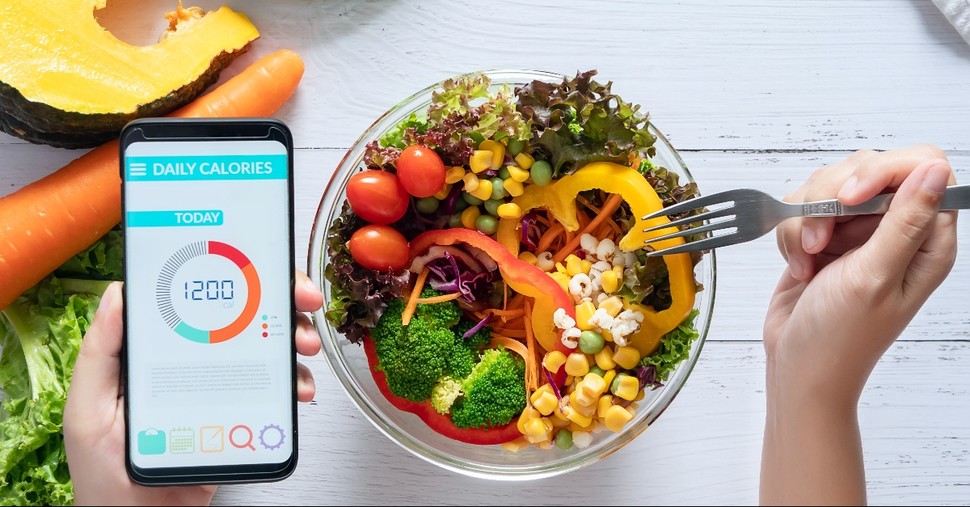
My smartwatch tracks my resting heart rate, sleep quality, steps, and calories burned. It even rewards me with a badge when I hit my goals. It’s profound what it can tell me, and yet it has no idea whether I prayed this morning. If I’m honest, I check my sleep score on many mornings before I’ve spoken a single word to God.
Tracking tools and health data awareness aren’t bad. As a dietitian and health coach, I appreciate the information we have access to. But after nearly twenty years in the health world, I’ve noticed something quietly shifting. Wellness gadgets and info were meant to be helpful companions, but they're slowly taking the wheel. It stops being something we do and inches toward something we obsess over and serve.
The prophet Isaiah paints a picture of this that has me thinking about how we approach health goals and the pursuit of wellness. In Isaiah 44, he describes a blacksmith who takes a tool and "shapes an idol with hammers, he forges it with the might of his arm" (Isaiah 44:12). And then there's a detail that, as a dietitian, I can't help but notice. While he's hammering, "he gets hungry and loses his strength; he drinks no water and grows faint" (verse 12). He is so consumed by building the thing he worships that he skips caring for the body doing the building. (Sound familiar?)
Isaiah goes on to describe how this man shapes and molds the idol, then cuts down a homegrown tree to build a fire. Where does the wood come from? An everyday process. He plants a tree, the rain makes it grow, and he uses it to warm himself and cook dinner (Isaiah 44:14-16). Then God names the blindness in verse 19: "No one stops to think, no one has the knowledge or understanding to say, 'Half of it I used for fuel; I even baked bread over its coals, I roasted meat, and I ate. Shall I make a detestable thing from what is left? Shall I bow down to a block of wood?'"
The tree that became wood and fire, and the meal, are merely everyday provisions. God provided them as neutral items to nourish and sustain. Something necessary quietly absorbed so much energy and devotion that it became the thing he bowed down to.
Health can quietly become a god for many of us. Food, movement, sleep, and all the data we can now access begin as helpful assets. It typically starts with good intentions. But over time, if we aren’t careful, we can start to raise the bar of what we are trying to accomplish or the goal we are after. Eventually we pour more and more of ourselves into it, until we find ourselves asking health to do what only God can: make us worthy, keep us safe, and give us a sense of control when life feels anything but.
Here’s the really good news: God doesn't leave the idol-maker in Isaiah 44 at the workbench, and he doesn’t leave us unguided with our health goals.
Before becoming a dietitian, I lived this transition myself when my dieting eventually turned into an eating disorder. In my clinical work, I see this insidious progression all too often. Here are a few gentle signs that wellness may have taken a seat too close to the throne:
- The scale, the tracker, or the mirror sets your mood for the day.
- A "good" eating day makes you feel a little more righteous, and a "bad" one makes you feel a little less loved.
- You've skipped the birthday dinner, the church potluck, or the coffee with a hurting friend because it didn't fit the plan.
- Rest feels like failure.
- You think about food, movement, or your body more than you think about Jesus. (Ouch. That one got me, too.)
If any of those felt familiar, pause and take a breath. God takes our sin and turns it into an invitation, which is what He did with his people in Isaiah 44. He called out the worship of a false god, and invited them in verse 22: “I have swept away your offenses like a cloud, your sins like the morning mist. Return to me, for I have redeemed you.” God follows this with an invitation to praise him in verse 23b: “burst into song, you mountains, you forests and all your trees.” Did you catch that… “all your trees.” The ordinary thing the people used, then worshiped, wasn’t removed; it was just put back in its place and repositioned to worship God.
And God holds the same invitation in our health journey: this isn’t about ignoring our health; rather, it's about using “all our trees” to praise Him. Here are three ways to help you get here:
1. Is it Discipline or Rigidity?
As a soccer coach, I run a lot of drills. Passing patterns. Skill work. Sprints that earn me a few eye rolls. But I run every drill with intention. The drills prepare us for the game.
That question, “What is this for?” is the clearest line I know between discipline and rigidity.
Discipline serves the bigger picture. It draws on wisdom to see beyond immediate gratification or comfort, and it is pure of heart and intention. Rigidity, by contrast, looks more like obsession. It forgets what the rule was for and clings to it anyway. Even if keeping it costs us the very things we hoped to protect.
Jesus had this exact conversation with the Pharisees. His disciples were hungry, so they picked heads of grain as they walked through a field on the Sabbath, and the religious leaders were outraged. Jesus answered, "The Sabbath was made for man, not man for the Sabbath" (Mark 2:27). But the Pharisees had turned it into a rule that mattered more than the hungry people standing in front of them.
We do this with our health rules, too. The protein goal was made for you—not the other way around. The early workout was meant to serve your life, not to rule it.
An important nuance can make the same action discipline one day and rigidity the next. Saying no to dessert might be discipline. Saying no to your daughter’s birthday cake because you’re afraid of what it will do to your numbers—that’s rigidity: same food, different master.
Rigidity keeps us caged. Discipline sets us free.
Rigidity operates in perfection. Discipline develops to grow closer to the Creator.
The next time a health rule feels heavy, try asking it out loud: What are you for? If it can answer, keep it with joy. If it can’t, or if the answer is to help you feel in control, it might be time to let it go.

Photo Credit: ©GettyImages/Halfpoint Images
2. Stewardship vs. Worship: Remember Who You Belong To
Here is the question underneath every idol: who do I belong to?
In Romans 1:25, Paul describes people who "exchanged the truth about God for a lie, and worshiped and served created things rather than the Creator." Our bodies are intentionally designed created things. And when we serve the body instead of the One who made it, we've made that same exchange, just in workout clothes.
The difference between stewardship and worship comes down to ownership. A steward manages something on behalf of its owner. A worshiper gives herself to the thing itself. Paul could not be clearer about which one we are: "You are not your own; you were bought at a price. Therefore honor God with your bodies" (1 Corinthians 6:19-20).
You are not your own. At first, that might sound like pressure. I have heard of this verse twisted to authorize “clean” eating. I know God didn’t intend it that way; rather, it’s the most freeing sentence in the whole conversation about health. If I am not my own, then my body isn’t a project to perfect; it is a gift from God, and he is in charge of it. It isn’t my report card. It isn’t my identity. It’s a gift I get to steward on behalf of Someone who loves me and has already paid for me in full.
So go ahead and chase after goals! Just hold those goals the way a steward holds the keys to someone else’s house: with gratitude and open hands.
3. Freedom: Pull Faith into Every Step
When we hear the words food freedom, it’s easy to picture freedom from something. This may include rules, guilt, and the tracker. And there’s truth in that. But the deeper freedom isn’t just about what we take off our plate. It’s about inviting God onto it every step.
That's what freedom looks like: faith pulled into every single step.
Every meal. "When you have eaten and are satisfied, praise the Lord your God for the good land he has given you" (Deuteronomy 8:10). Before or after you eat, pause and say thank you. It turns a plate into an altar of gratitude, whether it's a beautiful salad or drive-thru chicken nuggets in the carpool line.
Every prep. This one makes me think of Martha in Luke 10:40 when Jesus said she “was distracted by all the preparations that had to be made." Jesus never told her to stop cooking, but he did invite her to be present. When we chop the veggies or pack the lunches, they do have to get done; but can we draw close to him and make them quiet, holy moments?
Every joy. "Go, eat your food with gladness" (Ecclesiastes 9:7). You don’t have to tell me twice! Jesus' first miracle was at a wedding feast, and He made the good wine. Enjoying food is a part of God's design.
Every goal. "In their hearts humans plan their course, but the Lord establishes their steps" (Proverbs 16:9). How would your journey change if you brought your goals to Him first? Ask Him what He wants your health to look like this season.
Every discipline. "No discipline seems pleasant at the time, but painful. Later on, however, it produces a harvest of righteousness and peace for those who have been trained by it" (Hebrews 12:11). When your identity is rooted in Him, you see discipline differently. You can endure it because it is for his glory.
If wellness becomes an idol in your life, it often looks like compartmentalizing faith and food. Your faith is tucked away in one area of your life and food in another. But when we receive wellness as a gift, there is no separation. The kitchen, the gym, your church, the dinner table, and the quiet moments of prayer all belong to the same God.
Let’s Put Health Back in Its Place
Remember the idol-makers from Isaiah 44? God says in verse 22: “Return to me, for I have redeemed you."
“Return to me.” That’s the invitation for us, too. Not to try harder or toss out the meal plan, but to come home. The redemption is already finished. Wellness was never meant to be our god. But it can become a beautiful way to worship the One who truly is. Amen!
Jess Brown is a registered dietitian, founder of The Well Collective, and host of the Fuel Her Awesome podcast — but the work she's known for rarely stays on the plate. People come to her for gut healing, hormone balance, or energy boosts; what they find is an invitation to stop white-knuckling their own bodies and trust the One who made them. A board-certified specialist in sports dietetics and eating disorders, Jess built her Empowered Eating MethodTM on a single conviction: healing is almost never just physical. Nutrition is really about the mission it fuels. She writes and speaks on hormone and gut health in addition to the imperative daily work of choosing calm over control when it comes to caring for your body. Jess lives in New Mexico with her husband and two boys, and is often found off on an adventure. She believes your health can be a place you meet God, too. Start here with her Spirit-Led & Well-Fed devotional.
Originally published November 05, 2026.