Seeing God's Faithfulness through a Year of Holy Days


Listen or Read Below:

Audio By Carbonatix
“This is the day the Lord has made; we will rejoice and be glad in it.” (Psalm 118:24 NKJV)
As we bid farewell to one year and welcome another, we look ahead to the days and rhythms of a new year filled with faith and fellowship—for Christians and Jews alike. Jewish life unfolds according to a sacred rhythm—a cycle of holy days established by God Himself. As the Bible tells us, “These are the Lord’s appointed festivals, the sacred assemblies you are to proclaim at their appointed times” (Leviticus 23:4). Many Jewish holidays are commanded directly in Scripture and have been faithfully observed for thousands of years. Others were added in modern times, following the rebirth of the State of Israel in 1948. Yet each one—ancient or modern—reveals something essential about God’s faithfulness and the spiritual journey of His people.
It’s also important to remember that Jewish holidays begin at sundown and end at sundown, reflecting the biblical understanding of time: “There was evening, and there was morning” (Genesis 1:5). The Jewish calendar follows the lunar cycle, which means these holidays fall on different dates each year on the Gregorian calendar, while remaining fixed on the Hebrew calendar. As we explore each of these holy days, we are stepping into God’s calendar—His timing, His purposes, and His enduring promises to His people.
Tu B’Shvat – The New Year of the Trees
“Like a tree planted by streams of water, which yields its fruit in season…” (Psalm 1:3)
Tu B’Shvat, the New Year of the Trees, is one of four “New Years” in the Jewish tradition. It is celebrated on the 15th of the month of Shevat, which typically falls in late January or early February on the Gregorian calendar. This day celebrates the beginning of new life in trees when the sap begins to rise. In recent years, it has become custom for Jews in Israel to plant trees on Tu B’Shvat.
Purim – The Feast of Lots
“These days should be remembered and observed in every generation by every family, and in every province and in every city. And these days of Purim should never fail to be celebrated by the Jews—nor should the memory of these days die out among their descendants.” Esther 9:28
Purim recounts the events recorded in the Book of Esther and is also known as The Feast of Lots. Purim means “lots” in Hebrew, and gets its name from the lots cast by the villain of the story to determine which day the Jews were to be annihilated. Esther, the heroine of the story, was a young Jewish girl who was chosen to be King Xerxes’ wife. During Xerxes’ reign, one of the king’s advisors, Haman, plotted to destroy all Jews. In a moment of courage, Esther told Xerxes of this plan and was able to save the Jews, her people. This holiday, one of the most joyous on the Jewish calendar, celebrates the redemption of the Jewish people from certain death.
Passover – Pesach, The Story of the Exodus
“This is a day you are to commemorate; for the generations to come you shall celebrate it as a festival to the Lord—a lasting ordinance.” (Exodus 12:14)
Passover, Pesach in Hebrew, is the most widely observed and celebrated holiday on the Jewish calendar. It commemorates the most important moment in Jewish history, when the enslaved Israelites were freed from Egypt and the nation of Israel was born. The story of the Exodus is one that Christians know well, too—when God redeemed His children from slavery and Moses led the Israelites out from bondage. Moses and his people are an inspirational story for us all—an affirmation for people of faith that God protects, provides for, and deeply loves His people.
Yom HaShoah – Holocaust and Heroism Remembrance Day
“Be careful, and watch yourselves closely so that you do not forget the things your eyes have seen or let them fade from your heart as long as you live. Teach them to your children and to their children after them.” (Deuteronomy 4:9)
Yom HaShoah was inaugurated by Israel in 1951 as a national holiday to memorialize the six million Jews murdered during the Nazi reign of terror. During the observance, flags are flown at half mast, and at 10 a.m. air raid sirens sound throughout the country and Israelis stop whatever they are doing to observe a two-minute silence. We come together through prayer, the reading of Scripture, and the lighting of candles to remember the six million Jews murdered during the Holocaust.
Yom HaZikaron – Israel Memorial Day
“Precious in the sight of the Lord is the death of his faithful servants.” (Psalm 116:15)
Yom HaZikaron, Israel Memorial Day, is a somber remembrance of all the men and women who made the ultimate sacrifice to help form the nation of Israel and to keep it alive over the past nearly eight decades. The most noticeable feature of the day is the sounding of two sirens—one when the day begins at sundown and again at 11 a.m. during public prayer services at military cemeteries. During those times, the entire country comes to a standstill and observes a two-minute moment of silent reflection.
Yom HaAtzmaut – Israel Independence Day
“Blessed is the nation whose God is the Lord, the people he chose for his inheritance.” (Psalm 33:12)
Immediately following Yom HaZikaron is Yom HaAtzmaut, Israel Independence Day, a day of great celebration throughout the country. It was on the fifth day of the month of Iyar, May 14, 1948, on the Gregorian calendar, that the nation of Israel was re-established and Israel’s Declaration of Independence was signed in Tel Aviv. Yom HaAtzmaut celebrates this special day with parades, barbecues, and fireworks as a reminder to the Israeli people of their much sought-after freedom.
Yom Yerushalayim – Jerusalem Day
“Pray for the peace of Jerusalem: ‘May those who love you be secure. May there be peace within your walls.’” (Psalm 122:6-7)
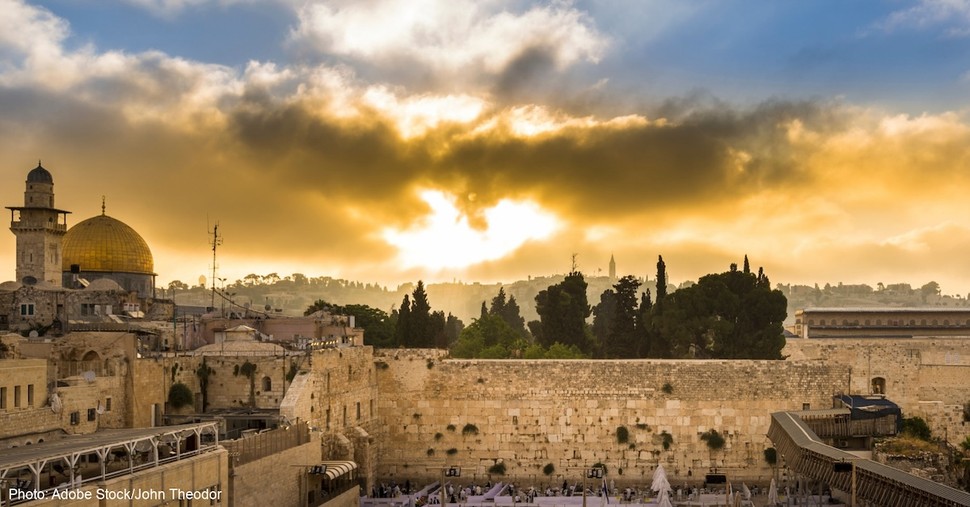
At the very center of the Jewish faith is the Holy City of Jerusalem. Both Holy Temples stood in Jerusalem, and it is in Jerusalem that Jews have celebrated their most joyous occasions and tragic moments. Jerusalem Day marks the historic reunification of this city when it was liberated in 1967 following the Six-Day War. It was the first time in thousands of years, since the Jews were exiled from Israel by the Romans, that the entire city was once again under Jewish sovereignty. The day is celebrated with special prayers, pilgrimages to Jerusalem, and gratitude to God for this miracle that the people of Israel will never take for granted.
Shavuot – Pentecost, the Festival of Weeks
“Celebrate the Festival of Weeks with the firstfruits of the wheat harvest…” (Exodus 34:22)
Shavuot (also known as Pentecost) occurs 50 days after Passover. Called The Feast of Weeks in the Bible, Shavuot originally marked the beginning of the spring harvest for the Israelites with a celebration at the Holy Temple in Jerusalem. Following the destruction of the Holy Temples, this day then focused on the anniversary of the giving of the Torah (the first five books of the Hebrew Bible) to Moses on Mount Sinai. The holy days of Shavuot and Passover are connected, with the time in-between known as The Counting of the Omer—50 days of anticipation between celebration of the people’s physical redemption from slavery and their spiritual redemption as children of God with the giving of His Word.
Tisha B’Av – The Fast of the Ninth of Av
“The hearts of the people cry out to the Lord. You walls of Daughter Zion, let your tears flow like a river day and night” (Lamentations 2:18)
Tisha B’Av, the Ninth day of the month of Av, commemorates the darkest day on the Jewish calendar—the destruction of the two Jerusalem Temples which occurred on the same day hundreds of years apart. It is a day of communal mourning not only for the destruction of the Holy Temples, but also for the many tragedies that have befallen the Jewish people that have occurred on the ninth of Av. Tisha B’Av is one of two full fast days on the Jewish calendar (the other is Yom Kippur) and is marked by observing Jewish mourning traditions and prayer.
Rosh Hashanah – Jewish New Year
“On the first day of the seventh month hold a sacred assembly and do no regular work. It is a day for you to sound the trumpets.” (Numbers 29:1)
Rosh Hashanah, the Jewish New Year, is celebrated on the first day of the month of Tishrei . It is a holy observance marked by intense moral and spiritual reflection as the Jewish people prepare for God’s judgment, which is sealed ten days later on Yom Kippur. The ten days in-between, known as the Days of Awe or Days of Repentance, find the Jewish people reflecting on past mistakes and praying on how they might improve in the year ahead. The sound of the shofar (the biblical trumpet made of a ram’s horn), which resounds throughout the High Holy Days, is a call for repentance.
Yom Kippur – Day of Atonement
“This is to be a lasting ordinance for you: On the tenth day of the seventh month you must deny yourselves and not do any work—whether native-born or a foreigner residing among you—because on this day atonement will be made for you, to cleanse you. Then, before the Lord, you will be clean from all your sins.” (Leviticus 16:29-30)
Yom Kippur, the Day of Atonement, is the holiest day of the Jewish year and the culmination of the High Holy Days. It marks the final opportunity to repent before God before the Book of Life is sealed for another year. The day is marked by fasting and spending time in synagogue, beseeching God for forgiveness through the words of a special liturgy that is used every year only on this day.
Sukkot – Festival of Tabernacles
“Celebrate this as a festival to the Lord for seven days each year. This is to be a lasting ordinance for the generations to come; celebrate it in the seventh month. Live in temporary shelters for seven days.” (Leviticus 23:41-42)
The Festival of Tabernacles, Sukkot, is a seven-day festival for the Jewish people that takes place only days after Yom Kippur concludes. While the High Holy Days are a solemn time, Sukkot is a joyous celebration that commemorates the Israelites wandering through the Sinai desert after the Exodus on their way to the Promised Land. Focusing on God’s providence and provision for the Israelites, the holiday is marked with the building of a sukkah, a temporary outdoor shelter open to the elements, where Jewish families eat, fellowship, and even sleep during the week-long celebration.
Shemini Atzeret & Simchat Torah – The Eighth Day of Assembly & Rejoicing in the Torah
“Oh, how I love your law! I meditate on it all day long.” (Psalm 119:97)
The eighth day after Sukkot is known as Shemini Atzeret and it marks the transition of the High Holy Days to the year ahead by reminding the people not to leave God behind. The next day is Simchat Torah, Hebrew for “Rejoicing in the Torah,” and celebrates the completion of the annual reading of the Torah and the beginning of a new cycle of reading from Genesis to Deuteronomy. God’s Word is the vehicle through which the Jewish people bring that joy into their daily lives.
Hanukkah – Festival of Lights
“Then came the Festival of Dedication at Jerusalem. It was winter…” (John 10:22)
Hanukkah, one of the most joyous festivals of the Jewish calendar, is the only holiday not mentioned in the Torah, although it is mentioned in the Christian Bible. It celebrates the miraculous victory of the Maccabees against the mighty Greek/Syrian army. After their astonishing victory, the Jewish people went into the Holy Temple, which had been defiled by the Greeks. When the Jews went to light the Temple menorah, as commanded by God, they only had oil for one day. However, they lit the menorah in faith and a miracle happened—the oil lasted for eight days and nights, until more pure oil could be procured. Jews today commemorate those miraculous events by lighting their own menorahs over the eight nights of Hanukkah and enjoying special foods fried in oil, such as latkes (potato pancakes) and donuts called sufganiyot.
Photo credit: ©International Fellowship of Christians and Jews
The International Fellowship of Christians and Jews is the leading non-profit building bridges between Christians and Jews, blessing Israel and the Jewish people around the world with humanitarian care and lifesaving aid.
Originally published December 29, 2025.